Huangyangchuan township, Gulang County, Gansu province. In a village, two members of a family died in accidents in a short period. People took it seriously, they decided to rebuild the old temple in the village, hoping it could bless them with peace. In the ceremony after the rebuilding was finished, the figure of Buddha, the picture of Chairman Mao, the Taoist and the country shamen, gathered together…This film documented the details of this ceremony, hoping to reveal the common status of Chinese people’s religion.
Yu Tian (played by Hu Tian) is a senior this year. He hasn't returned home for a few years while studying in a big city. The estrangement between him and his mother (Lin Jiehua) is somehow getting bigger and bigger. He is immersed in his artistic dreams and is not practical, but his mother, who has always been conservative, does not understand. His friends remained the same, still the same young people in the small town. Friends booed that he would be the most promising one among them, but he himself was convinced. He told his sister (played by Sun Nan) that he would go to the big city to make a fortune.
Filmed over three years on China’s railways, The Iron Ministry traces the vast interiors of a country on the move: flesh and metal, clangs and squeals, light and dark, and language and gesture. Scores of rail journeys come together into one, capturing the thrills and anxieties of social and technological transformation. The Iron Ministry immerses audiences in fleeting relationships and uneasy encounters between humans and machines on what will soon be the world’s largest railway network.
Xu Xin’s film “Dao Lu” (China 2012) offers an exclusive “in camera” encounter with Zheng Yan, an 83 year-old veteran of the Chinese Red Army, who calmly relates how he has navigated his country’s turbulent history over three-quarters of a century.Born to a wealthy family in a foreign concession, Yan joined the Chinese Communist Party (CCP) in 1941 because he sincerely believed in the socialist project, and in its immediate capacity to free China from the Japanese yoke and eradicate deep-rooted corruption.
The Chinese Department of Sun Yat-sen University (Guangzhou) staged the Chinese debut of "The Vagina Monologues" in December 2003. Since then, this feminist play, which came from the US and has been committed to the elimination of gender-based violence, has incited a vagina hurricane that blew all over mainland China.
Before the Flood is a study of the final weeks of a dying city, as thousand-year-old Fengjie on the Yangtze River is reduced to rubble and its inhabitants uprooted to make way for the new Three Gorges Dam that will flood the entire valley.
"China Gate" tells the story of young Chinese fight to change their fate through studying. Right before dawn, students in Huining have already started their self-studying session; hard working youngsters have filled up the space of school ground. This is one of the most poverty-stricken Counties in Western China; here people's only hope is in education, as the way to change their social status. Therefore all their effort point towards the College Entrance Examination, the process is like going through a gate, those who pass can study at urban Universities, and have the chance to build a better life. During the same winter season in Beijing, a graduate student faces a big decision. Should he keep trying to survive in the big city or get back to his countryside home? The exhausted faces at the Beijing underground seem to be revealing the truth about their distance in between. The student comes to see the flag ceremony at Tiananmen Square, where the pulsing symbol of the nation lies.
Li Shouwang is the leader of a blind storytellers team, learned storytelling at the age of 19. His childernare living hard in other cities. Li's money amost goes to his children's pocket every year. But with urbanisation, the storytellers have lost almost all their audience. As the conflict between the storytelling team and the village team intensified, his son, who was far away from home, became the only spiritual sustains... When he was excited that his son would be taking his family home for Chinese New Year, what's await is a sigh.
This film is a realistic record of a sixty-year-old couple living in a remote village (Gurenay) in the Badain Jaran Desert of Alashan, Inner Mongolia plant thousands of mu of ammodendron and euphratica to fight against expanding deserts.
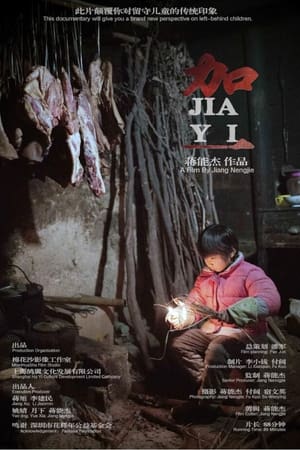
The documentary, “JIAYI”, adopts a particular position from where it objectively and non-discriminatingly uncovers a real world of these left-behind kids in rural area in China, which overthrows the social stereotyping towards this special group existing in the remote and underdeveloped regions.
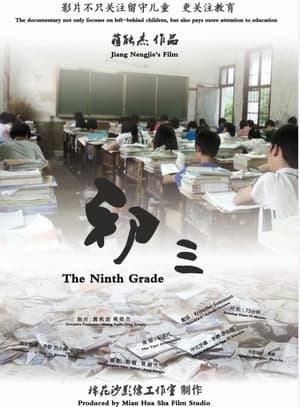
Class 172 is a key class for their excellent students of an ordinary secondary school in Hunan province, from which the kids’ main goal is to upgrade into one of the best province-level high school – No.1 high school of the county. In the recent few years, the school’s enrollment rate to high school was not quite satisfying, and this year, the newly promoted class in charge teacher – Mr. Xiang, who’s only graduated a few years ago, became their brightest hope to teach the students and raise the enrollment rate for school.
The player of Jia Zhangke's early film "Xiao Wu" and the famous independent film activist Wang Hongwei talked about Chinese independent films at the IFF Independent Film Forum.
Follow the lives of the elderly survivors who were forced into sex slavery as “Comfort Women” by the Japanese during World War II. At the time of filming, only 22 of these women were still alive to tell their story. Through their own personal histories and perspectives, they tell a tale that should never be forgotten to generations unaware of the brutalization that occurred.
In the sound of rice huller, the rice falls to the jar; and in the booming sound of thunder, the rain drops falldown on the ground. Witha shovel on shoulder, we're farming under the sky. -- This is a children's folk rhymes used to be very popular among the Hakka people lived in the westernpart of Fujian Province, China. While farming is not an easy work, rice hulling is an even more laborious work. Rice-huller is a tool used by the peasants in southern China to hull the rice for thousands of years in theirfarming history. This documentary films the making of probably the last rice-huller ever made by mankind.
Workers, peasants, soldiers, students and merchants were five groups of Chinese society in the 1950s, after the so-called elimination of the exploited class. Borrowing this concept, the umbrella is taken as the clue to rediscover changes in various social classes after the economic reform, and to analyze the social problems in China. Workers making umbrellas, merchants selling umbrellas, students looking for jobs in the rain. Umbrella is used as a metaphor that can be seen everywhere. As the raindrop, what we see is sometimes clear, sometimes untraceable.
This is a story about a five-year battle waged between the farmers of two villages and the local government over land-use rights. This documentary illustrates the subtle changes being made to the rules of the game between officials and citizens, and provides deep human insight into the loss, despair and increasing awareness experienced by common farmers in the pursuit of land-use rights.
A documentary chronicling the coming of age of a young chinese man.
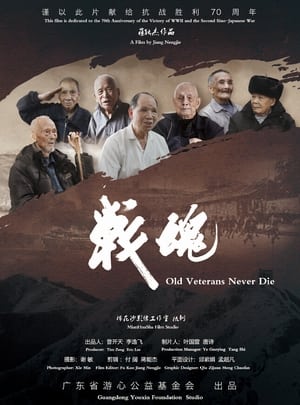
A veteran, Mr. Long’s life was full of legend. Yet, he lived his life in silence and never told others about his experience in the battlefield. There were many scars on his body and he got three shots only in the Songshan Battle. One of them went through between the bones and the scar had been apparently seen so far.
For Chinese parents, finding out that their kid is gay usually presents a major tragedy, with the big majority utterly unable to accept the homosexuality of their son or daughter. However, during recent years a fresh rainbow wind has been blowing over the Chinese mainland: a pioneer generation of Chinese parents has been stepping up and speaking out on their love for their gay kids. This documentary features 6 mothers from all over China, who talk openly and freely about their experiences with their homosexual children. With their love, they are giving a whole new definition to Chinese-style family bonds.
Zhang Ming went back to his hometown Wushan to record the last images before it being changed forever by the upcoming Three Gorges Dam.