Film journalist and critic Rüdiger Suchsland examines German cinema from 1933, when the Nazis came into power, until 1945, when the Third Reich collapsed. (A sequel to From Caligari to Hitler, 2015.)
Austrian actress Romy Schneider (1938) and French actor Alain Delon (1935), once fervent lovers in the early sixties, maintained a close friendship and a certain working relationship after their breakup until her death in 1984: a universal and eternal love.
A sci-fi documentary that follows the rise and fall of Lyd — a 5,000-year-old metropolis that was once a bustling Palestinian town until it was conquered when the State of Israel was established in 1948. As the film unfolds, a chorus of characters creates a tapestry of the Palestinian experience of this city and the trauma left by the massacre and expulsion.
The dramatic story of the British expedition that made the first ascent of Everest. Combining interviews with the surviving members of the 1953 British and 1952 Swiss attempt on Everest with rare archival material, this film tells the story of the race to climb Everest in the early 1950s and its climax in 1953.
A labyrinthine portrait of Czech culture on the brink of a new millennium. Egon Bondy prophesies a capitalist inferno, Jim Čert admits to collaborating with the secret police, Jaroslav Foglar can’t find a bottle-opener, and Ivan Diviš makes observations about his own funeral. This is the Czech Republic in the late 90s, as detailed in Karel Vachek’s documentary.
The origin story of America's first horror theme park and the thrilling journey of its founder. David Bertolino began as a salesman in a Boston joke shop and moved into Halloween products and costuming before becoming a “Hauntrepreneur” and launching the iconic SpookyWorld.
This is not merely another film about cinema history; it is a film about the love of cinema, a journey of discovery through over a century of German film history. Ten people working in film today remember their favourite films of yesteryear.
Four lives that could not be more different and a single passion that unites them: the unconditional love for their cinemas, somewhere at the end of the world. Comrades in Dreams brings together six cinema makers from North Korea, America, India and Africa and follows their efforts to make their audiences dream every night.
Brought to life through archival material and the reflections of over 40 colleagues, friends and fans, BLOOD & FLESH is much more than the story of a moviemaking life most unusual. It beautifully captures the worlds of outsider filmmaker communities that existed in California in the ’70s, and the weird ways they intersected with Hollywood mainstream and union indies. On Adamson shoots, regular Orson Welles crew and cinematographers like Gary Graver, Vilmos Szigmond and Lazlo Kovaks worked alongside Bud Cardos — and at one point, Charles Manson! Director David Gregory (founder of Severin Films, director of LOST SOUL: THE DOOMED JOURNEY OF RICHARD STANLEY’S ISLAND OF DR. MOREAU) spent years making this film, speaking to everyone down to the cops who investigated Adamson’s murder, vividly encapsulating both a bold life and tragic demise, with alien conspiracies, go-go dancers and Colonel Sanders coming in along the way. If you’ve got even a passing interest in cinema, you want to see this
An unconventional portrait of painter Frida Kahlo and photographer Tina Modotti. Simple in style but complex in its analysis, it explores the divergent themes and styles of two contemporary and radical women artists working in the upheaval of the aftermath of the Mexican Revolution.
Reclaiming what was once stolen from him, a man journeys back to the place of his childhood nearly 80 years after his world came crashing down.
Documentary about filmmakers of the New German Cinema who were members of the legendary Filmverlag für Autoren (Film Publishing House for Authors). Among them are Werner Herzog, Rainer Werner Fassbinder, and Wim Wenders.
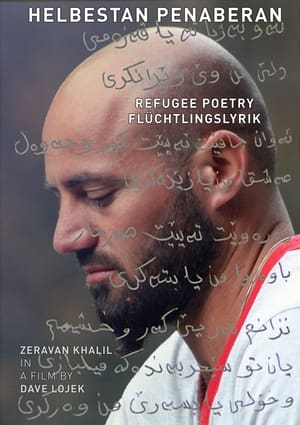
When asked a question on politics, late Palestinian poet Mahmoud Darwish once answered: “I write about love to expose the conditions that don’t allow me to write about love.” In TWO TRAVELERS TO A RIVER Palestinian actress Manal Khader recites such a poem by Mahmoud Darwish: a concise reflection on how things could have been.
A look at the Brazilian black movement between 1977 and 1988, going by the relationship between Brazil and Africa.
Samuel Fuller discusses his career as a filmmaker, illustrated by plenty of clips.
An exploration of the cinematic history of the folk horror, from its beginnings in the UK in the late sixties; through its proliferation on British television in the seventies and its many manifestations, culturally specific, in other countries; to its resurgence in the last decade.
An intimate portrait of the superb actress Gena Rowlands, icon of independent cinema. Together with her husband, legendary director John Cassavetes (1929-89), she lived an unusual life beyond the dream factory, a life in which reality and fiction were so perfectly intertwined that it made possible films that still today seem incredibly real.
In the late sixties, Spanish cinema began to produce a huge amount of horror genre films: international markets were opened, the production was continuous, a small star-system was created, as well as a solid group of specialized directors. Although foreign trends were imitated, Spanish horror offered a particular approach to sex, blood and violence. It was an extremely unusual artistic movement in Franco's Spain.
A journey into the BBC archives unearthing glorious performances and candid interviews from some of Britain's greatest poets.
James Franco interviews three experts on the poet Hart Crane, whose life was the subject of his feature The Broken Tower (2011).