Zurich-born Hugo Koblet was the first international cycling star of the post-war period. He was a stylist on the bicycle and in life, and a huge heartthrob. Koblet had a meteoric rise and won the Giro d'Italia in 1950. Once he had reached the zenith of his career, Koblet was put under pressure by overly ambitious officials and ended up ruining his health with drugs. In 1954, he married a well-known model and they became a celebrity dream couple. After his athletic career ended, Koblet began to lose his footing. Threatened by bankruptcy, he crashed his Alfa into a tree.
Max Frisch was the last big Swiss intellectual widely respected as a “voice” in its own right – a character hardly found today. The film retells Frisch’s story as a witness of the unfolding 20th century, wondering if such “voices” are needed at all, or if we could do without them.
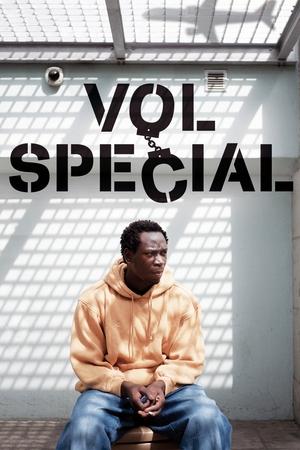
Switzerland still carries out special flights, where passengers, dressed in diapers and helmets, are chained to their seats for 40 hours at worst. They are accompanied by police officers and immigration officials. The passengers are flown to their native countries, where they haven't set foot in in up to twenty years, and where their lives might be in danger. Children, wives and work are left behind in Switzerland. Near Geneva, in Frambois prison, live 25 illegal immigrants waiting for deportation. They are offered an opportunity to say goodbye to their families and return to their native countries on a regular flight, escorted by plain-clothes police officers. If they refuse this offer, the special flight is arranged fast and unexpectedly. The stories behind the locked cells are truly heartbreaking.
The film reconstructs the memories of a divorced family with empathy yet merciless precision. An intimate family story emerges during the investigation into the reasons for the separation. Hinging on the subtle and touching testimonies of the family members, the film delves into complex interrelationships. Actors bring the family's memories alive as if they were their own. The result is a chronicle of a family drama, which the real protagonists complement and comment on – a reflection on the mechanisms and dynamics shaping and directing their family life over the years.
Klaus Rozsa, a well-known and politically active photographer, lived in Zurich for decades as a stateless individual. All of his applications for naturalisation were refused on political grounds. In 1956 he fled Hungary, growing up in Switzerland with a Jewish father who had survived Auschwitz and Dachau. Due to the extreme proximity of such a fate, the camera led him repeatedly to places where injustice was done. It was this particular quality of his camerawork that proved fateful for him.
While managers of Swiss banks in the USA ruefully apologize for their tax evasions practices and customer data is disclosed to the American authorities, Rudolf Elmer, former auditor at bank Julius Bär, is indicted for violating the Swiss banking secrecy law on the Cayman Islands. Rudolf Elmer: from insider to critic.
Bach rencontre Buxtehude
Die Schwalben des Goldrauschs
Douleur et révolte
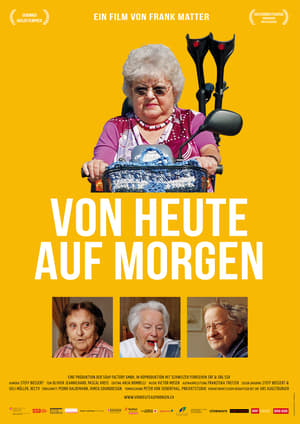
They came to Switzerland in the hope of a better life when they returned home. Thirty or forty years later, they're still here. Now in their retirement years, three couples who once came from Turkey and the Balkans are at a crossroads: to return or to stay? The question has been with these migrants all their lives in Switzerland. It's now urgent to find an answer, and the families of their children must also make a decision. Will the older generation return home? Who will look after old parents here or there?
Des bleus dans la police
L'usine
In 1906, Dr. Morgenthaler, a psychiatrist at Bern Psychiatric Hospital, started to collect and photograph the drawings, paintings and various objects designed by his patients. This collection of works by schizophrenic artists would later prove an important contribution to art history and the history of "Art Brut" or "Outsider Art": work by artists who have been deemed obsessive, mentally or psychologically ill, or otherwise "abnormal."
L'oasis des mendiants
Juntos, un retour en Argentine
L'autre versant de Gstaad
La moitié de la gloire
La nébuleuse du cœur
La conquête du temps libre
Dimitri - Clown