E. M. Cioran. Sa vie. Son oeuvre
I Was a Jewish Sex Worker is a humorous, no-holds-barred autobiographical film about the director’s former career as a sex worker and his relationship with his Jewish family. From graphic, erotic massages to a revealing interview with his grandmother, Roth tells a unique tale and explores themes of sexual wellness, connection and self-realization. Featuring guest appearances by German filmmaker Rosa von Praunheim and sexologist/performer Annie Sprinkle.
In 1972, officer Frank Serpico exposes the corruption which poisons the roots of the NYPD and becomes famous in 1973 when director Sidney Lumet tells his story in the classic film “Serpico,” starring Al Pacino.
A story of an extraordinary artist who has unintentionally signed a deal with a devil. Jiří Trnka was one of the biggest Czech artists of the 20th century and one of the founders of the puppet animation. His work demonstrated the world that communist society can provide better conditions for extraordinary artistic creations. The ideological clash between West and East didn’t leave children and their stories apart from their struggle in ideological and political positions.
Art historian and filmmaker Sundaram Tagore travels in the footsteps of Louis Kahn to discover how the famed American architect built a daringly modern and monumental parliamentary complex in war-torn Bangladesh.
When the cameras rolled, Doris Day wore a happy face, never hinting at the pain she endured in her personal life. This documentary brings viewers close to the real Doris Day through the eyes of her friends and family members and with the help of film footage, newsreels and photographs. What surfaces is a complex picture of an equally complicated woman who faced problems far more formidable than her cinematic image revealed.
A portrait of the life and career of Robert Downey Sr. (1936-2021), the visionary and fearless US filmmaker — father of actor Robert Downey Jr. — who in the sixties and seventies laid the foundations for countercultural comedy.
French pop diva Dalida candidly discusses a number of the songs that made her a phenomenal success across Europe, the Middle East and Japan in this celluloid chronicle of the beguiling singer. Dalida -- who earned 45 gold records -- talks about "J'attendrai," "Besame Mucho," "Paroles Paroles" and other hits. The video also includes previously unreleased pictures shot in exotic locales and footage spanning the singer's 30-year career.
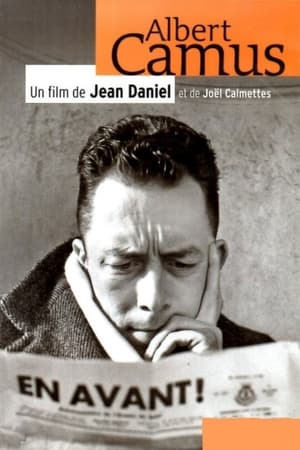
Albert Camus, la tragédie du bonheur
1976, Brian de Palma directs Carrie, the first novel by Stephen King. Since, more than 50 directors adapted the master of horror's books, in more than 80 films and series, making him now, the most adapted author still alive in the world.
Sigmund Freud is one of the most important personalities of the 20th century and has not only left his imprint on psychology, his very own field of knowledge, but also on of science and cultural and intellectual history; indeed, he has shaped the twentieth century altogether. Otto Brusatti's film takes us to Vienna, New York, Rome, Paris and London and shows not only previously unknown material about Freud's life and environment but also takes a cautious look on Freud's doctrine.
Julien Temple's second documentary profiling punk rock pioneers the Sex Pistols is an enlightening, entertaining trip back to a time when the punk movement was just discovering itself. Featuring archival footage, never-before-seen performances, rehearsals, and recording sessions as well as interviews with group members who lived to tell the tale--including the one and only John Lydon (aka Johnny Rotten).
A story about how football, cinema, photojournalism and intimidation with power can come together in a protagonist figure in Brazilian history: Luiz Carlos Barreto, better known as "Barretão". Narrated in first person, the documentary explores Barreto's view of himself, recounting his artistic and political trajectory, which blends with the history of Brazilian cinema as a whole.
Writer, journalist, explorer, filmmaker, communist militant, freedom fighter. Truths and lies. A plot twist. Politician. General De Gaulle's shadow. Overwhelmed by the weight of power. The numerous exploits of André Malraux (1901-1976).
An intimate, behind-the-scenes look at how an anonymous chef became a world-renowned cultural icon. This unflinching look at Anthony Bourdain reverberates with his presence, in his own voice and in the way he indelibly impacted the world around him.
How the inventor of the detective story became his own greatest mystery.
Armando Iannucci presents a personal argument in praise of the genius of Charles Dickens. Through the prism of the author's most autobiographical novel, David Copperfield, Armando looks beyond Dickens - the national institution - and instead explores the qualities of Dickens's work that still make him one of the best British writers. While Dickens is often celebrated for his powerful depictions of Victorian England and his role as a social reformer, this programme foregrounds the elements of his writing which make him worth reading, as much for what he tells us about ourselves in the twenty-first century as our ancestors in the nineteenth. Armando argues that Dickens's remarkable use of language and his extraordinary gift for creating characters make him a startlingly experimental and psychologically penetrating writer who demands not just to be adapted for television but to be read and read again.
Born into a family of actors, Françoise Dorléac, Catherine Deneuve's older sister, began her career at the age of 15. She shone a few years later alongside Jean-Paul Belmondo in "L'Homme de Rio". From there, a great international career is announced to the young actress. But in 1967, a few months after filming the "Demoiselles de Rochefort" with her sister, she died tragically in a road accident, at the age of 25. Nevertheless, she leaves behind an abundant career and thus continues to be present in the minds of cinephiles.
Fritz Lang, le cercle du destin - Les films allemands
In 1939, just finished the Spanish Civil War, Spanish republican photographer Francesc Boix escapes from Spain; but is captured by the Nazis in 1940 and imprisoned in the Mauthausen concentration camp, in Austria, a year later. There, he works as a prisoner in the SS Photographic Service, hiding, between 1943 and 1945, around 20,000 negatives that later will be presented as evidence during several trials conducted against Nazi war criminals after World War II.