In the Frozen Tomb of Mongolia
Résistants, Collabos - Une lutte à mort
Cruelty, psychological and sexual violence, humiliations: reality television seems to have gone mad. His debut in the early 2000s inaugurated a new era in the history of the audio-visual. Fifty years of archives trace the evolution of entertainment: how the staging of intimacy during the 80s opened new territories, how the privatization of the biggest channels has changed the relationship with the spectator. With the contribution of specialists, including philosopher Bernard Stiegler, this documentary demonstrates how emotion has made way for the exacerbation of the most destructive impulses.
L’épopée des vignerons
The story of Bob Hawke - Australia's most loved Prime Minister as he faces his greatest challenge: a battle within his own party. As he fights for his life, we discover his incredible transformation from a hard-drinking womanising trade union leader into a visionary world leader. For a man who once sacrificed his family to his job, he must now rely solely on his friendships and allegiances to defeat his challenger and remain in power.
In 150 years, twice marked by total destruction —a terrible earthquake in 1923 and incendiary bombings in 1945— followed by a spectacular rebirth, Tokyo, the old city of Edo, has become the largest and most futuristic capital in the world in a transformation process fueled by the exceptional resilience of its inhabitants, and nourished by a unique phenomenon of cultural hybridization.
Roland Emmerich himself and many of his companions provide insights into his life. With films such as Independence Day, 2012, and The Day After Tomorrow, he probably became the most successful director of disaster movies. But there were also failures.
Part architectural genius, part kitsch fairytale, Neuschwanstein Castle is closely linked to the tragic fate of Ludwig II of Bavaria (1845-1886). The "Mad King" poured his heart and soul into this unique construction which looks back nostalgically to the Middle Ages. A focus on the history of a building filled with dreams and legends which has become an icon of Germany around the world.
In 1975, as America faced social and political upheaval, filmmakers turned chaos into art.
A keen chronicle of the unlikely rise to power of Adolf Hitler (1889-1945) and a dissection of the Third Reich (1933-1945), but also an analysis of mass psychology and how the desperate crowd can be deceived and shepherded to the slaughterhouse.
The Conference on Security and Cooperation in Europe (CSCE) was the starting point for the slow but sure collapse of communist authoritarian rule in Eastern Europe. The Helsinki Effect offers new perspectives on the events of the Cold War. The film tells the story of the CSCE process, which had a major impact on the end of the Cold War, and sheds light on secret top-level discussions behind closed doors, through voice simulations using artificial intelligence.
The story of Nisar Ahmed Khan, told through his children and the people he served, a spiritual guide whose followers still visit his tomb on his birth and death anniversaries. And alongside how his family spends a few days at the village keeping his traditions alive.
When the revolution in Nicaragua won its victory nearly 40 years ago, the world began to dream. A young generation was taking the reins in a country of grand utopias. From West Germany alone, 15,000 “brigadists” travelled to help rebuild the war-torn country: liberals, greens, unionists, social democrats, leftists and church representatives harvested coffee and cotton, built schools, kindergartens and hospital wards. No movement has mobilised so many people. What became of the hopes and dreams of the revolutionaries and their supporters?
Oskar Kokoschka : Portraits européens
Great filmmakers claim the artistic influence of French director Henri-Georges Clouzot (1907-1977), a master of suspense, with a unique vision of the world, who knew how to offer both great shows and subtle studies of characters. Beyond the myth of the tyrannical director, a contrasting portrait of a visionary, an agitator, an artist against the system.
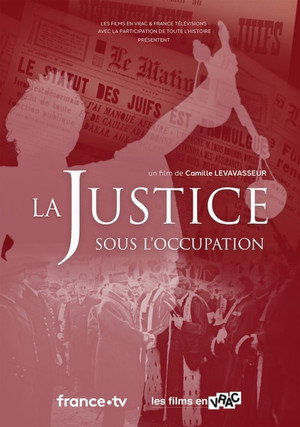
La Justice sous l'Occupation
A documentary analyzing the furore which so-called "video nasties" caused in Britain during the 1980s.
The Life and Times of David Lloyd George charts the life of the controversial Liberal politician with Philip Madoc in the titular role. The title theme, Chi Mai, was by Ennio Morricone
The last days of Marco Pannella’s life - indomitable and disruptive protagonist over 60 years of Italian political life - shown through never before seen repertory materials, as well as unpublished interviews and illustrious interventions. A deserved portrait, dedicated to one of the most independent figures of the 900 Italian.
She's been around for so many decades but hasn't aged a day. She's had more than 180 different jobs; she's been president, she's been to the moon, and she's done all the things that women aspire to do. She has a massive closet, and thousands of different outfits. Barbie is way more than just a 12-inches long piece of plastic, she is way more than a toy. The legendary blond bombshell has grown into a phenomenon and a children's sensation. Wildly revolutionary, Barbie broke barriers, shattered glass ceilings, and has inspired countless dreams, wonder and imagination, with her signature color: Pink. The history of the doll is a testament to its enduring appeal and impact. Things have changed for her the same way things changed for women. Whatever we may think about Barbie - love or loathe her - it is impossible to ignore her worldwide impact. Let's step into the beautiful world of Barbie and take a look at her cultural revolution through the decades.