"The Last Dragon" is a nature mockumentary about a British scientific team that attempts to understand the unique incredible beasts that have fascinated people for ages. CGI is used to create the dragons.
From the evacuation of the reserves, threatened by the flooding of the Seine in June 2016, to the first transfers of works to the Louvre's conservation center in Liévin, a look back at a spectacular rescue operation.
Some of them move. Others make noise. One weighs in at 700 pounds. Collectively, they represent the future of contemporary craft. Go behind the scenes of the "40 under 40: Craft Futures" exhibition, featuring traditional and non-traditional works of decorative art created by the top 40 American craft artists under the age of 40. Observe this wildly creative and diverse exhibition, assembled for the 40th anniversary of the Smithsonian American Art Museum's Renwick Gallery, and witness the challenges and rewards of bringing together 40 unique artists at the top of their craft.
Originally produced in 1997 on the threshold of the Third Millennium of the Christian Era, and in celebration of the Jubilee of the Year of Our Lord 2000, The Vatican Museums was the culmination of three years of research and filming, the collaboration of thirty-two scholars and historians from around the world, a crew of forty directors of photography, operators, and lighting technicians, state-of-the-art digital cinematography, lighting, animation, and computerized editing, and the work of a famous composer with original performances by master musicians. Now available on DVD for the first time, this historic three-disc collection features seven hours of magnificent documentary film that illuminates and chronicles the great journey of the human spirit. Here then is the world's most spectacular and sacred repository of art, history, and faith.
Marcia wakes up one day with the unnerving feeling that her husband has disappeared. She decides to take matters into her own hands to find out his whereabouts.
While struggling to finish a painting, a young girl finds herself lost in the world of perfection and objectivity.
Writer H. G. Wells pursues Jack the Ripper to modern day San Francisco after the infamous serial killer steals his time machine to escape the 19th century.
London's Dupayne Museum is in danger of closing since one of the trustees feels that the money expended on preserving the past could be better spent addressing the problems of living people. One of the museum's collections concerns murders committed between the world wars. When a killing that reflects one of the cases on display occurs, history seems to be repeating itself.
MUSEo
Annie is stuck in a long-term relationship with Duncan – an obsessive fan of obscure rocker Tucker Crowe. When the acoustic demo of Tucker's hit record from 25 years ago surfaces, its discovery leads to a life-changing encounter with the elusive rocker himself.
A man ventures out into the streets of a pandemic-ridden London.
Documentary examining the work of sculptor Richard Lippold, particular his sculpture of the sun at the Metropolitan Museum of Art.
The earliest surviving motion-picture film, and believed to be one of the very first moving images ever created, was shot by Louis Aimé Augustin Le Prince using the LPCCP Type-1 MkII single-lens camera. It was taken on paper-based photographic film in the garden of Oakwood Grange, the Whitley family house in Roundhay, Leeds, West Riding of Yorkshire (UK), on 14 October 1888. The film shows Adolphe Le Prince (Le Prince’s son), Mrs. Sarah Whitley (Le Prince’s mother-in-law), Joseph Whitley, and Miss Harriet Hartley walking around in circles, laughing to themselves, and staying within the area framed by the camera. Roundhay Garden Scene is often associated with a recording speed of around 12 frames per second and runs for about 2 to 3 seconds.
A ghost and a French marquis wander through the Winter Palace in St Petersburg, encountering scenes from many different periods of its history.
In the haunting stillness of post-Soviet suburbia, a lone man walks with purpose — toward the river. With each heavy step across the gray, lifeless field, he carries not only his own weight, but the burdens of an entire generation. He does not speak. He does not turn back. We do not know his name. But we know where he’s going. The River awaits. A meditation on isolation, purpose, and the absurdity of existence, "Идущий к реке" captures the Slavic soul in a single low-res frame. What started as a simple clip from a local Russian TV segment became a viral icon of stoicism, despair, and meme-worthy introspection.
Escaping from China with a microfilm of the formula for the mysterious "Lotus X", Lord Southmere, a Queen's Messenger, is chased by a group of Chinese spies.
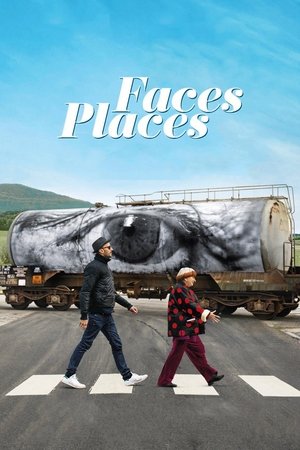
Director Agnès Varda and photographer/muralist JR journey through rural France and form an unlikely friendship.
The Kabul National Museum, once known as the "face of Afghanistan," was destroyed in 1993. We filmed the most important cultural treasures of the still-intact museum in 1988: ancient Greco-Roman art and antiquitied of Hellenistic civilization, as well as Buddhist sculpture that was said to have mythology--the art of Gandhara, Bamiyan, and Shotorak among them. After the fall of the Democratic Republic of Afghanistan in 1992, some seventy percent of the contents of the museum was destroyed, stolen, or smuggled overseas to Japan and other countries. The movement to return these items is also touched upon. The footage in this video represents that only film documentation of the Kabul Museum ever made.
A man has an eerie encounter with a mummy in a museum.
Based on a true story, details the daring 1964 theft of the J.P. Morgan jewel collection from New York's American Museum of Natural History. Called the "Greatest Jewel Heist of the 20th Century," the robbers took 22 precious gems, including the Star of India, the 100.32-carat de Long Ruby and the 16.25-carat Eagle Diamond, stones so famous they would be impossible to sell.