When Werner Herzog was still a child, his father was beaten to death before his eyes. His mother was overwhelmed with his upbringing and thereupon shipped him off to one of the toughest youth welfare institutions in Freistatt. This was followed by a career as a bouncer in the city's most notorious music club and an attempt to start a family. Today, the 77-year-old from Bielefeld lives with his dog Lucky in a lonely house in the country. Despite adverse living conditions, he has survived in his own unique and inimitable way.
Commentator-comic Bill Maher plays devil's advocate with religion as he talks to believers about their faith. Traveling around the world, Maher examines the tenets of Christianity, Judaism and Islam and raises questions about homosexuality, proof of Christ's existence, Jewish Sabbath laws, violent Muslim extremists.
The girl holding the world’s record for selling Girl Scout Cookies shows how effective sales techniques and setting of personal goals lead to success.
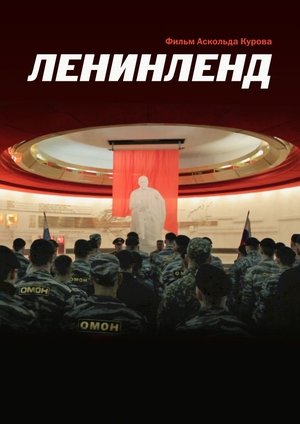
At the peak of Perestroika, in 1987, in the village of Gorki, where Lenin spent his last years, after a long construction, the last and most grandiose museum of the Leader was opened. Soon after the opening, the ideology changed, and the flow of pilgrims gradually dried up. Despite this, the museum still works and the management is looking for ways to attract visitors. Faithful to the Lenin keepers of the museum as they can resist the onset of commercialization. The film tells about the modern life of this amazing museum-reserve and its employees.
The essence of progress in civilization has always been handiwork. In traditional Chinese civilization, the emperor was supreme. Vested with the authority to enjoy the best of handiwork, all crafts used for residence, clothing, food, and travel were the most refined and splendid.
A poignant and humorous film telling the life story of the hugely popular author of the discworld series of books, in his own words.
The Kabul National Museum, once known as the "face of Afghanistan," was destroyed in 1993. We filmed the most important cultural treasures of the still-intact museum in 1988: ancient Greco-Roman art and antiquitied of Hellenistic civilization, as well as Buddhist sculpture that was said to have mythology--the art of Gandhara, Bamiyan, and Shotorak among them. After the fall of the Democratic Republic of Afghanistan in 1992, some seventy percent of the contents of the museum was destroyed, stolen, or smuggled overseas to Japan and other countries. The movement to return these items is also touched upon. The footage in this video represents that only film documentation of the Kabul Museum ever made.
Sámi artefacts from the Finnish National Museum are returning home to Sápmi, while the holy drums of the Sámi people are still imprisoned in the basements of museums across Europe. The returning objects symbolise the dignity, identity, history, connection to ancestors and a whole world view that was taken from the Sámi people. Director Suvi West takes the viewer behind the scenes of the museum world to reflect on the spirit of the objects, the inequality of cultures and the colonialist burden of museums.
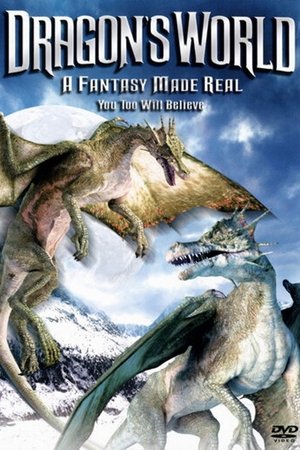
"The Last Dragon" is a nature mockumentary about a British scientific team that attempts to understand the unique incredible beasts that have fascinated people for ages. CGI is used to create the dragons.
What are one week films? They're an assignment we do our first week back at CalArts, designed to dust off cobwebs by throwing us straight into the deep end. Our class theme was "square," and we had a lot of fun playing around with compositions inspired by East Asian graphic design.
Told in his own words using interviews spanning from the 1980s through now, father and tennis coach Richard Williams retraces his family's journey from the courts in Compton to the grass at Wimbledon, defying every custom of the lily-white tennis establishment and fighting back against a system of oppression to raise two of the greatest champions in history - Venus and Serena Williams.
Born June 8, 1964, Frank Matter films four "twins", born the same day as him, but in other latitudes. Interweaving their life stories with rich archival material, the filmmaker links these Parallel Lives with elements from his own biography, to compose a fascinating fresco where intimate trajectories are part of the advent of the global village.
Tváře času
As part of a high-tech forensic probe into the demise of Egyptian Pharaoh Tutankhamun, scientists use X-rays and CT scans as they attempt to reach a conclusion about just how this famed king died. In addition, they explore the mysterious curse on explorers linked to Tut's tomb excavation.
A manufactured memory.
How the art in the Detroit Institute of Art connects to life's experiences and the neighborhood.
Portrait of the Canadian artist duo Cozic, composed of Monic Brassard (1944) and Yvon Cozic (1942). United in life and creation, the couple works with industrial materials in vibrant colors to create ecological and playful artworks. From the carefree hippie years of the 1960s to major public art commissions, their work reflects the evolution of our relationship with nature and the industrial world. Today, from their remarkable estate in Sainte-Anne-de-la-Rochelle in the Eastern Townships, the duo is preparing for their major retrospective at the Musée national des beaux-arts de Québec.
The poignant journey of a transgender actor unfolds, as twenty-three years after last performing on stage as a man, she makes her return in the iconic role of Aunt Eller in an LGBTQ+ production of the Rogers and Hammerstein classic Oklahoma! at the Oregon Shakespeare Festival.
Honour West and Joan Camuglia-May share their experiences in this upbeat roller-skating documentary.
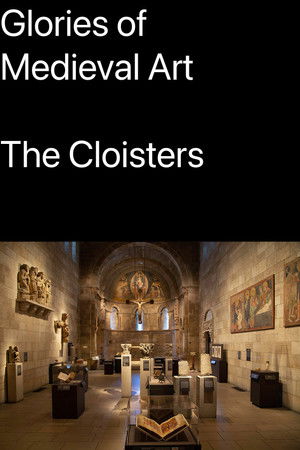
Philippe de Montebello, Director of The Metropolitan Museum of Art from 1977 to 2008, guides viewers through The Cloisters, pointing out Romanesque and Gothic architecture and artwork, beautiful tapestries, and the diverse species in the gardens. He outlines the history of the building and it's many influences and highlights significant works of art in the collection. It was produced in 1989 by The Metropolitan Museum of Art's Office of Film and Television.