"Come In" explores how Morse history is entangled with the history of the Spiritualist church. The Spiritualist Church was founded by the Fox sisters in 1850. They claimed that they were mediums who could communicate with the dead and they justified this ability by citing the new ability, through Morse, to speak with someone far away almost instantaneously. After fifty years of practicing Spiritualism, the sisters declared the religion a hoax, and many years later Morse code officially lost its role in the commercial realm. As Spiritualists continue to send messages to the dead in spite of the sisters’ statements, and Morse operators transmit messages into the ether with hope, Johnson asks: How do communication networks and technologies affect our calls and responses and make visible our desire for reciprocity?
The documentary about the Library is C-SPAN’s original feature on America’s iconic government institutions and buildings. This in-depth examination of the Library takes an intimate look at the oldest U.S. federal cultural institution, providing a behind-the-scenes glimpse into the history of the world’s largest library and its vast collection of books, photographs, maps and manuscripts. The documentary also examines how the Library is using science and technology to protect the nearly 150 million items in its collections. The Library of Congress is the only library in the world with its own preservation-science laboratory. Founded in 1800, the Library of Congress is the nation’s oldest federal cultural institution. Many of the Library’s rich resources can be accessed through its website at www.loc.gov.
In the mountains of Chiapas, a rebel experiment in autonomy continues to thrive – thirty years after its declaration of war against the Mexican state. ¡Ya Basta! 30 Years of Zapatista Autonomy, a Modern Insurgent documentary, explores the legacy and future of the EZLN, reflecting on how a masked, rural rebellion reshaped Mexico’s political landscape and inspired activists across the globe. What does revolution look like when it refuses to seize state power? And what can the world learn from a community that continues to build its own system from the ground up?
This short documentary produced by the University of Oregon Multimedia Journalism graduate program explores memories of Portland's Japantown – Nihonmachi – and the thriving Japanese American community in Oregon prior to World War II. The film features Chisao Hata, an artist, teacher and activist, and Jean Matsumoto, who was incarcerated at the Portland Assembly Center and in the Minidoka concentration camp as a child.
Blending drama with the explanations of passionate historians and specialists, this enriched historical reconstruction traces 60 years in the life a man who transformed the Middle Ages and laid the foundation of modern Europe, William The Conqueror.
However impressive the site is, however bossy the guides are, the visitors of the Musée Napoléon listen only absent-mindedly. Does this young lady really care about the tragic destiny of emperor Napoleon or Europe's changing face or isn't she more interested in her won reflection in a window case? And isn't the camera operator more prone to film the cornet wimples of visiting nuns than the fossilized remains of Napoleon's fallen grandeur...?
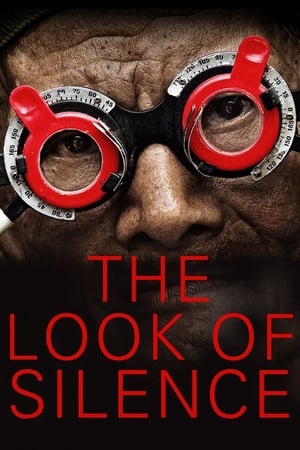
A film about convicted drug smuggler Myuran Sukumaran, who became an accomplished artist before he was executed by firing squad in Indonesia in April 2015.
The Lamalera village is located in a small volcanic Island, a poor, barren land, and they catch whales to eat. It is the only way for them to survive. The harpooners are called lamafa in the local language. They are the village's pride because they take the whole responsibility for the very dangerous hunting. In 2018. a tragedy struck the village. Benjamin, a young lamafa, was killed during a spear hunting. His father, Ignatius, was devastated, and Benjamin's brother, Demo, was shocked and unable to go hunting. They blame accidents at sea on a victim's family discord in Lamalera. Ignatius, the master boat-builder, decided to build a new traditional whaleboat to reunite the family bond. The whaling boat is 12 meters long, made entirely of hand-crafted wood, not using a single nail, and is considered an intangible cultural asset.
The film focuses on the exciting life journey of Swiss writer Katharina Zimmermann. She follows her husband on a mission to the jungle in Indonesia where she raises their four children and five foster children and lives through the military coup. Back in Switzerland Katharina discovers her voice and finds her path. Now, at eighty, she is writing her life story. Yet suddenly she faces another battle because her publisher is threatening to let her go.
Documentary about war photographer James Nachtwey, considered by many the greatest war photographer ever.
Heinz Stücke left Germany in 1962 with a bike, a tent and a goal: to see everything in the world. Now for the first time in 50 years, he's come home.
A look at Britain's beloved canal network via a fact-filled cruise along the first superhighways of the Industrial Revolution. In the age before mechanisation, a frenzy of canal-building saw a new army of workers carve out the British landscape, digging out hundreds of miles of waterways using picks, shovels and muscle.
In the 1970s, the Spanish dictatorship opened up to the outside world and allowed a group of Danes to build Tivoli World, the first amusement park on the Costa del Sol, a copy of Tivoli Garden in Copenhagen.
Well known for its exploration of seduction and revenge, the “Dangerous Liaisons” by Choderlos de Laclos caused a scandal from its first publication in 1782. Despite – or because of the scandal – the book was a top-seller. Since then, it stood the test of time. Combining eras, continents and people, the novel is adapted around the world. Marvelous tool for reflection on the female condition, social satire announcing the Revolution, remarkable work on the conflicting nature of love but also of the gender war, consecration of the power of the words, a libertine manual… “Dangerous Liaisons” is all of these at once.
Explore the tragic truth about the massacre at the 1972 Olympic Games in Germany. Through interviews with key people such as the families of slain Olympians, German investigators and an anonymous perpetrator.
Saint Patrick, esclave et protecteur de l'Irlande
Filmed in IMAX, a young Mayan boy who lives close to the ruins becomes acquainted with an archaeologist (Guerra) and asks her to tell him about his ancestors. The crew travelled to over 15 locations in Mexico and Guatemala, including Tulum and Chichén Itzá.
2010 documentary film on the Armenian Genocide by the Young Turk government of the Ottoman Empire during World War I. It is based on eyewitness reports by European and American personnel stationed in the Near East at the time, Armenian survivors and other contemporary witnesses which are recited by modern German actors.
Bandera, Texas (THE COWBOY CAPITAL OF THE WORLD) is a captivating documentary that explores the vibrant history, unique culture, and enduring values of the small town of Bandera, Texas.
How do you find your place in an ableist world as a person with a disability? Disabled Hugo Schmidt talks to the almost 90 year old Franz-Josef Sauer, who was left with a walking impairment by a tuberculosis infection in his childhood. In the 1990s Sauer received the German Federal Cross of Merit for his achievements in the disabled community. As a public servant in Münster and Düsseldorf he worked on several projects which still benefit his disabled peers. Sauer and Schmidt discover that, although they were born almost 70 years apart, their paths in life are not that different from each other.