Jo; or The Act of Riding a Bike is Zefier's third film.
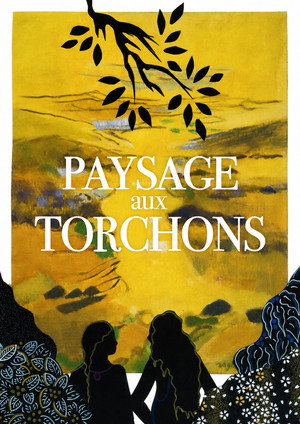
A man entranced by his dreams and imagination is lovestruck with a French woman and feels he can show her his world.
The first part of the documentary about the work of the Czech painter Mikoláš Alš called "The Song of Life", which focuses on the part of his work that draws its themes from life in the village.
The second part of the documentary about the work of the Czech painter Mikoláš Alš called "Glorious Homeland", which focuses on the part of his work drawing on Czech history.
A picture about the fine art of prehistoric times, the remains of which have been found in various places on the European continent.
One public housing flat in Moscow stood out above all others: the home of George Costakis, the foremost collector of early 20th century Russian avant-garde art. Its walls were crowded with banned and forgotten works by artists such as Malevich, Tatlin, Kandinsky, Chagall, Lissitzky, Rodchenko, and Kliun; public figures such as Edward Kennedy, Stravinsky, and Alfred Barr visited. Barrie Gavin met the collector in 1982 at his home in Athens. Costakis, a Greek born in Russia, passionately shares his story and those of the great Russian avant-garde artists. Their works are his legacy – without him, they would not have survived the political upheavals in Russia.
An American art collector, living in France in the 1870s, who loses his fortune in a stock market crash devises a scheme to get back his wealth through insurance fraud with the added consequence of potentially killing hundreds of people. His scheme is to place his art collection aboard a ship, insure the collection far beyond its value, and place a barrel of dynamite with a clock-piece timed to go off when the ship is at sea.
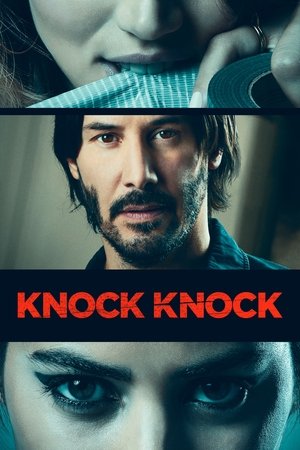
A veteran high school teacher befriends a younger art teacher, who is having an affair with one of her 15-year-old students. However, her intentions with this new "friend" also go well beyond platonic friendship.
"Meat Joy is an erotic rite — excessive, indulgent, a celebration of flesh as material: raw fish, chicken, sausages, wet paint, transparent plastic, ropes, brushes, paper scrap. Its propulsion is towards the ecstatic — shifting and turning among tenderness, wildness, precision, abandon; qualities that could at any moment be sensual, comic, joyous, repellent. Physical equivalences are enacted as a psychic imagistic stream, in which the layered elements mesh and gain intensity by the energy complement of the audience. The original performances became notorious and introduced a vision of the 'sacred erotic.' This video was converted from original film footage of three 1964 performances of Meat Joy at its first staged performance at the Festival de la Libre Expression, Paris, Dennison Hall, London, and Judson Church, New York City."
The film Cher Zoscar is a correspondence between the desire to create and life swallowing you up. Something like that.
Dona Eulália
Valarie sets up a photo shoot.
In 2003, eight Rhode Islanders created a secret apartment inside a busy mall and lived there for four years, filming everything along the way. Far more than a prank, the secret apartment became a deeply meaningful place for all involved.
A pre-internet mash-up that mixes “Peanuts” and David Lynch’s “Blue Velvet.”
Selbstportrait 1
The story focuses on high school girl Nagisa Yukiai who lives in a seaside town. She has believed her grandmother's story that spirits dwell in words and they are called "kotodama" (word spirit). One day, she strays into a mini FM station that has not been used for years. As an impulse of the moment, she tries to talk like a DJ using the facility. But her voice accidentally broadcasted reaches someone she has never expected.
Between two Thanksgivings, Hannah's husband falls in love with her sister Lee, while her hypochondriac ex-husband rekindles his relationship with her sister Holly.
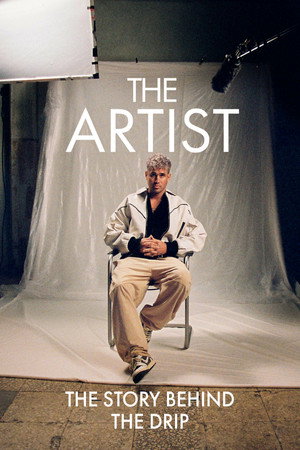
A model and a photographer, after hours of trying, strive for the perfect shot but face challenges as their high aesthetic standards get in the way.
This MGM Passing Parade series short takes a look at changing definitions of art in the United States.
Jim Moir (aka Vic Reeves) explores Video Art, revealing how different generations ‘hacked’ the tools of television to pioneer new ways of creating art that can be beautiful, bewildering and wildly experimental.