Since the enactment of the Anti-Boryokudan Act and Yakuza exclusion ordinances, the number of Yakuza members reduced to less than 60,000. In the past 3 years, about 20,000 members have left from Yakuza organizations. However, just numbers can’t tell you the reality. What are they thinking, how are they living now? The camera zooms in on the Yakuza world. Are there basic human rights for them?
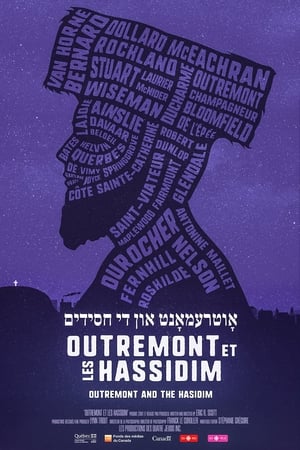
OUTREMONT AND THE HASIDIM reveals the challenges of accommodating the “Hasidim” – or ultra-Orthodox Jews – in the affluent Montréal borough of Outremont.Some 7,000 Hasidim live in or near this choice neighbourhood of Québec’s Francophone elite. After settling there more than 70 years ago, the Hasidim are a rapidly growing minority group which today represents about 23% of Outremont’s population.Thanks to unprecedented access to this self-isolated community, the film lifts the veil on its practices, traditions, music and life as they had never before been seen on Canadian television, without ignoring the community’s expectations, fears. and hopes.
Heleno has a disease unknown to most of the population. In the course of their suffocating routine, situations arise that defy the usual in society. But is it really Heleno's illness that prevents him from adapting to the world?
Between repetitive actions such as stocking shelves and scanning groceries, anonymous Brazilian supermarket employees reflect frankly on their lives, society, and the role they dream of playing in it.
Amidst the paralysis of downtown São Paulo, the film follows the journey of 5 characters to the same place - a common meeting point. The voices and experiences of each reveal something greater: a new perspective on life, movement and art.
A feature-length documentary about our complex relationship with manufactured objects and, by extension, the people who design them.
A film about the close relationship between two brothers. Markus (10) and Lukas (7) live in an old, yellow townhouse in the middle of Oslo. The river runs close to their home. A paradise in the heart of a big city. Here the brothers grow up with their dreams and longings for the future.
The Aït Atta tribe of the High Atlas mountain range in Morocco preserves their ancestral right of access to the agdal, a communal land management system that dates back hundreds of years. The film follows Ben Youssef family’s arduous transhumance journey from the desert-like landscape of Nkob to the green pastures of Agdal Igourdane, throughout uneven terrain of steep climbs and descents of these High Atlas mountains. They migrate each summer with their 800 goats, donkeys, mules, camels and dogs, as they embark on this formidable journey on foot.
Essie Coffey gives the children lessons on Aboriginal culture. She speaks of the importance of teaching these kids about their traditions. Aboriginal kids are forgetting about their Aboriginal heritage because they are being taught white culture instead.
An exploration —manipulated and staged— of life in Las Hurdes, in the province of Cáceres, in Extremadura, Spain, as it was in 1932. Insalubrity, misery and lack of opportunities provoke the emigration of young people and the solitude of those who remain in the desolation of one of the poorest and least developed Spanish regions at that time.
In this hour-long documentary, Dr Janina Ramirez tells the incredible story of a book hidden for centuries in the shadows of history, the first book ever written in English by a woman, Julian of Norwich, in 1373. Revelations of Divine Love dared to present an alternative vision of man's relationship with God, a theology fundamentally at odds with the church of Julian's time, and for 500 years the book was suppressed. It re-emerged in the 20th century as an iconic text for the women's movement and was acknowledged as a literary masterpiece.
Investigates the politics of cinematic shot design, and how this meta-level of filmmaking intersects with the twin epidemics of sexual abuse/assault and employment discrimination against women, with over 80 movie clips from 1896 - 2020.
Béatrice Dalle, à prendre ou à laisser
For millennia, Native Americans successfully stewarded and shaped their landscapes, but centuries of colonization have disrupted their ability to maintain their traditional land management practices. From deserts, coastlines, forests, mountains, and prairies, Native communities across the US are restoring their ancient relationships with the land. As the climate crisis escalates these time-tested practices of North America's original inhabitants are becoming increasingly essential in a rapidly changing world.
Eco-Terrorist: The Battle for Our Planet follows the most wanted environmentalist today, Captain Paul Watson. In this unique and groundbreaking film, Brown takes a deeper look into what really goes on behind the scenes in the deep waters of our world. More pranks, the glory of successful missions, and fiercer encounters with some of the most infamous and illegal marine hunters, while stopping at nothing to protect wildlife on a global scale. The film takes the audience right to the frontlines of the modern day environmental movement via those who started it.
Good Enough Parents: Liebe, Wut & Geschwisterbande - Warum so viel Streit?
A young woman from Barcelona's La Mina neighborhood inquires into the past of the Roma people in this documentary about the persecution of the Roma people.
Documentary Film maker, Mark Brown, attempts to discover the damaging effect the over-spilling immigrant population has on the coastal city of Calais, France.
A documentary that brings together interviews with 20 activists who address the issue of intersectional feminism and patriarchy in Portugal.
As their population dwindles, their businesses are all about gone, this town in rural Monterey, Indiana fights to stay alive. An in-depth look into small town life, “Welcome to Monterey” follows a town’s journey to their 20th annual Labor Day Festival, capturing the people’s passions and doubt about whether this town has a future in today’s world.