The Bonzo Dog Band freak out at the farm and strange sounds abound.
Club owners Angry and Cabaret have to scrounge up the money for rent fast, or risk having their business shut down.
A short film for the song 'แบตสำรอง' by BOY PEACEMAKER.
In this Broadway Brevities short, a stunt double is hit on the head and imagines himself in a series of movie scenes with doubles for various stars.
In a wordless story with semi-surreal stage sets, a poor black man ventures from his ramshackle rural home to the big city, where a dancing girl in a dive two-times him. He returns to his home and wife's arms.
Carlos Gardel and guitars performing "Añoranzas", vals written and composed by José María Aguilar.
Documentary musical essay on the topic of "Grenzwert". It was created in 72 hours.
Whilst doing their last concert before the Christmas Holidays, Busted find that their guitars have all disappeared mysteriously. With their only clue to there where-abouts being a mysterious note signed by 'Sinister Santa' the band take on London in hopes of finding their Guitars but learn the true meaning of Christmas along the way.
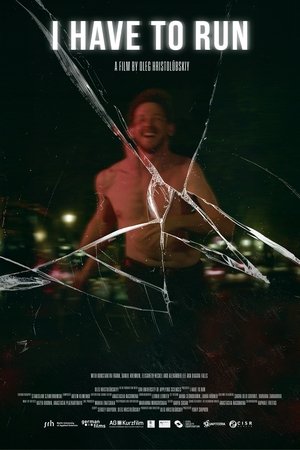
A film about peace, love and war. Dedicated to the 100th anniversary of the end of the Civil War in Russia. The film takes place at the end of the summer of 1917, when Russia and the whole world were at a crossroads between two eras. None of the people could even imagine how much his life would change in the very near future. In a strange way, the atmosphere of the film echoes our current reality and what is happening in Russia today. According to the form of visualization, the film belongs to experimental mockumentary cinema. To give greater authenticity to what is happening on the screen, the shooting was carried out on black-and-white negatives of 16 and 35 mm, hand-operated cameras were used and the material was developed in manual spiral tanks. The documentary chronicle of the Kolchak army of 1919 and the White army in the Far East of 1922 is embedded in the finale of the film.
Santa's workers demand to be entertained and thus put on a musical show for themselves.
A Salesman tries to locate a notorious Mexican bandit.
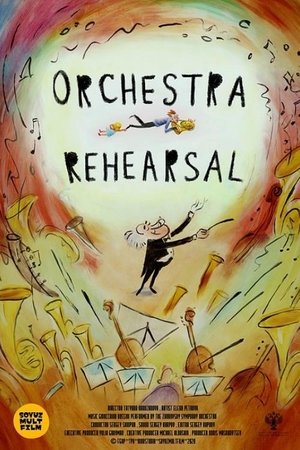
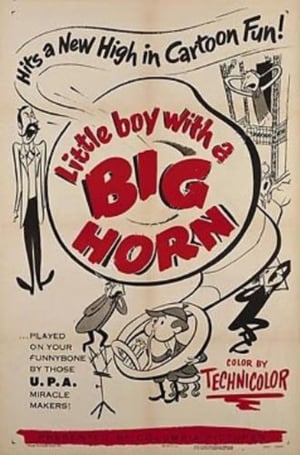
The Great Maestro gets to conduct more than he can compose himself to. A Puppetoon animated short film.
During the Great Depression, vaudeville has fallen on hard times. The Palace Theater may have to close its doors, unless the proprietor, William Jenkins, does something different, so he allows his 12-year-old son to put on a kiddie show that packs the house.
An engine moves from the roundhouse to a track where it couples with several passenger cars. At 2:10 in the afternoon, it starts a trip out of the station through the countryside to its destination. The film consists of a montage of shots, some close up, of the engine and its gears and wheels. With the accompanying ambient sounds and an orchestral score, the emphasis is on the engine's power and speed. Parallel lines of multiple tracks, telephone wires, and trees confirm a careful composition.
At the zoo, the animals have all gone to play baseball. Animals fill the stands as they watch the antics that can only come about from exotic animals who play baseball.
The Fantasia-inspired session features live performances of Life Is Yours, 2001 (Summer Sky), 2AM & Looking High from FOALS' 2022 album 'Life Is Yours'.
This short movie takes us through beautiful landscapes and oppressive spaces. A dream sequence that leads to liberation, on the border between imagination and reality. We travel with a boy who matures. He dreams, he dances, he is the conductor. The only.
Harry Fox performs his vaudeville act.
The Gay Parisian is an American short film produced in 1941 by Warner Bros. featuring the Ballet Russe de Monte-Carlo and directed by Jean Negulesco. The film is a screen adaptation, in Technicolor, of the 1938 ballet Gaîté Parisienne, choreographed by Léonide Massine to music by Jacques Offenbach. It was nominated for an Academy Award at the 14th Academy Awards for Best Short Subject (Two-Reel).
The first of a series of six two-reel "Musical Parade" shorts produced in Technicolor for the Paramount 1943-44 production season. The series would continue into 1948, and then were reissued in the early 50's. Songs included "All the Way" and "At the Mardi Gras."