At the Seisho Music Academy, the 99th Graduating Class is rehearsing for the annual production of the theatrical play, Starlight. Behind the scenes, however, an underground "Revue Starlight" audition, orchestrated by a talking giraffe, pits the students against each other in stage battles in order to shine as the top star. Karen Aijō, upon being reunited with her childhood friend Hikari Kagura, comes across these auditions and battles to become the top star alongside Hikari.
Theatre 1 (Observational Film Series #3) is a feature length documentary, which closely depicts the world of Oriza Hirata, Japan's leading playwright and director, and his theatrical company, Seinendan. By depicting them, the film leads the audience to revisit fundamental but timely questions: What is theatre? Why do human beings act?
Oriza Hirata is Japan's leading playwright and director, who runs his own theatrical company, Seinendan. Theatre 2 (Observational Film Series #4) examines the dynamic relationship between theatre and the society through depicting Hirata's activities. In order for his art and his not-so-commercial company to survive this highly capitalistic modern society, what kind of strategy does Hirata have and practice?
Luca Cupiello lives with the wife Concetta, the son Tommasino, and a brother, Pasquale. The son is wild, living by gimmicks and stealing from his uncle; the daughter Ninuccia does not get along with her husband Nicolino and plans to run away with her lover Vittorio; the wife tries to hide her family's troubles from her husband. Luca, who silently suffers the family situation, takes refuge in setting up the Nativity scene.
A filmed adaptation of Rose Leiman Goldemberg’s play, based on Sylvia Plath’s intense correspondence with her mother Aurelia, from the time the poet was in university until her suicide. Delphine Seyrig and her niece Coralie Seyrig recite Sylvia and Aurelia’s letters to the audience directly.
Television recording of the theatre play 'Gebroed' by the Werkteater from 1983. The play, written and performed by Frank and René Groothof, is about their childhood together, their relationship to each other and to their parents, their conflicts, but also their shared love for theater and music.
Doctor Faustus is Christopher Marlowe's most renowned and controversial work. Famous for being the first dramatised version of the Faustus tale, the play depicts the sinister aftermath of Faustus's decision to sell his soul to the Devil's henchman in exchange for power and knowledge. In the first-ever staging of this menacing drama at the Globe Theatre, Matthew Dunster's production features Paul Hilton as the arrogant, power-hungry Faustus and Arthur Darvill as the sardonic Mephistopheles, and includes several impressive magical stunts along the way.
Ztracený prsten
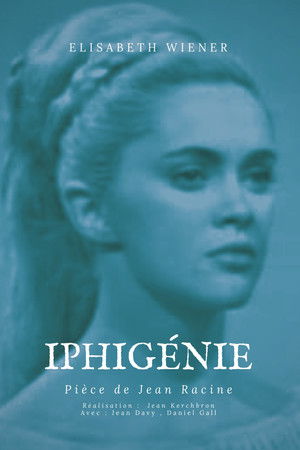
On the shores of Aulis, the Greeks prepare to attack Troy. But their ships are unable to set sail because the gods are holding back the winds necessary for departure. Agamemnon consults the oracle. The solution is tragic. To appease the goddess Artemis, whom he had offended, he must sacrifice his own daughter.
Amol, a child, is confined to his adoptive uncle's home by an incurable disease. He stands in the courtyard and talks to passers-by and inquires about the places they go to. The construction of a new post office nearby prompts the imaginative Amol to fantasise about receiving a letter from the King or being his postman.
Boj se stínem
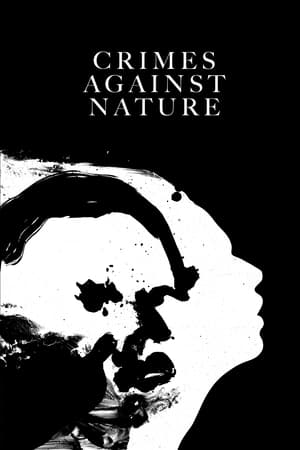
Described in the 70’s as "A Chorus Line for gay people," Crimes Against Nature remains vital today as a communal disclosure of roles that gay people adopt in order to survive in a world that devalues homosexual feelings. It features individual actors delivering revealing monologues, during which the other members of the collective play background roles (parents, schoolmates, etc.). One by one, the actors detail the ways in which they have buried their true selves in order to survive and be accepted in the world: repression, drug use, shyness, being agreeable, putting experiences into "little boxes," acting "butch," and so on.
Le Jeu de la vérité 2
O Alence a káčeti
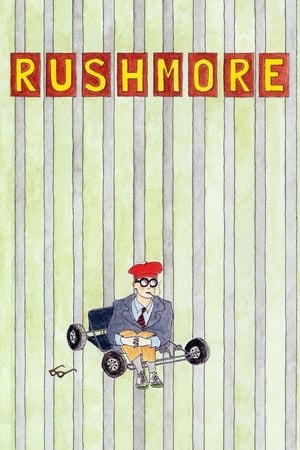
When a beautiful first-grade teacher arrives at a prep school, she soon attracts the attention of an ambitious teenager named Max, who quickly falls in love with her. Max turns to the father of two of his schoolmates for advice on how to woo the teacher. However, the situation soon gets complicated when Max's new friend becomes involved with her, setting the two pals against one another in a war for her attention.
Stage actress Valerie Stanton is locked in a bitter feud with her producer and ex Gordon Dunning. When he attempts to blackmail her into remaining under contract with his company, Stanton, in a fit of passion, clubs Dunning with a statuette, killing him. Her gloves have prevented fingerprints but her perfect alibi quickly unravels as Captain Danbury begins investigating.
In a miserable, freezing two-room apartment on the first floor of a building, the Ruòppolo family lives in complete poverty. Giovanni, a clerk, struggles against a thousand difficulties to make ends meet, while his wife, Cristina, takes care of the housework.
"Man Hastam" is a unique adaptation of the Ferdowsi's tragic drama "Rustam-o-Sohrab". The play opens with Shah of Turan, Afrasiyab who is guided by the Prophet Paisgoh in an attempt to retain his throne. Raised in darkness, Sohrab is unaware of his genuine lineage and turns into a soldier looking for his father, whom he believes to be the finest of all warriors. Under Paisgoh's direction, the Shah stages a fight between the legendary Persian hero, Rustam, and his own son, Sohrab, both unaware of their relationship. Themes of manipulation, destiny, identity, and the terrible might of war are investigated in the play. It explores the human cost of political scheming and the terrible effects of misinterpretations. With its deep emotional resonance, "Man Hastam" is a meditation on the inevitable clash between personal honor and the manipulative forces that drive individuals to conflict.
Artistic director of the National Theater Eric de Vroedt writes and directs a performance about his own mother Winnie, who passed away in 2020. This piece, titled The Century of My Mother, is a family story about the migration from the Dutch East Indies to the Netherlands. It is De Vroedt's way of examining the relationship with his mother and not having to say goodbye to her yet: 'I can let her live on stage, but when the curtain falls, when the play is completely finished, then she is really dead'.
In early 20th-century Naples, a theatrical parody lands beloved thespian and playwright Eduardo Scarpetta in court, facing a malicious lawsuit that could compromise his freedom of expression and the economic security of his extended family—including his son's, young Eduardo De Filippo.