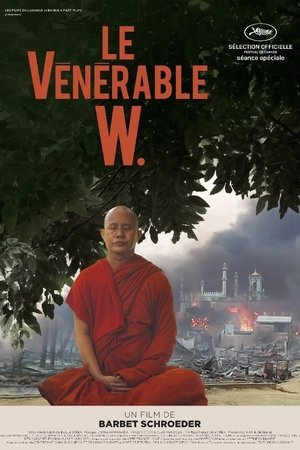
While global attention focuses on Ukraine, the Middle East, and Trump’s trade policies, the situation in East Asia is shifting rapidly. Former wartime enemies Japan and South Korea are drawing closer and aligning themselves with Taiwan. An emerging alliance is forming—one that, together with the U.S., positions itself against China. But does this strengthen peace, or turn East Asia into a powder keg?
Drama-documentary recounting the events of the 1st July 1916 and the Battle of the Somme on the Western Front during the First World War. Told through the letters and journals of soldiers who were there.
A documentary like no other. Starting with the bizarre practices and fantasies of a group of filmmakers working under the label Experimental Film Society, it spins off into a manifesto of light and sound. This dazzling journey through a view of cinema as cosmic ritual and erotic delirium is also an idiosyncratic celebration of the medium itself. Rouzbeh Rashidi’s ornate visual style unleashes a parade of visionary scenes that redefine movie magic as a fevered hallucination.
The history of Europeans in North America, from the arrival of Columbus in 1492 to the business success of German immigrants such as Heinz, Strauss or Friedrich Trumpf, Donald Trump's grandfather. During the 19th century, thirty million people — Germans, Irish, Scots, Russians, Hungarians, Italians and many others — left the old continent, fleeing poverty, racism or political repression, hoping to make a fortune and realize the American dream.
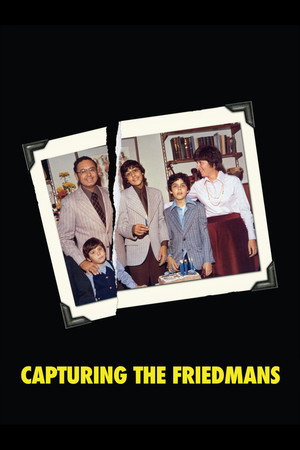
An Oscar nominated documentary about a middle-class American family who is torn apart when the father Arnold and son Jesse are accused of sexually abusing numerous children. Director Jarecki interviews people from different sides of this tragic story and raises the question of whether they were rightfully tried when they claim they were innocent and there was never any evidence against them.
When adults are ineffectual, children have to grow up quickly. Ola is 14 and she takes care of her dysfunctional father, autistic brother and a mother who lives apart from them and is mainly heard the phone. Most of all she wants to reunite a family that simply doesn’t work — like a defective TV set. She lives in the hope of bringing her mother back home. Her 13 year old brother Nikodem’s Holy Communion is a pretext for the family to meet up. Ola is entirely responsible for preparing the perfect family celebration. “Communion” reveals the beauty of the rejected, the strength of the weak and the need for change when change seems impossible. This crash course in growing up teaches us that failure is not final. Especially when love is in question.
A portrait of the legendary actor Jean-Pierre Léaud, icon of the French New Wave and closely linked to the work of François Truffaut and Jean-Luc Goddard.
After selling herself at fourteen to a brothel inside her home town of Svay Pak, Mien takes an undesired path all over Cambodia for the remainder of her teenage life. At twenty, her path crosses with a group of people fighting to make a difference, bringing her long and onerous journey back to face where it all began. The Pink Room is an intertwined story of the heart-rending, epic battle to end sex slavery, from rescue to prevention, and experiencing first hand, the need to change not just individuals, but the communities they come from. Most documentaries on trafficking only bring awareness to the problem. This film bring awareness to the solutions.
A portrait of a relationship between three generations and how it shifts between the search for closeness, understanding and acceptance, as the teenage son steps closer to adulthood. The film continues to follow the lives of Tero and his son Henri, both previously featured in Kärkkäinen’s documentary The Living Room of a Nation.
The life and work of stage designer ADOLPHE APPIA, originator of the most profound agitations in contemporary theatre. Through the dynamic alternation of animated drawings and choreographies specially conceived for the film, we discover the steps of his artistic evolution.
Charles Louis Schulmeister (1770-1853) was a smuggler and a revolutionary, but also a chief of police and Napoleon Bonaparte's favorite spy. A look back on his adventurous life with the purpose of unraveling the many mysteries of his unique path.
An account of the life and work of the charismatic Spanish writer Terenci Moix (1942-2003).
A docudramatisation of the 1960 obscenity trial in the United Kingdom of Penguin Books for publishing D.H. Lawrence's novel Lady Chatterley's Lover.
It was a family secret, hidden for decades - until now. With the help of commercial DNA bases, SVT's US correspondent Carina Bergfeldt sets out in search of her secret half-brother, who according to a rumour exists. The hunt came to affect her whole life.
Four years after Pour la suite du monde (1963), director Pierre Perrault asks Alexis Tremblay if he'll agree to travel with his wife Marie to the country of their ancestors, France. In a montage parallel, we follow them in France and listen to them talking to their friends about it.
In the first century, after the death of Herod the Great, Judea goes through a long period of turbulence due to the actions of the corrupt Roman governors and the internal struggles, both religious and political, between Jewish factions, events that soon lead to the uprising of the population and a cruel war that lasts several years and causes thousands of deaths, a catastrophe described in detail by the Romanized Jewish historian Titus Flavius Josephus.
An account of the reign of Herod the Great, king of Judea under the rule of the Roman Empire, remembered for having ordered, according to the Gospel of Matthew, the murder of all male infants born in Bethlehem at the time of the birth of Jesus, an unproven event that is not mentioned by Titus Flavius Josephus, the main historian of that period.
In the spotlight of global media coverage, the first transgender woman ever to perform as Don Giovanni in a professional opera, makes her historic debut in one of the reddest states in the U.S.
Second attempt to create a feature film out of the 200,000-plus feet of film which Soviet film-maker Sergei Eisenstein shot during 1931-32 in Mexico for American socialist author Upton Sinclair, his wife and a small company of investors. The projected film, to be called "Que Viva Mexico", was never completed due to exhaustion of funds and Stalin's demand that Eisenstein return to the USSR (he had been absent since 1929). The first attempt at editing the footage, in the USA, resulted in "Thunder Over Mexico", released in 1934. In 1940, Marie Seton, from the UK, acquired some of the footage from the Sinclairs in an attempt to make a better cutting according to Eisenstein's skeletal outline for the proposed film. This film has apparently been lost.
They are frozen in place, stagnating without any direction. Around them, things change rapidly.