REVOLUTION OS tells the inside story of the hackers who rebelled against the proprietary software model and Microsoft to create GNU/Linux and the Open Source movement.
NOTHING TO HIDE is an independent documentary dealing with surveillance and its acceptance by the general public through the "I have nothing to hide" argument. The documentary was produced and directed by a pair of Berlin-based journalists, Mihaela Gladovic and Marc Meillassoux. It was crowdfunded by over 400 backers. NOTHING TO HIDE questions the growing, puzzling and passive public acceptance of massive corporate and governmental incursions into individual and group privacy and rights. After the emotion initially triggered by the Snowden revelations, it seems that the general public has finally accepted to live in a monitored digital world.
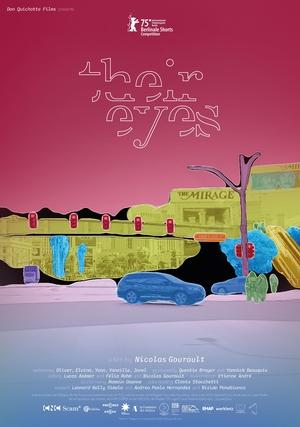
How does a machine learn to read the world? Testimonies and screen recordings introduce the experience of online micro-workers from the Global South: their job is to teach the AI of self-driving cars to navigate the streets of the Global North.
Once upon a time there was a large Finnish company called Nokia that manufactured the world’s best and most innovative mobile phones. Nokia’s annual budget was larger than that of the Government of Finland and their phones spread everywhere and changed the whole culture of communication. But then something changed. Film portrays the rise and fall of Nokia and the Finnish mobile phone industry. Nokia engineers, designers and managers tell their story about the creation, success and downfall of the Finnish mobile phone.
William Shatner presents a light-hearted look at how the "Star Trek" TV series have influenced and inspired today's technologies, including: cell phones, medical imaging, computers and software, SETI, MP3 players and iPods, virtual reality, and spaceship propulsion.
LIKE is an IndieFlix Original documentary that explores the impact of social media on our lives and the effects of technology on the brain. The goal of the film is to inspire us to self-regulate. Social media is a tool and social platforms are a place to connect, share, and care … but is that what's really happening?
Stephen Hawking has warned that the creation of powerful artificial intelligence will be “either the best, or the worst thing, ever to happen to humanity”. Inspired by Brian Christian’s study The Most Human Human: What Artificial Intelligence Teaches Us About Being Alive, the filmmakers set out on an international investigation highlighting the effects of AI - scenes from our daily lives destructive and constructive.
In 1986, astronomer turned computer scientist Clifford Stoll had just started working on a computer system at the Lawrence Berkeley Laboratory when he noticed a 75-cent discrepancy between the charges printed by two accounting programs responsible for charging people for machine use. Intrigued, he deduced that the system was being hacked, and he determined to find the culprit. This is the re-enactment of how he tracked down KGB cracker Markus Hess through the Ethernet to Hannover, Germany.
In the first decades of the 20th century, when life was being transformed by scientific innovations, researchers made a thrilling new claim: they could tell whether someone was lying by using a machine. Popularly known as the “lie detector,” the device transformed police work, seized headlines and was extolled in movies, TV and comics as an infallible crime-fighting tool. Husbands and wives tested each other’s fidelity. Corporations routinely tested employees’ honesty and government workers were tested for loyalty and “morals.” But the promise of the polygraph turned dark, and the lie detector too often became an apparatus of fear and intimidation. Written and directed by Rob Rapley and executive produced by Cameo George, The Lie Detector is a tale of good intentions, twisted morals and unintended consequences.
Sparked by a public display of sexual harassment in 2012, GTFO pries open the video game world to explore a 20 billion dollar industry riddled with discrimination and misogyny. Every year, the gaming community grows increasingly diverse. This has led to a clash of values and women are receiving the brunt of the consequences every day, with acts of harassment ranging from name calling to death threats. Through interviews with video game creators, journalists, and academics, GTFO paints a complex picture of the video game industry, while revealing the systemic and human motivations behind acts of harassment. GTFO begins the conversation that will shape the future of the video game world.
When Steve Jobs died the world wept. But what accounted for the grief of millions of people who didn’t know him? This evocative film navigates Jobs' path from a small house in the suburbs, to zen temples in Japan, to the CEO's office of the world's richest company, exploring how Jobs’ life and work shaped our relationship with the computer. The Man in the Machine is a provocative and sometimes startling re-evaluation of the legacy of an icon.
Hackers Wanted explores the origins and nature of hackers and hacking by following the adventures of Adrian Lamo, and contrasting his story with that of controversial figures throughout history.
In the early 1960s, computers were still science-fiction to most people; those who did grasp computers knew them as room-filling behemoths. A small team at the Italian company Olivetti would thus astonish everyone in 1965 when they unveiled a computer small enough to fit on a desk and usable by regular people: Programma 101, considered by many the world’s first personal computer.
In The Realm of the Hackers is a documentary about the prominent hacker community, centered in Melbourne, Australia in the late 80's to early 1990. The storyline is centered around the Australian teenagers going by the hacker names "Electron" and "Phoenix", who were members of an elite computer hacking group called The Realm and hacked into some of the most secure computer networks in the world, including those of the US Naval Research Laboratory, Lawrence Livermore National Laboratory, a government lab charged with the security of the US nuclear stockpile, and NASA.
Four children want to invite their friends to a picnic, but they don't know how to use the telephone. Suddenly, the room goes dark and the phone becomes large enough for them to climb into. They walk through a tunnel and meet a man named Telly, who takes them into the world of Telezonia, where they are shown various kinds of telephones. They meet several costumed characters, such as Question Mark, who teaches them how to answer the phone; Q and Z, who show them how to use the phone book; and Exclamation Point, who teaches them how to place a call. By the time they leave Telezonia, they are full-fledged telephone users.
Apple. Intel. Genentech. Atari. Google. Cisco. Stratospheric successes with high stakes all around. Behind some of the world's most revolutionary companies are a handful of men who (through timing, foresight, a keen ability to size up other people, and a lot of luck) saw opportunity where others did not: these are the original venture capitalists. All were backing and building companies before the term 'venture capital' had been coined: companies that led to the birth of biotechnology and the spectacular growth in microprocessors, personal computers and the web. SOMETHING VENTURED uncovers the ups and downs of the building of some of the greatest companies of the twentieth century, and the hidden dramas behind some of the most famous names in business.
A tale of how the great vision and epic failure of General Magic, the "greatest dead company in Silicon Valley", changed the lives of billions.
In this video series an individual confronts fears and, through the process of confessing directly to the camera, transcends trauma. It is also about agin, longing, the delusions and misconceptions we are encumbered with as we mature towards self-awareness, and the masks we assume to deny or hide understanding. The tapes rupture, fracture, and use digital effects to mirror the psychological changes of the protagonist.
Somewhere on the internet is a land where communities pretend to live out a survivalist fiction. The avatars of the directors of Knit’s Island spent 963 hours there, creating a fascinating film resulting from their encounter with these communities. The “players” reveal their fears and fantasies, in an at times unsettling blurring of the real and the virtual.
An audiovisual experiment that shows how oil is refined into gasoline and ultimately powers cars and other vehicles, accompanied by classical music and experimental synthesizer sounds. Filmed in the Libyan desert, the film traces the path and development of the gasoline, from the extraction of oil as it is drilled in the Libyan desert to the pump at the gas station, making road construction machines dance and convertibles roar through the Spessart forests. This film also drew Herbert von Karajan and Leo Kirch's attention to Hugo Niebeling, in which the director has road bulldozers "dance" to the music of Vivaldi.