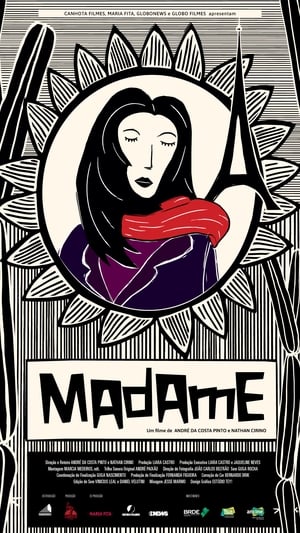
After losing part of her memory in an accident, Leila, a young French woman of Iraqi origin, reconstructs her story by reconnecting with her family and exploring her roots. Through music and cinema, she brings her exiled father's poems to lite, dis-covers the reality of the Middle East, and embarks on a personal quest to understand her identity and find her voice.
Life is about choice. What we eat, what we read, who we elect; every day we make choices that determine how we want to live. But what if these choices are just an illusion? In an era where regulations and red tape rule every industry, where lobby groups and big businesses wield more influence than ever before, our daily choices have become increasingly limited. And with all our options so deliberately handpicked, are we really making a choice at all? Freedom From Choice examines the current state of life and personal choice today. Experts from many different fields offer a frank and startling look at the hidden limitations in our daily lives. Focusing on key areas such as food, medicine, finance, and media, Freedom From Choice provides viewers with a glimpse at the myriad of ways their lives are being dictated and tells us who stands to gain.
This highly controversial documentary, aired as part of the CBS Reports series, ostensibly covers the growing influence of the LGBT community in San Francisco circa 1979. Critics have rebuked the program for its characterization of the sexual practices of gay men, while organizations such as the Moral Majority referenced it in campaigns against gay rights ordinances.
An undocumented immigrant explores his and his family's immigration trauma while grasping hope through a voicemail.
Shot shortly before and after the 2024 presidential election, 15 different people answer one question, "What will the United States be like in 10 years?"
Between 1968 and 1970, J M Goodger, a lecturer at the University of Salford, made a film record of the living conditions in the slums of Ordsall, Salford, which were then in the process of being demolished. Under the title 'The Changing face of Salford', the film was in two parts: 'Life in the slums' and 'Bloody slums'.
This documentary focuses mostly on the 1930’s to 1950’s – arguably the most important period in modern American history. These decades included the Great Depression, the peak of labor militancy in 1937 (probably the closest the US has come to a popular revolution since 1787), the rise of the “guest worker” phenomenon, the counter-attack against labor unions, the creation of the military industrial complex, the rise of the FBI, the foundations of the civil rights movement, and the purging of radicals from organized labor and public life.
Since November 2022, the Brussels prisons of Saint-Gilles, Forest and Berkendael have been moving to the brand-new "prison village" of Haren, on the outskirts of Brussels. An ultra-modern, ultra-secure, semi-private prison. But why build new prisons in the first place?
This documentary follows the 2002 mayoral campaign in Newark, New Jersey, in which a City Councilman, Cory Booker, attempted to unseat longtime mayor Sharpe James.
This film journeys deep into the heart of Austria’s favorite daily newspaper, the Kronen Zeitung, the most widely-read paper per capita in the world. The “Krone’s” 2.7 million readers represent 43% of the Austrian press market. A reflection of the Austrian soul, this newspaper serves as a prism through which we can understand the rise of the populist Right in this country and examine the dangerous flirtation between media and politics.
"Africa Light" - as white local citizens call Namibia. The name suggests romance, the beauty of nature and promises a life without any problems in a country where the difference between rich and poor could hardly be greater. Namibia does not give that impression of it. If you look at its surface it seems like Africa in its most innocent and civilized form. It is a country that is so inviting to dream by its spectacular landscape, stunning scenery and fascinating wildlife. It has a very strong tourism structure and the government gets a lot of money with its magical attraction. But despite its grandiose splendor it is an endless gray zone as well. It oscillates between tradition and modernity, between the cattle in the country and the slums in the city. It shuttles from colonial times, land property reform to minimum wage for everyone. It fluctuates between socialism and cold calculated market economy.
Någon annan betalar is a film about politicians' irresponsible use of your tax money. The documentary is financed through voluntary donations and based on the book 365 sätt att slösa med dina skattepengar.
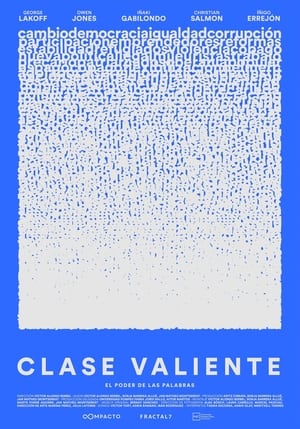
The film is a controversy on democracy. Is our society really democratic? Can everyone be part of it? Or is the act of being part in democracy dependent to the access on technology, progression or any resources of information, as philosophers like Paul Virilio or Jean Baudrillard already claimed?
Information Violence
Diving deep into the true causes of the Great Recession, the financial crisis of the 2010s, renowned economists, investors and business leaders explain what America is facing if we don't learn from our past mistakes. Is the economy really improving or are we just blowing up another Bubble?
An enduring myth in U.S. presidential election history is that George H.W. Bush only lost his re-election bid in 1992 because a peculiar independent candidate from Texas, Ross Perot, drew more voters away from Bush than from Democratic candidate Bill Clinton. Perot ran a quirky "outsider" campaign that in many ways presaged the Donald Trump phenomenon of 2016. It all amounted to one of the most successful third-party bids in U.S. history; Perot won 19 percent of the popular vote.
With a colossal cigar dangling from the corner of his mouth, a libation in hand, and an unmistakable disdain for his political adversaries, Roger Stone emerges as the quintessential ally to Donald Trump. Revered as a right-wing powerbroker, Stone's influential journey traces back to the era of President Nixon, a legacy inked onto his own back. In a film marked by unparalleled access, Christoffer Guldbrandsen captures the tumultuous final months of the Trump administration, centering on the heart of power and climaxing with the unprecedented storming of Congress. Guldbrandsen finds himself amidst the chaos as Trump supporters converge on Washington, witnessing firsthand Roger Stone's strategic retreat from his hotel suite as the 'Stop the Steal' campaign spirals into a riot. A Storm Foretold – Roger Stone and Die unfolds the narrative of a once-established political party metamorphosing into an anti-democratic movement, where impassioned rhetoric evolves into tangible violence.
In 2010, the iconic Tote Hotel – last bastion of Melbourne’s vibrant music counterculture – was forced to close by unfair laws. Filmed over 7 years, “Persecution Blues” depicts the struggle of more than 20,000 fans – and the bands who inspire them – to preserve their history and protect their future, and puts the audience on the front line of an epic-scale culture war.
Volta Para a Base - Esquerda, Direita e Bolsonaro
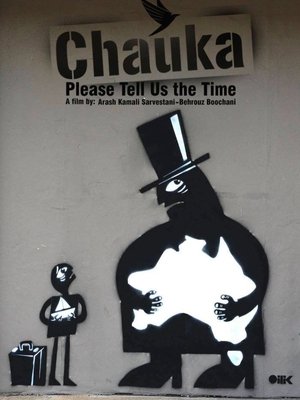
An urgent and powerful documentary, shot in a detention centre where asylum seekers trying to reach Australian shores are indefinitely detained. Secretly shot on a mobile phone by Iranian journalist Behrouz Boochani while detained on Manus, in Papua New Guinea, the film is a collaboration with Dutch-Iranian filmmaker Arash Kamali Sarvestani. Boochani recounts, via the testimonies of fellow inmates, the abuse and violence inflicted and the precarious state of limbo they find themselves in. Chauka, the name of the dreaded solitary confinement unit within the detention centre, was originally the name of a beautiful bird and symbol of the Manus Island. By interweaving dialogue with two Manusian men and shots of daily life on the island, the film gives a much-needed voice to Manus inhabitants, understandably distressed by the current situation. With marked restraint, the film exposes lives broken by shocking immigration policies.