Les Blank's poetic documentation of 1967's Los Angeles Easter Sunday Love-In.
Legacy takes the audience on a rapid-fire journey through the evolution of the world, starting with a cosmic bang, evolving through billions of years of plants, animals and the creation of natural resources, ending with man and his bounty – “sitting on his world contemplating his coconut”. Preserved by the Academy Film Archive in 2012.

An mutoscope motion picture installation commissioned for the 86th anniversary of the Guggenheim museum. Later preserved and turned into a short film. Preserved by the Academy Film Archive in 2000.
African-American Philadelphia police detective Virgil Tibbs is arrested on suspicion of murder by Bill Gillespie, the racist police chief of tiny Sparta, Mississippi. After Tibbs proves not only his own innocence but that of another man, he joins forces with Gillespie to track down the real killer. Their investigation takes them through every social level of the town, with Tibbs making enemies as well as unlikely friends as he hunts for the truth.
One of Les Blank's industrial films, which follows a Holly Farms "broiler" chicken from factory incubation to the county fair barbecue pit. A hilarious, disturbing and surreal look at a large-scale chicken farm producing 156 million chickens a year! Film includes lots of chicken songs and music recorded live in the Blue Ridge Mountains of North Carolina. Preserved by the Academy Film Archive in 2013.
Whether at the stage of conceptualization or "editing", the blending and multiple impression of the images were done in-camera. In this sense, I think I have found ways to strengthen the evolution of the camera as a creative instrument. The whole film is one scene without any dark moments. In AUTUMN SPECTRUM, movement is the dominant element, while nostalgia is the real theme of the film.
According to the director, "Gyromorphosis strives to bring into actuality the inherent kinetic qualities seen in the construction-sculpture of Constant Nieuwenhuys of Amsterdam. To realize this aim I have put into motion, one by one, pieces of this sculpture and, with colored lighting, filmed them in various detail, overlaying the images on the film as they appear and disappear. In this way, I have hoped to produce sensations of acceleration and suspension which are suggested to me by the sculpture itself."
An animated short consisting of 4 segments: bowl, garden, theatre, marble game. Preserved by the Academy Film Archive in partnership with Harvard Film Archive in 2015.
This animated short focuses on the lives of three eccentric people living on a farm in the Ukrainian countryside. Told in a non-linear, stream of consciousness style, the film depicts the deceitful relationship between a master and his two servants.
The Story of Koula, one of the Marshall Plan films, was made in Greece in 1951. It neatly exemplifies the capacity of Europe to ‘talk back’ to the USA within the framework of cultural aid programmes. And as such it can introduce a little‐explored topic: the politics of the avant‐garde in Greece in the post‐Civil War years and in particular the role of US cultural aid. This post‐war perspective throws light on the better‐known National School associated above all with Manolis Kalomiris, who dominated Greek music and musical life in the interwar period. The second part of this paper scrutinises the agenda and achievements of the Kalomiris circle, and that in turn enables useful generalisations about romantic nationalism in music. The third part of the paper reflects on the pre‐World War I achievements of Heptanesian traditions, again caught between singularities and dependencies. Preserved by the Academy Film Archive in 2005.
A joyous, chaotic and colorful romp through nature; A psychedelic dance troupe rehearses in a studio.
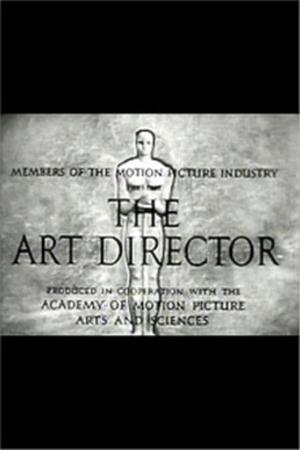
A film's art director is in charge of the set, from conception to construction to furnishing. This short film walks the viewer through art directors' responsibilities and the demands on their talents. They read a script carefully and design a set to capture the time and place, the social strata, and the mood. They must be scholars of the history of architecture, furnishings, and fashion. They choose the colors on a set in anticipation of the lighting and the mood. Their work also sets styles, from Art Deco in the 20's to 30s modernism. Then it's on to the next project. Preserved by the Academy Film Archive in 2012.
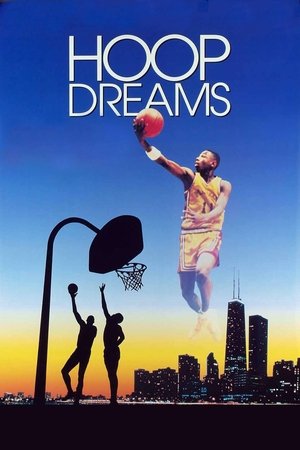
Every school day, African-American teenagers William Gates and Arthur Agee travel 90 minutes each way from inner-city Chicago to St. Joseph High School in Westchester, Illinois, a predominately white suburban school well-known for the excellence of its basketball program. Gates and Agee dream of NBA stardom, and with the support of their close-knit families, they battle the social and physical obstacles that stand in their way. This acclaimed documentary was shot over the course of five years.
Film of "Dropped Objects" falling from 8,000 ft. altitudes with skydivers as performers. This film of a conceptual artist's work is a document of Skyworks but also meant to be expressive as an art film. A film of meditation revealing the cosmic breath as Skyworks pieces fall at the rate of 120 to 135 miles per hour. A breathing language of light and knowledge. Performance-controlled flight. Gyres cycling in and out - the mystic spiral. A perception of light and space as energy lines alter the environment temporarily. Preserved by the Academy Film Archive in 2016.
The story revolves around a woman, who stays in a large mansion with her husband. She develops an obsession for her ornaments and refrains giving them to her husband as they face financial crisis. Preserved by the Academy Film Archive in partnership with Arsenal - Institut für Film und Videokunst e.V. in 2007.
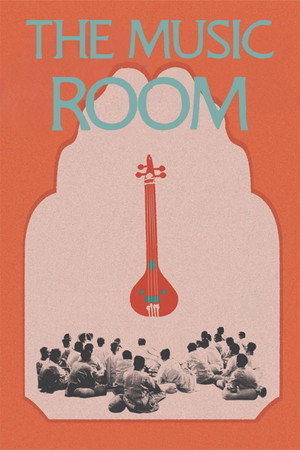
An aging, decadent landlord’s passion for music becomes the undoing of his legacy as he sacrifices his wealth in order to compete with the opulent music room of his younger, richer neighbour.
A “found object of paint and mold” given to Brakhage by the poet David Meltzer. According to Jane Brakhage, Stan did nothing to it but see it, splice it, and add titles. (From Barrett and Brabner. Stan Brakhage: A Guide to References and Resources)
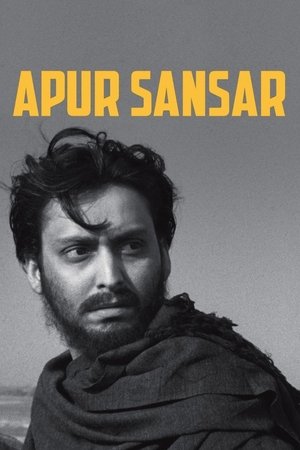
Apu, now a jobless ex-student dreaming vaguely of a future as a writer, is invited to join an old college friend on a trip up-country to a village wedding.
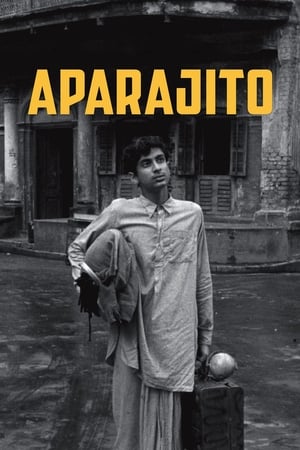
Apu and his family have moved away from the country to live in the bustling holy city of Benares. As he progresses from wide-eyed child to intellectually curious teenager, eventually studying in Kolkata, we witness his academic and moral education, as well as the growing complexity of his relationship with his mother.
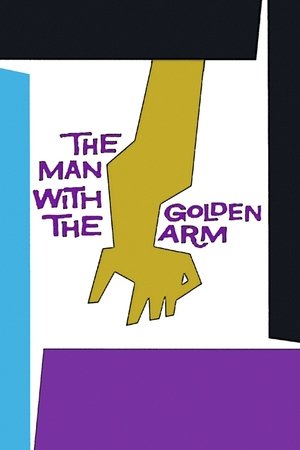
When illegal card dealer and recovering heroin addict Frankie Machine gets out of prison, he decides to straighten up. Armed with nothing but an old drum set, Frankie tries to get honest work as a drummer. But when his former employer and his old drug dealer re-enter his life, Frankie finds it hard to stay clean and eventually finds himself succumbing to his old habits.