From the New York Transit Museum archives, a 1981 documentary about the workers who make "A" train service possible. A production of the New York State Museum.
A day-to-day record of the construction of the Confederation Bridge linking Prince Edward Island to the mainland, Abegweit reveals some of the innovations that made this mammoth project one of the most impressive engineering feats in Canadian history.
On November 25, 1973, the first of four car-free Sundays transformed West Germany's deserted highways into spaces for walking, cycling, and horse-drawn carriages, while towns and cities took on a festive atmosphere. Introduced during the oil crisis to conserve fuel after the Arab oil embargo and production cuts following the Yom Kippur War, the measure became an unforgettable collective experience. Beyond the immediate energy shortage, the crisis marked a turning point, ending the postwar economic boom and encouraging greater awareness of energy use, consumerism, and environmental issues.
Numerous people are on subway trains running up and down the city center endlessly. There are people who run this decent space “underground”. Under the noisy world today, we approach them to see what life is like underground.
In the 1930’s, the workers of the underground, headed by brigades of writers, are in charge to write in real time "the history of the Moscow Metro". Based on their narratives, partially unpublished, the film recounts the first lines construction of the most beautifiul underground in the world, in the light of this "big literary Utopia", stoped by the purges of 1937-38.
In the heart of New York City stands Grand Central Terminal. Explore the magnificent secrets of this iconic landmark as we take you inside the heart, soul and amazing engineering of this superstructure. From railroad cars to rush hours, we unlock the colorful tales of its past, present and future.
24 hodin pražského metra
"The End of the Line - Rochester's Subway" tells the little-known story of the rail line that operated in a former section of the Erie Canal from 1927 until its abandonment in 1956. Produced in 1994 by filmmakers Fredrick Armstrong and James P. Harte, the forty-five minute documentary recounts the tale of an American city's bumpy ride through the Twentieth Century, from the perspective of a little engine that could, but didn't. The film has since been rereleased (2005) and now contains the main feature with special portions that were added as part of the rereleased version. These include a look at the only surviving subway car from the lines and a Phantom tun through the tunnels in their abandoned state, among others, for a total of 90 minutes of unique and well preserved historical information.
Métro, une ville sur les rails
Ignaz Wuzel and Gerhard Jeschko are regulars at the espresso in the Südtiroler Platz underground station. Warden Leopold Prinz knows the problems of the children from Karlsplatz. In 1993, Elizabeth T. Spira filmed people on the Vienna subway network. Above all, it is the desperate, the lost and the forgotten who find refuge and a home in and around the subway.
Rhode Island slashed its public transportation budget in September, leaving bus riders struggling as they attempt to get to work, school, doctor appointments, and visit their children. Community members already struggling to make ends meet have been forced to wake before dawn just to make it to work. Others are now spending money they don’t have on private rides. Still more are standing for over an hour on crowded buses, worried about sickness and tired from the rest of their commute. As the freezing temperatures approach, concerns are rising. RIPTA advocates will present their case to lawmakers in January and until then, these bus riders have been left out to dry on the unforgiving streets of Rhode Island.
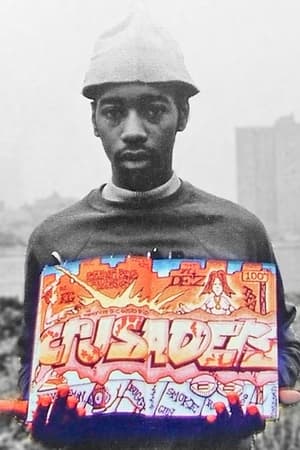
Documentary on New York Graffiti featuring art by Cliff, Phase 2, Comet, Blade, IN, Billy167, LSD OM, Ajax , Dean, Mico, Checker 170, Skylark
Hip-Hop Culture and Graffiti Video Magazine
The world-famous Greyhound bus is almost as old as the Wild West. It is a symbol of North America, of progress, and of nostalgia. Reporter Studs Terkel travelled 2,000 miles across the United States by Greyhound. From Seattle to Chicago, he observes his fellow-passengers. He meets a number of travelers who appear to be very interesting people: a Native American boxer on his way to his birthplace in Montana, a bar owner who was a bank robber in a former 'career', a 99 year old woman who is still running a busy hotel, and, of course, a pedigree cowboy. The spectator of this film listens to their personal stories, watches the beautiful scenery, and is treated to famous feature film fragments in which the Greyhound bus plays a part. Seven states and two time zones later, he is back in his cinema seat.
Quien dice patria dice muerte
Documentary about the development of the Boeing 747 jumbo jet. The 747 was a game changer, the airliner that revolutionised mass, cheap air travel. But the first wide-bodied plane was originally intended as a stopgap to Boeing's now-abandoned supersonic jet. This is the remarkable untold story of the jumbo, a billion-dollar gamble that pushed 1960s technology to the limits to create one of the world's most recognisable planes.
In 2019, this short film documentaries the daily of severals subway artists in the stations of Rio de Janeiro
A close-up of a snow-bound city, and the men, money and machinery it takes to dig it out.
For the past ten years, Jürgen Henn has filmed over-height trucks crashing into the 11foot8 train bridge affectionately nicknamed the "Can Opener." In that time, millions have viewed the crashes online. Regional, national, and international news organizations have dined out on the story and the goofy crash reels. But why do motorists continue to crash despite the many warnings, sensors, and signs? And what is it about these crashes that holds our attention? In this piece, we look for the humanity in human error.
Jak se žije převozníkům podle Romana Vávry