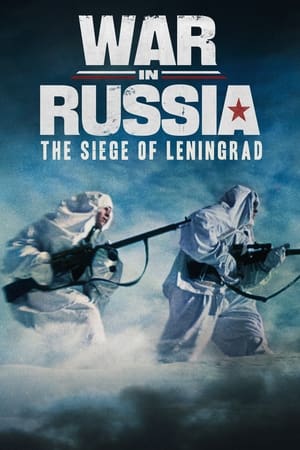
Hitler's invasion of Russia was one of the landmark events of World War II. This documentary reveals the lead-up to the offensive, its impact on the war and the brinksmanship that resulted from the battle for Moscow. Rare footage from both German and Russian archives and detailed maps illustrate the conflict, while award-winning historian and author John Erickson provides insight into the pivotal maneuvers on the eastern front.
Made in 1940 and sponsored by the Ministry of Information this film shows the food contributions supplied to Britain by various colonies and dominions. 'Food from the Empire highlights the severity of the food issue, by discussing food production as a battle (...) and offers insights into British attitudes towards its colonies and dominions. The commentary notes that the ‘free people’ of these countries are ‘anxious to send every ounce they can to the United Kingdom for they know that upon the ability of Great Britain to hold out depends their own freedom’. Britain is depicted as a dominant power, fighting to protect those within the Empire, while the colonies are loyal and ‘anxious’ to help.' - Tom Rice, on the film from colonialfilm.org.
Iran : La Stratégie du chaos
Henry Ford, the legendary automobile manufacturer, James D. Mooney, the GM manager and Tom Watson, the IBM boss, were all awarded the Grand Cross of the German Eagle, the Nazis' highest distinction for foreigners, by Hitler for their services to the Third Reich. At this time, in 1937 and 1938, Hitler's armaments industry was running at full speed. The German subsidiaries of these American companies - Opel, the Ford Werke AG and Dehomag - had willingly allowed themselves to be integrated into the "Führer's" war preparations. The film concentrates on the companies which were indispensable for Hitler to wage war. The documentary is supported by new archive material, as well as interviews with contemporary witnesses and experts.
In March 1943, twenty-year-old Ovadia Baruch was deported together with his family from Greece to Auschwitz-Birkenau. Upon arrival, his extended family was sent to the gas chambers. Ovadia struggled to survive until his liberation from the Mauthausen concentration camp in May 1945. While in Auschwitz, Ovadia met Aliza Tzarfati, a young Jewish woman from his hometown, and the two developed a loving relationship despite inhuman conditions. This film depicts their remarkable, touching story of love and survival in Auschwitz, a miraculous meeting after the Holocaust and the home they built together in Israel. This film is part of the "Witnesses and Education" project, a joint production of the International School for Holocaust Studies and the Multimedia Center of the Hebrew University of Jerusalem. In this series, survivors recount their life stores - before, during and after the Holocaust. Each title is filmed on location, where the events originally transpired.
On the 29th September 1945, the incomplete rough cut of a brilliant documentary about concentration camps was viewed at the MOI in London. For five months, Sidney Bernstein had led a small team – which included Stewart McAllister, Richard Crossman and Alfred Hitchcock – to complete the film from hours of shocking footage. Unfortunately, this ambitious Allied project to create a feature-length visual report that would damn the Nazi regime and shame the German people into acceptance of Allied occupation had missed its moment. Even in its incomplete form (available since 1984) the film was immensely powerful, generating an awed hush among audiences. But now, complete to six reels, this faithfully restored and definitive version produced by IWM, is being compared with Alain Resnais’ Night and Fog (1955).
Mexican American Rodolfo P. Hernandez faced death along the 38th parallel, earning a Congressional Medal of Honor for valor during the Korean War. A story of heroism, perseverance and service, Hernandez proved that even in the most dire circumstances a wounded soldier can accomplish his mission and go on to greater service as a veteran.
Houda al-Habash, a conservative Muslim preacher, founded a Qur'an school for girls in Damascus, Syria when she was just 17 years old. Every summer, her female students immerse themselves in a rigorous study of Islam, in addition to their secular schooling. A surprising cultural shift is underway-women are claiming space within the mosque, a place historically dominated by men. Challenging tradition, Houda insists education for women is a form of worship. Using Qur'anic teachings, she encourages her students to pursue higher education, jobs, and public lives, while remaining committed to an interpretation of Islam prioritizing women's role as wives and mothers. In a world rarely seen, The Light In Her Eyes tells the story of a leader who challenges the women of her community to live according to Islam, without giving up their dreams. Shot right before the uprising in Syria erupted, the film is an exclusive look at a social movement thriving in a country controlled by a repressive regime
Les Lycéens, le Traître et les Nazis
James Holland moves beyond the D-Day beaches to reassess the brutal 77-day Battle for Normandy that followed the invasion. Challenging some of the many myths that have grown up around this vital campaign, Holland argues that we have become too comfortable in our understanding of events, developing shorthand to tell this famous story that does great injustice to those that saw action in France across the summer of 1944.
Documents the major trial of the Nazi war criminals and the violent acts that they were accused of.
They were going to become heroes, but they didn't know it. Most of them were not yet twenty years old in June 1940, when France found itself on the ground. They were starting careers, studies, had families, friends. None had heard General de Gaulle's call on June 18, but all listened to Marshal Pétain's speech on the 17th, asking to stop fighting. They immediately rebelled and joined London or the Resistance. Through the testimonies of seven of the last Companions of the Liberation (made in 2013), this film tells us about their unwavering commitment and takes us in their footsteps until the Liberation.
Account of one of the most critical periods of World War II. In the spring of 1940, Holland, Belgium, and France fell to Hitler's army. The Soviet Union was Germany's ally, and the United States stood on the sidelines. At this time of peril, it was Britain alone that faced the Nazi army. Thanks to Britain's two great assets: its indomitable leader, Winston Churchill, and the courage and resilience of its people--ordinary citizens who accomplished extraordinary things, a nation's darkest hour became its finest. Through months of intense air bombardment, including the "Blitz" of London, and under permanent threat of invasion, the British people exemplified heroism under fire. The peoples of occupied Europe, and those of the United States, came to see that resistance to Hitler was indeed possible.
When Italy capitulated 1943 and joined the allied forces, some soldiers from the German Wehrmacht also changed sides and joined the Italians in their fight to liberate the country. This film tells the story of Rudolf Jacobs, Walter Fischer and Heinz Brauers, three of the ‘Good Germans’ remembered in Italy for their efforts in fighting the Nazis.
A history of the political and social repression carried out by the ruthless regime of Spanish dictator Francisco Franco between 1936 and 1975 that focuses on the lives of gays and lesbians during those dark years and the death of the Spanish gay poet Federico García Lorca.
June 6, 1944: The largest Allied operation of World War II began in Normandy, France. Yet, few know in detail exactly why and how, from the end of 1943 through August 1944, this region became the most important location in the world. Blending multiple cinematographic techniques, including animation, CGI and stunning live-action images, “D-Day: Normandy 1944” brings this monumental event to the world’s largest screens for the first time ever. Audiences of all ages, including new generations, will discover from a new perspective how this landing changed the world. Exploring history, military strategy, science, technology and human values, the film will educate and appeal to all. Narrated by Tom Brokaw, “D-Day: Normandy 1944” pays tribute to those who gave their lives for our freedom… A duty of memory, a duty of gratitude.
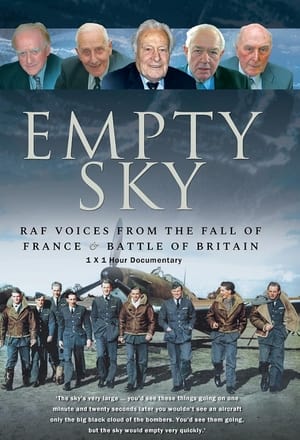
The Hawker Hurricane was the first fighter monoplane to join the Royal Air Force and the first combat aircraft adopted by that arm capable of exceeding 300 mph in level flight. The Hurricane shouldered the lion s share of Britain s defence during the Battle of Britain. This program portrays the history of this legendary aircraft which was to form an immortal partnership during the infamous battle.
Produced by the Army Pictorial Service, Signal Corps, with the cooperation of the Army Air Forces and the United States Navy, and released by Warner Bros. for the War Activities Committee shortly after the surrender of Japan. Follow General Douglas MacArthur and his men from their exile from the Philippines in early 1942, through the signing of the instrument of surrender on the USS Missouri on September 1, 1945. Preserved by the Academy Film Archive in 2013.
Father Edward J. Flanagan is a familiar name to many Americans, often for the Oscar-winning 1938 film starring Spencer Tracy about Flanagan’s groundbreaking child welfare organization. But the story extends far beyond that, to a man whose name and legacy are still well-known as far as Germany and Japan. Flanagan gained influence and admiration over the course of his life from Presidents, CEOs, celebrities and more, but none mattered more to him than that of the children for whom he tirelessly worked. A sobering reminder of this was during WWII, as Flanagan saw droves of former Boys Town citizens go off to war. In fact, so many former Boys Town boys named Flanagan as their next of kin that the American War Dads Association named him as America’s No. 1 War Dad.
Three part documentary of the history of the Royal Air Force during World War Two. They combine actual Air Ministry films and period newsreel footage with interviews of surviving members of the air force. The first part covers the period from the 'phoney war', the invasion of Poland and the early bombing raids on enemy shipping, through to the attacks on France. Aircraft featured include the Blenheim and Wellington bombers, the Sunderland flying boat, Spitfires and Hurricanes and the opposing ME109.