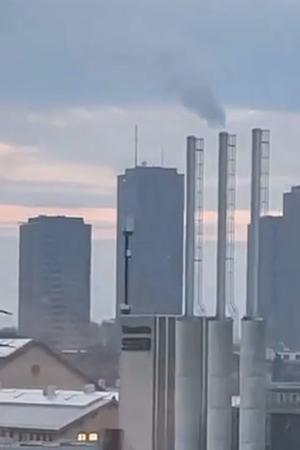
The painter Alfredo Romero locks himself in his studio-apartment in the Estación de Francia neighborhood in Mollet del Vallès (Barcelona) to create the final painting of his series Paisajes interiores (Inner Landscapes). The director of this film does the same, but to create his own work about the painter's creative process. Premiered at Documenta Madrid in 2009.
Josef Mánes
Martin Benka
This film tells Jean-Michel's story through exclusive interviews with his two sisters Lisane and Jeanine, who have never before agreed to be interviewed for a TV documentary. With striking candour, Basquiat's art dealers - including Larry Gagosian, Mary Boone and Bruno Bischofberger - as well as his most intimate friends, lovers and fellow artists, expose the cash, the drugs and the pernicious racism which Basquiat confronted on a daily basis. As historical tableaux, visual diaries of defiance or surfaces covered with hidden meanings, Basquiat's art remains the beating heart of this story.
Two college students set out to capture a ghost on film to make millions instead of doing their finals.
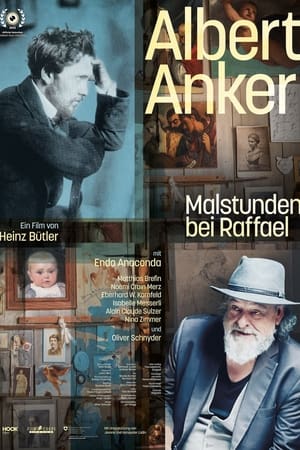
Marking the 500th anniversary of Raphael’s death, the greatest exhibition ever held of his works took place in Rome. Exhibition on Screen was granted exclusive access to this once-in-a-lifetime show. With over two hundred masterpieces, including paintings and drawings – over a hundred of which have been brought together for the first time – this major exhibition celebrates the life and work of Raffaello Sanzio da Urbino.
A look at the feud between graffiti artists King Robbo and Banksy.
This feature documentary portrays one of the most important museums in the world, the Kunsthistorisches Museum Wien. It presents a unique look behind the scenes of this fascinating institution and encounters a number of charismatic protagonists and their working fields unfolding the museum’s special world – as an art institution as well a vehicle for state representation.
Ladovi furianti
X-ray images were invented in 1895, the same year in which the Lumière brothers presented their respective invention in what today is considered to be the first cinema screening. Thus, both cinema and radiography fall within the scopic regime inaugurated by modernity. The use of X-rays on two sculptures from the Bilbao Fine Arts Museum generates images that reveal certain elements of them that would otherwise be invisible to our eyes. These images, despite being generally created for technical or scientific purposes, seem to produce a certain form of 'photogénie': they lend the radiographed objects a new appearance that lies somewhere between the material and the ethereal, endowing them with a vaporous and spectral quality. It is not by chance that physics and phantasmagoria share the term 'spectrum' in their vocabulary.
Departing from peripheral details of some paintings of the Bilbao Fine Arts Museum, a female narrator unravels several stories related to the economic, social and psychological conditions of past and current artists.
The Victorian era is often cited for its lack of sexuality, but as this documentary reveals, the period's artists created a strong tradition surrounding the classical nude figure, which spread from the fine arts to more common forms of expression. The film explains how 19th-century artists were inspired by ancient Greek and Roman works to highlight the naked form, and how that was reflected in the evolving cultural attitudes toward sex.
In 2014 a large painting representing Judith Beheading Holofernes was discovered in an attic in Toulouse, France. A controversy ensued immediately about the attribution of the painting's authorship to Caravaggio. The documentary follows a famed art expert in charge of organizing the sale of the painting on behalf of the owners, while specialists debate on its authenticity.
Geniale Frauen - Malerinnen von der Renaissance bis zum Klassizismus
Five years into performing as renowned filmmaker George Lucas in the cult comedy show "The George Lucas Talk Show", comedian Connor Ratliff questions the need for its continuation and his own drive for success and fulfillment in show business.
Banksy is a graffiti artist with a global reputation whose work can be seen on walls from post-hurricane New Orleans to the separation barrier on the Palestinian West Bank. Fiercely guarding his anonymity to avoid prosecution, Banksy has so far resisted all attempts to be captured on film. Exit Through the Gift Shop tells the incredible true story of how an eccentric French shop keeper turned documentary maker attempted to locate and befriend Banksy, only to have the artist turn the camera back on its owner.
Filmmaking icon Agnès Varda, the award-winning director regarded by many as the grandmother of the French new wave, turns the camera on herself with this unique autobiographical documentary. Composed of film excerpts and elaborate dramatic re-creations, Varda's self-portrait recounts the highs and lows of her professional career, the many friendships that affected her life and her longtime marriage to cinematic giant Jacques Demy.
Godard by Godard is an archival self-portrait of Jean-Luc Godard. It retraces the unique and unheard-of path, made up of sudden detours and dramatic returns, of a filmmaker who never looks back on his past, never makes the same film twice, and tirelessly pursues his research, in a truly inexhaustible diversity of inspiration. Through Godard’s words, his gaze and his work, the film tells the story of a life of cinema; that of a man who will always demand a lot of himself and his art, to the point of merging with it.
We all carry hell with us. The filmmaker’s hell exists on a canvas, which he studied carefully in childhood. The mystical picture has many names: Circus, Hell, Game at the Arena. Decades later he finds the painting again. The film unravels as loose ponderings about the plight of being an artist and touches upon the filmmaker’s personal demons. Can he see the painting in a new light?
To mark the artist Fernando Botero's 75th birthday, Peter Schamoni made a documentary film about his moving life. Fernando Botero is immediately recognizable by his colourful and exuberant works. Schamoni convinces us that, behind the cliché of the naïve, Fernando Botero is an artist who also devotes himself to serious and profound themes. Schamoni not only accompanies Botero to Tuscany, where he creates his sculptures, and to his Parisian painter's studio. The film also takes us on a journey to Colombia, where Schamoni lets the viewer take part in the world in which the artist lives and works, in the highs and lows of his life.