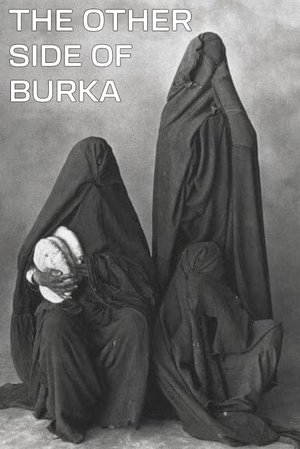
In the year following the 9/11 terrorist attacks, young journalist Claude Baechtold finds himself in the war zone of Afghanistan. Not entirely voluntarily, the avowed anti-militarist is dragged by two fearless reporters on a round trip through the entire country.
In 1892, Ellis Island, in New York Bay, became the main gateway to the United States for immigrants arriving increasingly from Europe. The story of immigration to the United States from 1892 to 1954, an enthralling polyphonic narrative that embraces both small and great history.
A look at the Brazilian black movement between 1977 and 1988, going by the relationship between Brazil and Africa.
A conversation between Idrees Khan and his mother on how the celebrate their Trini culture in Orlando
Documentary that shows the changing attitude towards immigrant labor in The Netherlands. The documentary follows three immigrants that arrived in Holland 30 years ago to work in a bakery.
Twenty-five films from twenty-five European countries by twenty-five European directors.
In this guided tour of a unique Persian carpet, a close-up of the delicate "spine" of a tree branches out into the discovery of a fantastical world.
French documentarist Sonia Kronlund follows actor and director Salim Shaheen, an Afghan movie star who produced more than 110 low-budget movies in a country devastated by war.
A documentary about a night café called Walkers, its workers and the youth – largely immigrants – populating the café during the night.
The Heroes of the Massacre River is a powerful documentary that chronicles the stories of the pioneers behind the construction of the historic Canal of Ouanaminthe, a project that united Haitians across the nation and the diaspora. This film celebrates the groundbreaking efforts of key figures, centering on Dr. Bertrhude Albert, Dr. Naismy-Mary Fleurant, architect Wideline Pierre, economist Etzer Emile as well as dedicated canal workers Milourie Sylfrard, Theodore Johnson and Joseph Pressoir — all guided by the investigative journey of Max Angie Clervil. It also serves as a commentary on the complexity of colonialism and borders, tracing the role that the Massacre River continues to play in the history of Ayiti.
Is the solution to Switzerland's future to integrate Germany into the confederation? After all, like Michael Ringier, CEO of the Ringier media group, says, blithely ignoring all minorities, we're very close in culture and language. Oskar Freysinger takes out his guitar and sings his answer. Politicians from French-speaking Switzerland and Ticino think expanding will help the country survive. The former German foreign minister thinks the two countries' traditions are too different. The banker Oswald Grübel is worried about Germany's debts, although he'd be prepared to take over its assets. With serious interviews interspersed with gags (boat people on Lake Constance, the last Habsburger as a peasant), Giaccobbo gathers off-the-cuff reactions which reveal a lot about the different mentalities. The movie laughs at preconceived notions, redefines neutrality and reflects on what designates a nation. Switzerland, which loves to teach the world a lesson, will soon helvetize the planet, oder?
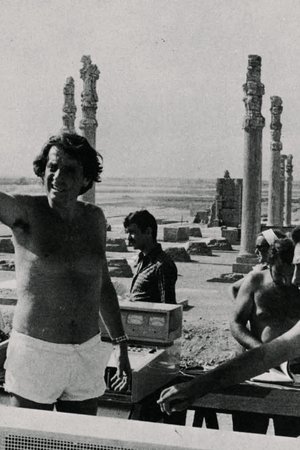
In 1960, acclaimed filmmaker James Ivory traveled to Afghanistan to shoot scenes for a documentary that was never completed. In 2022, he decided to revisit this unique footage, which takes him back to his adventurous youth.
The story of Shaista, a young man who—newly married to Benazir and living in a camp for displaced persons in Kabul—struggles to balance his dreams of being the first from his tribe to join the Afghan National Army with the responsibilities of starting a family. Even as Shaista’s love for Benazir is palpable, the choices he must make to build a life with her have profound consequences.
16 Days in Afghanistan is a documentary that documents the state of Afghan people after the fall of the Taliban.
Fanizadeh documentary is about the famous actor of Iranian cinema Parviz Fanizadeh. This documentary film deals with his life and works. This documentary is based on the talks of characters from theater and cinema who worked directly with him. Among them there are Taghvai, Mehrjoui, Golestan, Kimiaiee, Nosrat Karimi, Behrouz vosoughi, Pari Saberi, etc.
In september 2017 Samira comes from Iran to Sarajevo, BH for the first time to shoot a documentary. She tries to connect with the country and people. In order to find people who traveled from far places like her, she attempts to visit a refugee center, but all she finds are closed gates as she isn't allowed to see anyone.
Armed only with their cameras, Peabody and Emmy Award-winning conflict Journalist Mike Boettcher, and his son, Carlos, provide unprecedented access into the longest war in U.S. history: they are embed with U.S. troops during nine days of intense combat in Afghanistan.
The Fall of the I-Hotel brings to life the battle for housing in San Francisco. The brutal eviction of the International Hotel's tenants culminated a decade of spirited resistance to the razing of Manilatown. The Fall of the I-Hotel works on several levels. It not only documents the struggle to save the I-Hotel, but also gives an overview of Filipino American history.
A powerful depiction of war in infamous global conflict zones. Directed by Oscar/Emmy documentary makers Buddy Squires and Graeme Scott (know for Sam Smith), this film provides a rare and powerful insight into humanity and hope in the depth of war and the greatest global humanitarian crisis of the last several decades.
On September 22, 1998, the Iranian poet Hamid Hajizadeh and his nine-year-old son Karun, whose name symbolically refers to Iran's longest river, were brutally murdered in their home in Kerman. The documentary film, based on the statements of the survivors, tries to sensitively reconstruct one of the many terrible motivated events that took place in Iran at the end of the previous century and draws us into the fateful day with the help of detailed shots of the objects in Hamid's study.