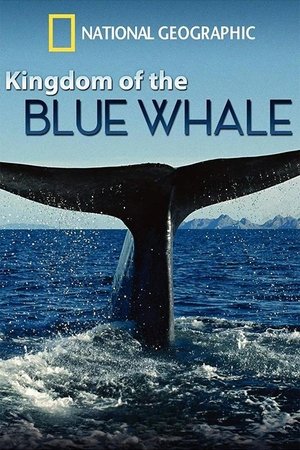
Whales have long been a profound mystery to us. They live in a world so removed from our own that we can barely imagine their lives. Their environment is different, their senses are different, their relationships are different. How might such almost alien creatures see the world?
After years of preparation, a team of highly motivated Quebeckers set out on one of the longest wilderness expeditions ever documented. Stage one involves skiing in relentless polar conditions from Ellesmere Island to the Northwest Passage where the challenge was reaching the mainland. Cue canoes for a 2000km journey across Nunavut and NWT until they reach the first dirt road available where bikes are waiting to be pedalled 4000km to Point Pelee in Ontario.
In 2024, Abdelkrim Baba Aissa, aged 75, engages in a series of filmed interviews with Algerian journalist Thoria Smati. They address the chronology of the rich and committed career of this self-taught Algerian actor, director, producer and screenwriter, who made his debut on Algerian television as an assistant director then at ONCIC as a director in the years 70.
Documentary showing a couple of photographers driving for 35 days, leaving Brazil for Ushuaia.
Follow the story of a leopard mother as she raises her cubs near the Luangwa River, facing a constant battle to hunt successfully, defend her territory and protect her cubs against enemies.
People looking at the Mona Lisa in the Louvre – or are they just looking at themselves?
70 years after the last wolves roamed the national park, a total of 41 wolves were reintroduced between 1995 and 1997. A globally unique experiment that had many supporters, but also resolute opponents, then as now.
Photographer Mike Lassiter journeys across South Carolina capturing the stories of historic, often family-run businesses that line main streets from the coast to the upstate.
Sunderbans (Forest of Beauty) is in West Bengal, India, and is the only place on Earth that is the natural habitat of Royal Bengal Tigers that have never known to be fearful of humans. One tiger has been known to kill three fully grown men, leaving behind orphans and widows who belong to poor tribes, dependent on harvesting wild honey and fishing, in a swampy mangrove region. About 80 people are killed annually by these ferocious beasts with razor-sharp jaws, whose forepaws can shatter bones, and sharp teeth can pierce a skull in one bite. Amidst religious superstitions, the narrator attempts to explain the cause behind their taste for human meat in a region devoid of electricity, roadways, firearms and safe drinking water, and why the villagers continue to live there despite of being stalked and mauled on land and water alike.
The NFL has staged 48 Super Bowls. Four photographers have taken pictures at every one of them. In KEEPERS OF THE STREAK, director Neil Leifer tells the story of this exclusive club, made up of John Biever, Walter Iooss, Mickey Palmer and Tony Tomsic. With their cameras, they have captured football's biggest game of the year for almost five decades.
A documentary of insect life in meadows and ponds, using incredible close-ups, slow motion, and time-lapse photography. It includes bees collecting nectar, ladybugs eating mites, snails mating, spiders wrapping their catch, a scarab beetle relentlessly pushing its ball of dung uphill, endless lines of caterpillars, an underwater spider creating an air bubble to live in, and a mosquito hatching.
Short film made from photographs taken by anthropologist and photojournalist Rogério Ferrari in Palestinian territories in 2002.
Errol Morris examines the incidents of abuse and torture of suspected terrorists at the hands of U.S. forces at the Abu Ghraib prison.
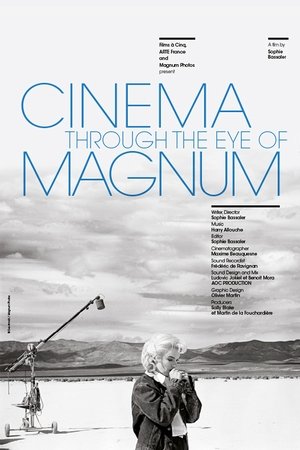
The film tells the story of the intimate and unprecedented encounter between the photojournalists of the Magnum Agency and the world of cinema. The confrontation of two seemingly opposite worlds – fiction and reality. For 70 years their paths crossed: a family of photographers, amongst them the biggest names in photography, and a family of actors and filmmakers who helped write the history of cinema, from John Huston to Marilyn Monroe to Orson Welles, Kate Winslet and Sean Penn.
Documentary about chimps in Gombe.
When chimps go to war...
Ewan McGregor narrates a captivating portrait of wild Shetland and traces the course of a breeding season as the animals on these remote islands battle for survival.
This documentary tells the story of the inimitable kea. The 'Clown of the Alps' is heralded as the world’s smartest bird (its intelligence rivals a monkey’s). Kea are famous on South Island tracks and ski fields for their insatiable (and destructive) inquisitiveness. Curiosity almost killed the kea when it was labelled a sheep killer, and tens of thousands were killed for a bounty. After shots of baby kea being fed, there is extraordinary night footage in clip four of the 'avian wolf' in action. The award-winning film makes a compelling case for the charismatic kea as a national icon.
With more than 300 days a year, the sun dominates this country so much that it’s even shining from their flag. It’s a barren land, sometimes it’s like it’s from another planet but still familiar. It is land of contrasts and colours with wide landscapes and fascinating deserts. Influenced by various cultures during colonization and now reborn from the shadows of Apartheid in 1990, Namibia gives a beautiful collage of culture, language, art, music and food. Everyone who loves an adventure should travel to Namibia, the precious corner of our world full of incredible natural wonders. The experience of endless landscapes and an unparalleled blaze of colour make Namibia unforgettable. NAMIBIA – THE SPIRIT OF WILDERNESS invites you on a trip whose fascination will never let you go: From the Namib Desert over the breath-taking Fish River Canyon to the spectacular Etosha National Park where you will see wild elephants, antelopes, giraffes, zebras and lions.
Oriental Honey Buzzard (Pernis ptilorhynchus) is one of the raptors in Taiwan that specifically builds their nests in “ferns”. While other buzzards migrate between cold northern continent and warm southern islands, they prefer to propagate in Taiwan. Ninety-nine Peaks is their major habitat. With different feather colors, this species can only be distinguished from other birds by their long narrow beak and sharp claws. However, it is certain that all oriental honey buzzards love to eat pupa of bees. The Oriental Honey Buzzard of Ninety-nine Peaks is a documentary produced by Raptor Research Group of Taiwan and published by Forestry Bureau, Council of Agriculture Executive Yuan in 2011. This film not only was nominated in the 34th Montana International Wildlife Film Festival but also won the first –run film in the National Ecological Film Festival and the Best Animal Behavior Award at the 2011 Japanese Wildlife Film Festival.