Stop for Bud is Jørgen Leth's first film and the first in his long collaboration with Ole John. […] they wanted to "blow up cinematic conventions and invent cinematic language from scratch". The jazz pianist Bud Powell moves around Copenhagen -- through King's Garden, along the quay at Kalkbrænderihavnen, across a waste dump. […] Bud is alone, accompanied only by his music. […] Image and sound are two different things -- that's Leth's and John's principle. Dexter Gordon, the narrator, tells stories about Powell's famous left hand. In an obituary for Powell, dated 3 August 1966, Leth wrote: "He quite willingly, or better still, unresistingly, mechanically, let himself be directed. The film attempts to depict his strange duality about his surroundings. His touch on the keys was like he was burning his fingers -- that's what it looked like, and that's how it sounded. But outside his playing, and often right in the middle of it, too, he was simply gone, not there."
7-year-old Sasha has always known that she is a girl. Sasha’s family has recently accepted her gender identity, embracing their daughter for who she truly is while working to confront outdated norms and find affirmation in a small community of rural France.
The film approaches the work of the Greek artist Nikos Koniaris. The particular way in which the painter depicts human suffering is presented through a film - a hybrid of real recording and directed material. The grief, the sick body, is reflected in self portraits, portraits of dying strangers and paintings of dead models. The paintings, apart from his work, also express a different version of himself. All together contribute to the depiction of man as a "garment of pain".
Rolland, a 70 year-old man, exiled by his family due to his sexual orientation, makes peace with the past by finding himself in a small ghost town in the western part of Jalisco, San Sebastián del Oeste. Almost 40 years later, he wants to go back to his hometown, try to regain his daughter's love and be a part o his granddaughter's life.
Fragments from a portrait of Jean-Louis Costes - sincere artist, versatile designer, poet of excess -, a man forever atoning his anguish through singing, performance, drawing and writing...
With more than 70 films and 160 million cumulative tickets in France, Jean-Paul Belmondo is one of the essential stars of French cinema.
Shere Hite’s 1976 bestselling book, The Hite Report, liberated the female orgasm by revealing the most private experiences of thousands of anonymous survey respondents. Her findings rocked the American establishment and presaged current conversations about gender, sexuality, and bodily autonomy. So how did Shere Hite disappear?
Fashion revolutionary Bethann Hardison looks back on her journey as a pioneering Black model, modeling agent, and activist, shining a light on an untold chapter in the fight for racial diversity.
Alanis Obomsawin, a North American Indian who earns her living by singing and making films, is the mother of an adopted child. She talks about her life, her people, and her responsibilities as a single parent. Her observations shake some of our cultural assumptions.
Documentary on Antoine de Caunes, a French television presenter, comedian, actor, journalist, writer and film director.
How do you deal with life's curveballs? FIGURE 3 tells trapeze artist Korri Singh Aulakh's story of being diagnosed with the chronic autoimmune condition Myasthenia Gravis. It's the third installment in FIGURES, a new series of portrait films. Shot on a mix of 16mm film, VHS and digital.
A Sense of Justice, immerses us In a law firm in this same city. There, we can find Christine Mengus and Nohra Boukara, specialized in the rights of foreigners, supported by Audrey Scarinoff and their co-workers.. Stories from their sad, appalling or tragicomic cases alternate with their daily legal work. And as we hear snatches of consultations involving illegal entry or departure, deportation orders, the right to reside or medical assistance, we become witnesses to predictable tragedies, to the administrative or social precariousness induced by such predicaments, and to whole lives depending on court rulings.
Mariem, 53, a former estate agent, has been living at a shelter for several months. Surrounded by women in far more precarious circumstances than herself, she tries to regard her unprecedented social downfall as an immersion in real life. By the time she leaves, Mariem’s view of the world will have changed forever, enriched by all the women she has met along the way.
A man tells the story of his three cats.
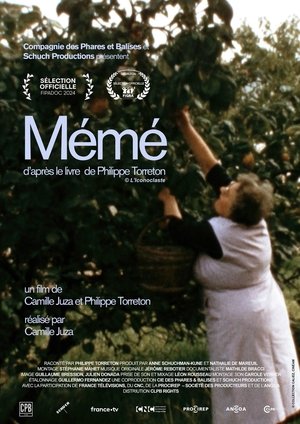
Mémé
A young woman of the Tarahumara, well-known for their extraordinary long distance running abilities, wins ultramarathons seemingly out of nowhere despite running in sandals.
In the 1960s, a young Spanish flamenco dancer named Antonia Singla captivated audiences with her strikingly passionate performances. Having lost her hearing at a young age, La Singla rose to fame with her commanding presence through a combination of her powerful gaze and thunderous movement. However, just at the height of her fame, she seemingly disappeared and decades later has been all but forgotten. When a young woman in Seville comes across La Singla’s story, a bigger picture starts to be unveiled. Through research, interviews and captivating archival footage, she starts to piece together the legend of La Singla. Through the beauty of her performances and the heartbreak of her story, La Singla celebrates and preserves the legacy of one of the greatest Flamenco dancers of all time.
After consolidating itself as a tourist destination in the mid-1960s, this small coastal village has become the dormitory town for the workers of a Nuclear Power Plant. With the liberal promise of prosperity and socioeconomic wellfare, many workers left their homes to move to the small city and started working at the new Nuclear Power Plant. The collective unrest and the silence, cut off by the great gusts of wind, articulate the landscape of the village that is now under the aid of the Nuclear Power Plant.
Ten years ago, Volodymyr Zelensky was just one of the many faces on Ukrainian television screens. He became a star thanks to the 2015 satirical series Servant of the People, in which he played a history teacher who becomes president. Four years later, what began as fiction became a reality. This French documentary follows the transformation of a popular TV comedian into a statesman on the front lines of the Russian invasion. Archival footage, family photos, television appearances, and interviews with Zelensky and those closest to him create a multi-layered portrait of a man who always longed for a large audience. At the same time, the film places his personal development in the broader context of post-Soviet Ukraine, which is also searching for its own identity.
In a conservative Armenian family a 16 years old Karine dreams to become a veterinarian, but her family, especially her father, who is a well-known dog-fighter, is against it. They say it’s not a proper job for women. Karine needs to choose: to follow her dreams or to listen to her patriarchal family.