Casa Loma was the unfinished dream mansion of Canadian industrial magnate Henry Pellatt. A self-made millionaire, Pellatt was derided by fellow aristocrats for nouveau-riche pretentions: the house and its décor considered by many an ornate fake. Its original contents were sold at Pellatt’s bankruptcy auction in 1924. Today the building is a museum. The movie has three sections—the first in a cellar tunnel, the next in a first-story workroom near the stables, the third in the tower’s summit.
A career overview of tv/film composer Billy Goldenberg.
Die Schachtel (The Box), 1968. 35mm film transfer to videotape, black-and-white, sound; 29 minutes.
Documentary about Canadian composer John Wyre.
A short film by conservatory students.
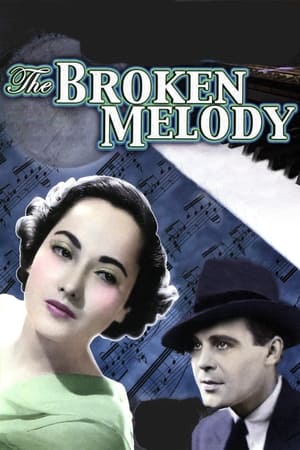
A successful songwriter, dazzled by high society, falls for a society girl who is just playing around.
A chronicle of the life of infamous classical composer Ludwig van Beethoven and his painful struggle with hearing loss. Following Beethoven's death in 1827, his assistant, Schindler, searches for an elusive woman referred to in the composer's love letters as "immortal beloved." As Schindler solves the mystery, a series of flashbacks reveal Beethoven's transformation from passionate young man to troubled musical genius.
A surreal musical comedy set in a world where the avant-garde and the mainstream are reversed.
This audio-visual tone poem uses the language of filmmaking to offer a first-hand evocation of the turbulent psychological effects one can experience due to prolonged lack of sunlight.
Lyrical biography of the classical composer, depicted as a romantic hero, an accursed artist.
Lyla and Louis, a singer and a musician, fall in love, but are soon compelled to separate. Lyla is forced to give up her newborn but unknown to her, he grows up to become a musical genius.
Music is an integral part of most films, adding emotion and nuance while often remaining invisible to audiences. Matt Schrader shines a spotlight on the overlooked craft of film composing, gathering many of the art form’s most influential practitioners, from Hans Zimmer and Danny Elfman to Quincy Jones and Randy Newman, to uncover their creative process. Tracing key developments in the evolution of music in film, and exploring some of cinema’s most iconic soundtracks, 'Score' is an aural valentine for film lovers.
Speaking upon the release of ‘Bodyguard’, Black Dahlia said: “Bodyguard is a theatrical exploration of gaining a new body but your soul remains. It is a sonnet to your past physical body in this realm and the new union that will inevitably be formed. A harsh and gentle celebration of your capabilities, your limits, and your destiny.” As well as being the Director for the music video, Black Dahlia was also Producer, Art Director, Choreographer, and Concept creator for the project. Donning various characters, Black Dahlia embodies performance art and its mediums such as contortion, mime, surrealism, Dada, the avant-garde, and body horror. ‘Bodyguard’ follows Black Dahlia in various theatrical forms and her journey to transformation through reanimation that looks reminiscent of a John Waters film. It also features cameos from Melbourne-based artists, Bura Bura as Dr Barget Hower, Manda Wolf as Dr Avanti and Cong Josie as Dr Cong.
The creative processes of avant-garde composer Philip Glass and progressive director/designer Robert Wilson are examined in this film. It documents their collaboration on this tradition breaking opera.
A vacuum repairman moonlights as a street musician and hopes for his big break. One day a Czech immigrant, who earns a living selling flowers, approaches him with the news that she is also an aspiring singer-songwriter. The pair decide to collaborate, and the songs that they compose reflect the story of their blossoming love.
While Trevor and Sam are smoking pot, Trevor’s mom comes home. When she finds out, Trevor reveals his father’s adulterous ways and destroys his family.
Young Stanzi who is visiting Vienna helps a young corporal and musician to become famous for his marching song "Die Deutschmeister".
The story of Yes is as controversial as their music. The twists and turns of band's career is now told for the first time in a series of exclusive interviews with Yes members past and present for this definitive and fully authorised documentary.
(A)lter (A)ction, 1968. Videotape, black-and-white, sound; 65 minutes (director's edit: 57 minute television version).
As Tobias, a young director, supposes that his girl-friend Ellen had an affair with his brother Markus, front man of "Hansen", one year ago, he decides to shoot a documentary about the band's next tour. When Ellen joins the project, everybody's emotions boil over, although they are observed all the time.