An inside look at China working towards the goal of becoming a superpower by the year 2000 via education as the key to modernization. Filmed in Peking, on a rural commune in central China, and in the industrial northeast region, Jack Reynolds interviews Vice Premier Fang Yi and the president of Peking University, as well as students, workers, and peasants.
A Rebel Without a Cause for a new generation, and one of the most defiant children to ever grace the big screen, 14-year-old Hai is a teenage terror, a high school dropout and an all-around badass. He is also entirely irresistible. You cannot take your eyes off this kid, complete with a motorbike and an everpresent cigarette butt drooping from the corner of his mouth. (Dorothy Woodend, DOXA Documentary Film Festival)
Lao Zha’s film examines rural life in Haiyuan County, in Ningxia Province. Unlike the rapidly globalizing urban centres, here life remains largely unchanged for the Hui people, a Muslim ethnic group, whose diverse cultural roots incorporate Arabic and Persian influences that arose out of the Hui’s proximity to the Silk Road. In a remote Hui village, a little boy named Huhu is growing up under the watchful eye of his grandparents, and, occasionally, his less-than-reliable mother. (Dorothy Woodend, DOXA Documentary Film Festival)
A representation of queer and feminist imagery that was mainly shot in the Qinghai-Tibetan Plateau, remote and developing areas in southwest China, and metropolitan cities like Beijing from 2000 to 2004 to document the social changes in contemporary China. The director sympathetically and erotically represents a variety of women, including women as laborers, women as prayers, women in the ground, women in marriage, and women who lie on the funeral pyre with their dead husbands. Her camera juxtaposes the mountains and rivers in old times, the commercialized handicrafts as exposition, the capital exploitation of the elders’ living space, and the erotic freedom of the young people in a changing city.
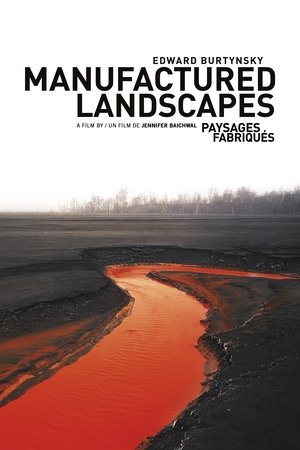
MANUFACTURED LANDSCAPES is the striking new documentary on the world and work of renowned artist Edward Burtynsky. Internationally acclaimed for his large-scale photographs of “manufactured landscapes”—quarries, recycling yards, factories, mines and dams—Burtynsky creates stunningly beautiful art from civilization’s materials and debris.
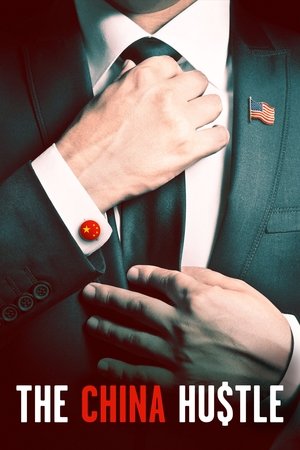
An unsettling and eye-opening Wall Street horror story about Chinese companies, the American stock market, and the opportunistic greed behind the biggest heist you've never heard of.
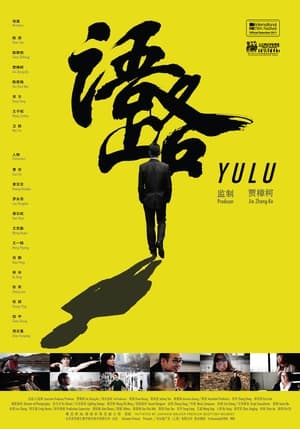
The film uses a documentary approach to tell the stories of 12 Chinese pioneers, chosen from the fields of business and the arts. The protagonists reflect upon their life journeys against the backdrop of modern China.
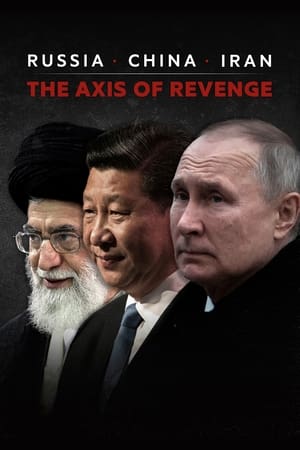
Russia, China and Iran: three former empires are determined to take their revenge and reassert their power after centuries of humiliation. Since the start of the war in Ukraine, they have never been so aligned on the international stage. Their common goal: to put an end to Western hegemony, restore their zone of influence and propose a new model of society. To achieve this, they are waging a hybrid war against the democracies: military, technological, economic, informational and ideological. Are they on the verge of joining forces to create a new world order?
Chai Jing's documentary about the massive smog problem in China. Chai Jing started making the documentary when her as yet unborn daughter developed a tumour in the womb, which had to be removed very soon after her birth. Chai blames air pollution for the tumour. The film, which combines footage of a lecture with interviews and factory visits, has been compared with Al Gore's An Inconvenient Truth in both its style and likely impact. The film openly criticises state-owned energy companies, steel producers and coal factories, as well as showing the inability of the Ministry of Environmental Protection to act against the big polluters.
During the Cultural Revolution in China in the late 20th century, ethnic Manchu people were persecuted and forced to give up such cultural traditions as the shaman dance (tiao tchin, meaning "spirit-jumping" or "god's dance"). However, on Changbai Mountain in Northeast China, a farmer named Guan Yunde decided to start designing and building traditional Manchu shaman drums. At age 70, he is one of a minority of ethnic Manchu people in China's Jilin province, and one of the few people keeping the Manchu shamanic tradition alive.
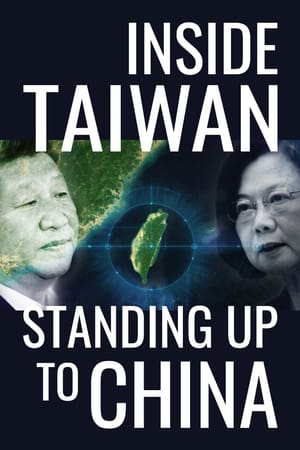
Taiwan is at the heart of a struggle between two nuclear powers – China and the United States - and there are fears it will become the next global conflict. President Xi Jinping insists Taiwan is part of China and must re-unify with the motherland. But Taiwan’s president, Tsai Ing-wen, says the island is already independent and must maintain its freedom and democracy. Jane Corbin investigates how the Taiwanese government and young people are fighting what they say is Chinese disinformation, cyber attacks and dirty tricks.
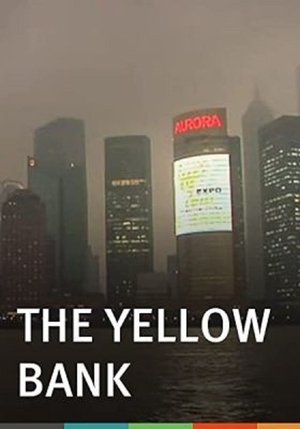
A short documentary that captures the longest total solar eclipse of the 21st century, The Yellow Bank takes you on a contemplative boat ride across the Huangpu River in Shanghai, China. Filmmaker J.P. Sniadecki, who lived and worked in Shanghai nine years earlier, uses the eclipse as a catalyst to explore the way weather, light, and sound affect the urban architectural environment during this extremely rare phenomenon.
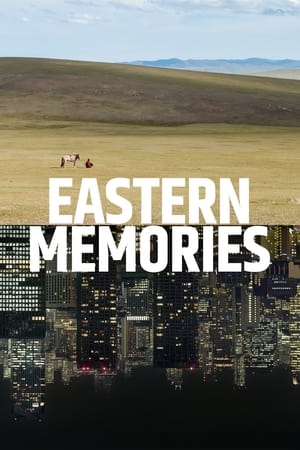
At the turn of the 19th and 20th century Finnish philologist G. J. Ramstedt travelled around Mongolia and Central-Asia. In this documentary Ramstedt’s memoirs are heard in the modern day setting, where tradition is replaced with hunger for money, and deserts give way to cities.
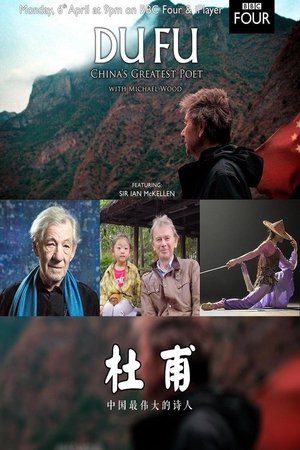
Sir Ian McKellen reads the poetry, Michael Wood traces the journey on the ground. Together they conjure up the extraordinary life, times and words of China’s greatest poet, Du Fu. In this film, the first to ever be made about Du Fu in the west, Michael follows his tracks by road, train and riverboat. Along the way, he meets ordinary people, dancers and musicians, who help to tell the amazing story of a poet whose words have resonated through the centuries, describing the experiences of ordinary people caught up in war, corruption, famine and natural disasters. "I am one of the privileged. If my life is so bitter, then how much worse is the life of the common people?"
Imagine buying the works of true masters, like Renoir, Da Vinci, Van Gogh, Rembrant, Matisse and Raphael for just thirty US dollars! Welcome to the most prolific copy artists in China. The Dafen Village, in southern China, is best described as the oil painting copy capital of the world. It’s here where the masterpiece meets the mass market, where the world's great and not-so-great oil paintings are copied. Thousands of artists turn out reproductions of famed European masterpieces, and the not so famous, for homes and businesses around the world. Last year, Dafen generated about US$35 million in sales. Thousands of painters supply 600 galleries that fill orders from around the world. This documentary talks to the copy-artists to find out what in the name of art, is going on.
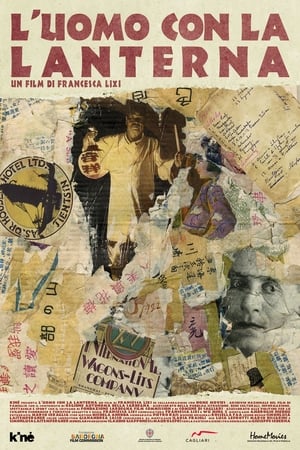
To discover the truth behind the mysterious objects her uncle brought back from the Far East during her childhood, filmmaker Francesca Lixi embarks on a journey to those places through archival footage.
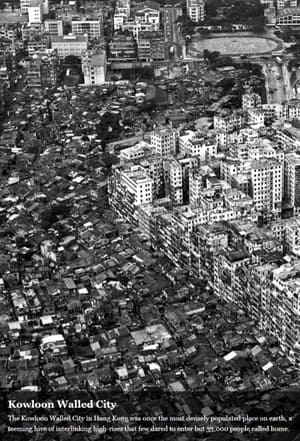
The Kowloon Walled City in Hong Kong was once the densest place on earth, a virtually lawless labyrinth of crime, grime, commerce and hope. A Wall Street Journal documentary tracks its colorful legacy and brings the place alive 20 years later.
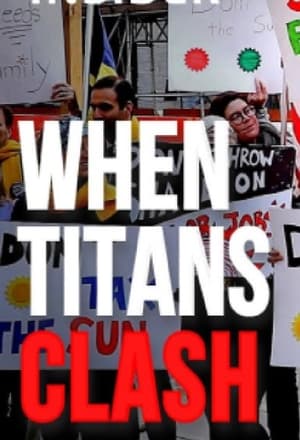
A 3 year trade war has created corporate casualties in both US and China. In China, a dual circulation model is now underway to mitigate the effects of US protectionism. In the US, a Biden administration mulls new economic measures against China, even as industry groups lobby for tariffs to be lifted. Both countries also brace for what used to be unthinkable- the possibility of a financial war.
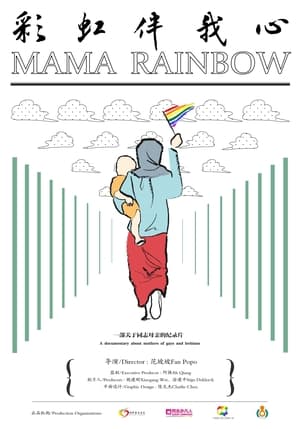
For Chinese parents, finding out that their kid is gay usually presents a major tragedy, with the big majority utterly unable to accept the homosexuality of their son or daughter. However, during recent years a fresh rainbow wind has been blowing over the Chinese mainland: a pioneer generation of Chinese parents has been stepping up and speaking out on their love for their gay kids. This documentary features 6 mothers from all over China, who talk openly and freely about their experiences with their homosexual children. With their love, they are giving a whole new definition to Chinese-style family bonds.
In a street in the north of Shanghai we find a small restaurant, dirty and run-down, but with lots of personality, where Chinese noodles (miantiao) are made 24 hours a day. It’s run by an ethnic Hui Muslim family from the region of Qinghai, in Northwest China. ‘Abierto 24 horas’ presents a chronological account of the 24 hours of life in this establishment.