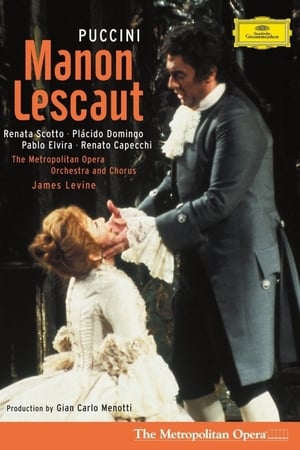
Although Domingo was younger and Banackova looked more like the sweet and innocent young Madalena than the one played by Tomowa-Sintow in the ROH production, this production was not as good. It was not as tight and neat. The tempo set was far too slow for the time-period of the story. The stage setting was distracting. The lighting was too dark. Except Domingo, a natural actor who was always into his role and sings and acts with passion, none of the other performers came up with a convincing portrayal of the role he/she played.
The Queen of the Night enlists a handsome prince named Tamino to rescue her beautiful kidnapped daughter, Princess Pamina. Aided by the lovelorn bird hunter Papageno and a magical flute that holds the power to change the hearts of men, young Tamino embarks on a quest for true love, leading to the evil Sarastro's temple where Pamina is held captive.
Dvořák: Čert a Káča
Kristine Opolais is the young woman whose conflicting desires for love and luxury lead to her tragic end, and Roberto Alagna plays the man who falls for her in Puccini’s early hit. Richard Eyre’s elegant production, which sets the action in 1940s occupied France, was one of the highlights of the Met’s 2015–16 season. Massimo Cavalletti as Manon’s brother and Brindley Sherratt as her aging admirer co-star, and Principal Conductor Fabio Luisi is on the podium.
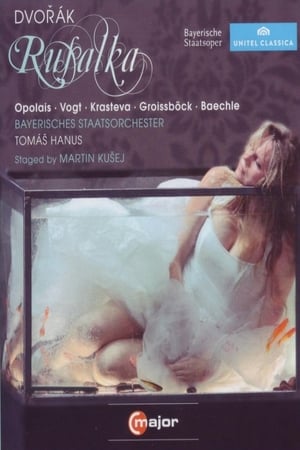
Captured live from Naples’ splendid San Carlo Theatre – the world’s oldest continuously running public opera venue – where it opened the company’s theatrical season, acclaimed director Dmitri Tcherniakov stages a new production of Dvořák’s beautiful, supremely romantic opera about a water sprite Rusalka who longs to find love.
An anthology of four abbreviated operas: "William Tell" by Rossini, "The Marriage of Figaro" by Mozart, "Don Pasquale" by Donizetti, and "Carmen" by Bizet. Filmed in Italy with major opera stars, and accompanied by English narration.
Based on real events and drawing on Georg Büchner's revolutionary play, Alban Berg's Wozzeck turns a grimly tragic narrative of violence and murder into one of the most powerful and original operas of the 20th century. Berg's uncompromising portrayal of brutality and madness generated much controversy, but the significance of Wozzeck was soon recognised; its compelling lyrical expansiveness, large-scale dramatic gestures and remarkable musical structures producing music of overwhelming emotional intensity. The Financial Times declared this to be 'a beautiful, moving, engrossing production… this is a consummate Wozzeck, blending clarity, lyricism, compassion and crushing force.'
The documentary dives intimately behind the scenes of the Finnish National Opera and sucks the viewer in like the best of thrillers. The three hours fly by, even for those who aren’t necessarily interested in opera as an art form.
Drama lyrique in five acts, after the play by Maruice Maeterlink
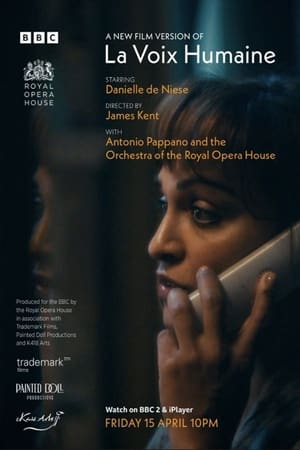
Running through Bartók’s disenchanted tale, whose haunting music was initially condemned as unplayable, and the expression of despair in Poulenc’s monologue, the director Krzysztof Warlikowski perceives a shared dramatic thread, a shared feminine consciousness and a shared sense of imprisonment and suffocation: for the woman who penetrates the confines of Bluebeard’s castle and Elle, the woman who clings to a telephone conversation with a man as the only thing worth living for, are condemned to share the same fate. And this man she speaks to, does he really exist? Unless the director has interpreted Cocteau’s words to the letter and the telephone has become a “terrifying weapon that leaves no trace, makes no noise”…
The soldier Wozzeck (Christian Gerhaher) flits through a world that he is unable to decipher. The doctor torments him with absurd medical experiments; the captain humiliates and ridicules him. And Wozzeck’s lover, Marie (Gun-Brit Barkmin), with whom he has a child, cuckolds him with the drum major. Wozzeck becomes a murderer, stabbing Marie to death. Georg Büchner’s drama fragment, on which Alban Berg based his first opera, is an unflinching case study of social injustice and human suffering. But it is also a grotesque piece that thrives on exaggeration – and in which only a fine line separates the unfathomable from the ridiculous. Accordingly, director Andreas Homoki forgoes all realism.
Part of the celebrations for the 150th anniversary of the death of the Pesaro composer, Il Barbiere di Siviglia staged in Lugano, is the result of a virtuous collaboration that involved Swiss Radio and Television, LuganoInScena and LuganoMusica. The musical part was entrusted to Maestro Diego Fasolis who, together with his Barocchisti ensemble, was involved in the project from the very beginning. Internationally renowned soloists such as Edgardo Rocha (who embodies the Count of Almaviva), Riccardo Novaro (Bartolo), Lucia Cirillo (Rosina), Giorgio Caoduro (Figaro), Ugo Guagliardo (Basilio) and Alessandra Palomba (Berta) performed on stage.
In the early 19th century, in Seville and the surrounding area, Carmen seduces the sergeant Don José, who deserts the army to be with her. But the beautiful gypsy falls in love with the bullfighter Escamillo, much to Don José’s despair.
Cio-Cio-San, a young Japanese geisha, seeks to fulfill her dreams through marriage to an American naval officer. Her faith in their future is shattered by his empty vows and the loss she endures touches something deep within us all.
Tan Dun portrays the Venetian explorer's travels to the Far East as a journey of both inner and physical discovery, a voyage depicting spiritual experiences as well as a geographical expedition. Pierre Audi's mythical staging and Jean Kalman's fabulous set design complement the composer's own musical direction, forging the dazzlingly versatile soloists, the Netherlands Chamber Orchestra and Cappella Amsterdam to a stunning symbiosis of elements across time and space, a true testimony to cultures intertwined in globalization.
Opera at La Scala Milan
'La Bohème' im Hochhaus
Recorded at the Glyndebourne Festival Opera in 1995, this acclaimed presentation of composer Gioachino Rossini's epic opus ERMIONE is based on Jean Racine's play "Andromache." Set in Troy after the city fell to the Greeks, the production recounts the rancorous battle between widow Andromache and Helen of Troy's green-eyed daughter, Ermione for the love of Pyrrhus
Based on a revolutionary play supposedly written by the Eternal President of the Democratic People's Republic, Kim Il-sung, and rumored to have been co-directed by Kim Jong-il. This revolutionary work is also popular among the Chinese, especially those who lived through the Cultural Revolution, and have fond memories of revolutionary antics.
A version of Benjamin Britten's opera based on the Melville story. Will the virtuous young sailor Billy Budd be hanged for murder?