In the 50's, in Paris, the neighbors Rodolfo and Mimi meet each other when Mimi's candle blows out in a cold and dark night. They immediately fall in love for each other, in times of financial difficulties in the post-war. Rodolfo introduces Mimi to his close friends Marcello and his beloved Musetta; Colline; and Schaunard and together they have a good-time in Café Momus. Some time later, Mimi tells Marcello that she can not support the jealousy of Rodolfo any longer and when Marcello discuss with Rodolfo, Mimi overhears the real reason for the behavior of her beloved Rodolfo.
Starring the exquisite coloratura soprano Emma Matthews as the innocent girl priestess Lakmé, and superb tenor Aldo Di Toro as the love-struck Gerald, the story tackles religion and cross-cultural love against a backdrop of British rule in India in the mid-19th century. French conductor Emmanuel Joel-Hornak brings out the full depth of the lush, dramatic score, with familiar high points being the beautiful renditions of the well-known Flower duet and Bell Song. Dominica Matthews adds her rich voice as Mallika and Stephen Bennett is darkly dominating as Brahmin priest Nilakantha, Lakmés father, while Roxane Hislop is a consumate Mistress Bentson. Set and costume designs by Mark Thompson fill the stage with rich colour, atmosphere and exoticism, complemented by Nigel Levings warm lighting. This restudied production, originally conceived by Adam Cook, is skilfully directed by Roger Hodgman.
Berlioz’s colossal masterpiece requires stupendous forces—dozens of soloists, enormous chorus, orchestra and ballet, a superb conductor who understands the uniqueness of the score—plus a production that does visual justice to the work. “A stupendous achievement” was one critic’s assessment of Peter Wexler’s inventive production. And with James Levine’s wizardry galvanizing the marvelous all-star cast, this is truly a gem. Plácido Domingo is the legendary hero Aeneas, Jessye Norman the obsessed prophetess Cassandra, and Tatiana Troyanos is Queen Dido, who commits suicide when Aeneas leaves her.
Marc Minkowski conducts the Orchestra and Chorus of the Opera National de Lyon in this 1997 production of Offenbach's opera starring Natalie Dessay, Yann Beuron, Jean-Paul Fouchecourt and Laurent Naouri.
Short Polish dance film
A group of 12 teenagers from various backgrounds enroll at the American Ballet Academy in New York to make it as ballet dancers and each one deals with the problems and stress of training and getting ahead in the world of dance.
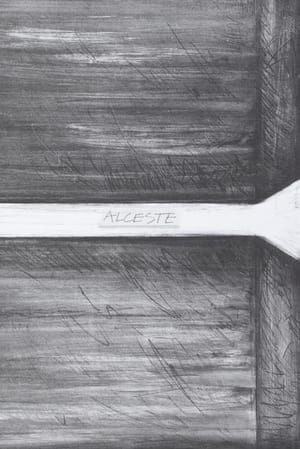
John Eliot Gardiner conducts Gluck’s 1776 French version of “Alceste” at the Théâtre du Châtelet in Paris. Soprano Anne Sofie von Otter takes the title role of Alceste, Queen of Thessaly, who offers to die at the hands of the gods in place of her husband, Admète (Paul Groves), so that the people will not lose their king. Alceste is then saved from the underworld by Hercule (Dietrich Henschel).
A struggling female soprano finds work playing a male female impersonator, but it complicates her personal life.
Handel's 1724 opera Tamerlano followed the success of his previous year's Giulio Cesare with another colourful historical costume drama. This time the setting is the court of "Timur the Tartar", who has just defeated the Turkish Sultan Bajazet at the battle of Angora. There are, naturally enough, romantic complications when both Tamerlano and his ally, the Greek Prince Andronico, fall in love with Bajazet's daughter Asteria. She, however, has plans to revenge her father's defeat. This production was directed by Jonathan Miller and staged in the intimate surroundings of the Goethe Theatre of Bad Lauchstadt as part of the 2001 Halle Handel Festival.
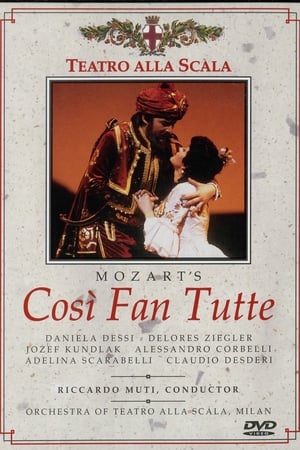
A production of Mozart's opera recorded live at Zurich Opera House in 2000. Cecilia Bartoli leads an all-star cast including Roberto Saccà, Liliana Nikiteanu, and Agnes Baltsa. The conductor is Nikolaus Harnoncourt. Filmed live at the Zurich Opera House in February 2000 on a set which visualises the subtitle "The School for Lovers", the plot revolves around two army officers arguing about the fidelity of their brides, then setting out to test their chastity. Despite the often playful humour, this is not only psychologically telling music-making, but reveals Mozart exploring the structure of opera, discarding convention to mix large ensemble sections with arias for as many different combinations of singers as possible. With Liliana Nikiteanu attractively contrasted with Bartoli, and thoroughly convincing performances by Roberto Sacca (Ferrando) and Oliver Widmer (Guilelmo), this Così has a freshness and flow which, coupled with the timeless romantic themes, feels very contemporary.
Premiered in 1787, “Don Giovanni” exposes the timeless theme of a man hovering between vitality and destruction. Neither morality nor the law can stop this serial lover in his quest to conquer all women as he places his own pleasure above all other principles. Today, the rich depth of Mozart’s masterpiece still astonishes audiences with its mix of comedy and seriousness, pleasure and love, entertainment and murder. At the helm of this new Salzburg Festival production, in a near-live broadcast from the Great Festival Hall, director Romeo Castellucci promises to focus on the ambiguity and inner turmoil of this serial lover whose immoral behaviour condemns him to a deadly solitude. The exceptional cast – featuring Italian baritone Davide Luciano (Don Giovanni), Russian soprano Nadezhda Pavlova (Donna Anna) and Finnish bass Mika Kares (the Commendatore) – is accompanied by the chorus and musicians of the musicAeterna ensemble, conducted by Vitaly Polonsky and Teodor Currentzis.
Imagine a window into the past. Imagine finally connecting singers' bodies to the voices you have always treasured on record, watching footage of performances from another era. All of singers featured here have something in common (with one exception, Sutherland): they sang and performed on stage before the advent of filmed opera. . And it shows, for the first time, a few tantalizing minutes of recently recovered footage from Callas' legendary Lisbon Traviata, featuring Addio dal Passato and Parigi oh cara with Alfredo Kraus. This DVD will leave you asking for more.
To speak of that ballet is very difficult because the theme is so popular as a fairy tale, adapted by Perrault from German folklore and then recuperated from the same folklore by the Grimm brothers, and what's more turned into an unforgettable film by Walt Disney. Angelin Preljocaj was thus trying to break a mould in which that character and her story had been cast seemingly for ever. And it is a success. Because first the setting, the stage direction are very interesting and rich. Rich are the costumes. Rich are the main ideas of the setting like the enormous magic mirror coming down from the sky, or like the deep underground mine turned into a vertical surface on which the seven dwarfs are dancing like dragon-flies on their strings.
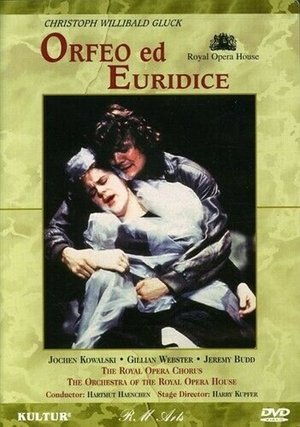
A sudden gunshot shatters the dream of two lovers on their wedding day. The fate of Orpheus and Eurydice is cruel: on the very day they sought to seal their love, EurydiceΆs soul embarks on its journey to the underworld. Heartbroken, Orpheus embarks on a perilous journey to bring his beloved back from Hades. A journey that will lead the fearless hero to confront the depths of his emotions and face his greatest fears. This journey will take him through strange worlds and into encounters with some of the greatest musical pieces and arias in the history of music. Will love triumph over death?
The life and career of Italian opera singer Farinelli, considered one of the greatest castrato singers of all time.
Erich Wolfgang Korngold's "Die tote Stadt" in a Bayerische Staatsoper production from 2019, directed by Simon Stone. Kirill Petrenko is conducting Jonas Kaufmann and Marlis Petersen.
George Balanchine's jewel-themed triptych, strikingly choreographed to the music of Faure, Stravinsky and Tchaikovsky. This three act masterpiece is renowned as the world's first full-length abstract ballet. The Russian-born co-founder of the New York City Ballet, Balanchine was inspired by the artistry of jewellery designer Claude Arpels to create a trio of distinct movements revealing the essence of each precious stone. Each part also evokes three different cities: Paris, New York and St. Petersburg. 'Emeralds' was conceived as a tribute to the French romantic school, with music by Gabriel Faure. The fiery and energetic 'Rubies' taps into the rich tradition of Broadway musicals, with music by Stravinsky. 'Diamonds' honours the grandeur of Imperial Russia and the Maryinsky Theater, choreographed to the music of Tchaikovsky. With its jewel-like costumes, this is a celebration of the influences on the choreographer who was described as the father of American ballet.
A Night in Tuscany is the first DVD released by Italian singer Andrea Bocelli of a concert held in his native Tuscany, in 1997, highlighting the unique blend of Classical, Pop, and traditional Italian songs that made him a crossover success as an internationally acclaimed tenor. The concert takes place at the Piazza dei Cavalieri in Pisa. Bocelli performs two opera duets with soprano Nuccia Focile during the concert, before singing Miserere with Italian rock star Zucchero, who discovered him, and Time To Say Goodbye with English soprano Sarah Brightman
Live Metropolitan Opera performance March, 1985.
A synthesis of sound and movement; colourful characters dance and move in repetitive patterns to percussive and melodic elements. A combination of motion and music that is hypnotic and beautiful. At first it feels structured and orderly but as more elements are added becomes quixotically expressive.