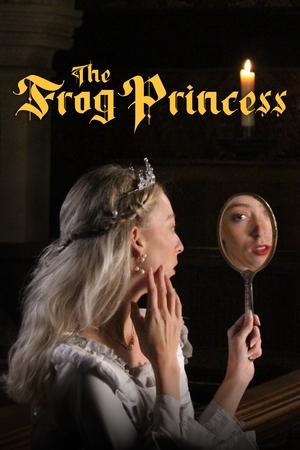
A delightful retelling of the classic fairytale by Hanna-Barbera, using live action and animation.
The story of a princess who despised the deep love of a wise king is taken from the legacy of the French writer Charles Perrault. Like all fairy tales by this master storyteller, this one has an original theme and contains wisdom, which is difficult to find. But by the end of it, the princess will know what matters most in life.
Pretty country girl Verunka is afraid that she will never get married. No groom is good enough for her mother. Above all, she wants a rich groom for her daughter. She would never give her Vendulka to the painter Žabž, even though he truly loves her daughter. The lavish dress and title enchant her mother Hromaska, and she has no idea who she is promising Vendulka to as her wife. If it weren't for the clever Žabž, Hromaska could have the devil as her son-in-law.
Princess Magdalena is not having an easy time. Her mother, the queen, has died and her father, the king, has remarried. When Magdalena has grown into a pretty girl, her stepmother begins to make life hell for her. She doesn't want the king to notice that the princess is already an adult and even in love, so with the help of a treacherous flower, she enchants the girl into an obedient puppet. In the end, however, all the queen's intrigues turn against her and the young princess will be happy alongside her beloved prince...
A fairy tale about a magic key that can be used to control time. How many times a day do we think about time and would like to do something with it - if only we had the power! Fortunately, we don't have it, because who knows what would happen if we could control time. However, in fairy tales, everything is possible and the magic key that a watchmaker's journeyman received from an inconspicuous grandfather will convince you of this.
Hejkalka
For centuries, the cold lights of the stars have gazed down on human endeavors from the heavenly plains, and for centuries, people have tried to read their destinies from the movements of the stars... And it is precisely how dangerous it is to blindly believe dubious interpreters of the stars that is the subject of the fairy tale The Star of Life. An old duke calls upon the renowned astrologer, Master Vecchio, to be the tutor of his daughter Drahomíra. The power-hungry astrologer convinces the duke, with the help of false horoscopes, that if he does not give him his daughter's hand in marriage, he will perish in battle. Drahomíra, faithful to her childhood love for the hunter Ondřej, does not believe the master, and so the devious Vecchio sets a trap for her...
What could the fairies be missing, anyone who sees those three lovely elderly ladies living happily in their castle in the middle of a beautiful garden would think. And yet something was missing. They longed for someone to cheer them up, to care for them. A little magic was all it took for Princess Janet to trade her family castle for a fairy garden. At first it seemed that she would not be so bad off here, but as soon as she made it known that she would not marry the obsolete king of the flower elves, a cruel punishment awaited her.
Even a small child knows that people go to hell for their bad deeds—especially if the devils are targeting evil, envious, exploitative, greedy, and lazy people... Of course, everyone thinks that this applies to everyone else, that they themselves are not really that bad, and, most importantly, that they have plenty of time to improve. Of course, the desire to improve is the first step in the right direction, but Vašek, the hero of our fairy tale, doesn't even have that desire. He quite likes his lazy nature. And why wouldn't he, when his parents, and even his sweetheart Andulka, can't do anything but complain and sigh and hope that maybe one day... The offer of help comes from a completely unexpected source—Beelzebub himself, the chief prince of all devils and she-devils, takes Vašek to hell for a year to re-educate him. Of course, this isn't for free, and there's a nasty trick hidden in it.
Sumikkogurashi debuted in 2012 as slightly negative characters who like to stay in the corner of a room. The characters include "Shirokuma", a polar bear who is sensitive to cold, "Penguin?" (with a question mark in its name), a penguin who is unsure if it is actually a penguin, "Tonkatsu", a piece of pork cutlet that was left uneaten, "Neko", a shy cat, and "Tokage", who hides his nature as one of the last dinosaurs. The franchise has inspired toys, books, stationery material, video games—and now a feature film.
Soviet film following Nasreddin
When Little Red Riding Hood is harassed by the wolf for the umpteenth time, she decides to take matters into her own hands. Through the grapevine, she acquires a mysterious object called Trinity. At first glance, this strange artifact seems to solve the problem, but gradually she discovers that it also comes with its own dangers.
Ilya Muromets has to rescue his trusty horse Burushka and Kiev treasury from the greedy hands of the famous bandit, Sparrow the Robber.
Cursed to die by the evil fairy Maleficent when she was a baby, Princess Aurora is sent into hiding under protection from three good fairies. As she grows up far away, Maleficent becomes increasingly determined to seal the princess's fate.
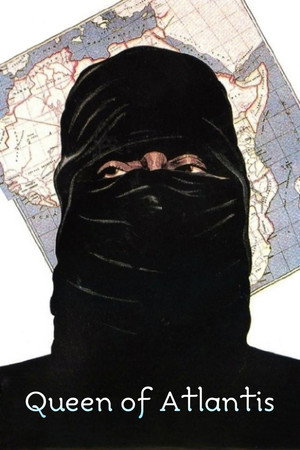
Two young officers, Saint-Avit and Morhange, get lost in the desert and find themselves prisoners of the beautiful Antinéa, queen of the city of Atlantis. Saint-Avit, blinded by his love for her, obeys her when she orders him to kill his comrade... With L’Atlantide, Pabst offers a psychoanalytic reading of Benoit’s novel, with a dominant female figure who enslaves her lovers before destroying them. The film’s fantasy dimension is disturbing, L’Atlantide bathes in a humid nightmare atmosphere, between the desperate search for a missing friend and the apparitions of an underworld lost in the desert. A long, discursive flashback suggests the Parisian origins of Antinéa, born from the marriage between Clémentine, a pretty, light-thighed French Cancan dancer, and an Arab prince seduced during a theatrical performance. But again, it's impossible to know whether these are the ramblings of an old alcoholic or the strange truth.
Das Märchen von der Zauberflöte
In post–civil war Spain, 10-year-old Ofelia moves with her pregnant mother to live under the control of her cruel stepfather. Drawn into a mysterious labyrinth, she meets a faun who reveals that she may be a lost princess from an underground kingdom. To return to her true father, she must complete a series of surreal and perilous tasks that blur the line between reality and fantasy.
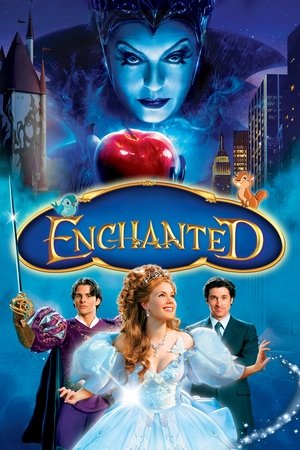
The beautiful princess Giselle is banished by an evil queen from her magical, musical animated land and finds herself in the gritty reality of the streets of modern-day Manhattan. Shocked by this strange new environment that doesn't operate on a "happily ever after" basis, Giselle is now adrift in a chaotic world badly in need of enchantment. But when Giselle begins to fall in love with a charmingly flawed divorce lawyer who has come to her aid - even though she is already promised to a perfect fairy tale prince back home - she has to wonder: Can a storybook view of romance survive in the real world?
Following the benevolent King's disappearance, the Evil Queen dominated the once fair land with a cruel streak. Princess Snow White flees the castle when the Queen, in her jealousy over Snow White's inner beauty, tries to kill her. Deep into the dark woods, she stumbles upon seven magical dwarves and a young bandit named Jonathan. Together, they strive to survive the Queen's relentless pursuit and aspire to take back the kingdom.
It ain't easy bein' green -- especially if you're a likable (albeit smelly) ogre named Shrek. On a mission to retrieve a gorgeous princess from the clutches of a fire-breathing dragon, Shrek teams up with an unlikely compatriot -- a wisecracking donkey.