An epic story of adventure, starring some of the most magnificent and courageous creatures alive, awaits you in EARTH. Disneynature brings you a remarkable story of three animal families on a journey across our planet – polar bears, elephants and humpback whales.
Deep Blue is a major documentary feature film shot by the BBC Natural History Unit. An epic cinematic rollercoaster ride for all ages, Deep Blue uses amazing footage to tell us the story of our oceans and the life they support.
West Coast of England, redshanks wander through wetlands in search of food while facing constant threats from loose dogs.
Takes us to locations all around the US and shows us the heavy toll that modern technology is having on humans and the earth. The visual tone poem contains neither dialogue nor a vocalized narration: its tone is set by the juxtaposition of images and the exceptional music by Philip Glass.
Industrialization brings progress, but also harmful influences on the environment. Warning of the dangers of waste materials dumped into the air and the waters.
The world's last kakapo population is plagued by a deadly curse. Without a cure, it could be the end of the world's rarest and strangest wild parrot.
A captured mustang remains determined to return to his herd no matter what.
A documentary of insect life in meadows and ponds, using incredible close-ups, slow motion, and time-lapse photography. It includes bees collecting nectar, ladybugs eating mites, snails mating, spiders wrapping their catch, a scarab beetle relentlessly pushing its ball of dung uphill, endless lines of caterpillars, an underwater spider creating an air bubble to live in, and a mosquito hatching.
One filmmaker's exploration of natural light in California and its influence on people's lives.
Returning from a hunting trip in the forest, the Henderson family's car hits an animal in the road. At first they fear it was a man, but when they examine the "body" they find it's a "bigfoot". They think it's dead so they decide to take it home (there could be some money in this). As you guessed, it isn't dead. Far from being the ferocious monster they fear "Harry" to be, he's a friendly giant.
Something shocking is happening in the abyss around Guadalupe Island. Photos of great whites with strange scars believed to be from giant squids have surfaced. Dr. Tristan Guttridge leads a mission to get a glimpse into the battles between the two beasts.
The giant squid is a creature of legend and myth which, even in the 21st century, has never been seen alive. But now, an international team of scientists thinks it has finally found its lair, 1,000 metres down, off the coast of Japan. This is the culmination of decades of research. The team deploys underwater robots and state-of-the-art submersible vessels for a world first - to find and film the impossible.
Groundbreaking documentary which follows a Japanese-led team of scientists as they attempt to shed light on the mysterious world of deep sea sharks. Only 50 specimens of the newly discovered 'megamouth' have ever been sighted. Over four years, scientists and film crews voyaged in midget submarines into the depths of Suruga Bay and Sagami Bay to film them. Prehistoric 'living fossil' sharks such as bluntnose sixgill sharks, goblin sharks and frilled sharks also lurk in the depths. As part of the investigation, a sperm whale carcass was placed at the bottom of the sea to attract these sharks, which were then studied and observed from the submersible vessels. Revealing in detail the previously unknown behaviour of deep sea sharks, the film unravels another of the intriguing mysteries of our planet's biodiversity.
See a man living among wolves as the National Geographic Channel presents the unique story of maverick researcher named Shaun Ellis who raises abandoned wolf cubs and teaches them by example how to survive in the wild. In A Man Among Wolves, see how Shaun has given up everything to take a daring and unorthodox approach to understanding wolves' every move - living and behaving like them, howling, licking and snarling like them, even eating carcass meat like them.
A newly discovered mega-hunt is happening off the coast of South Africa. In an epic annual spectacle in False Bay, a pod of cunning killer whales hunt 5,000 common dolphins.
Humans belong to a group called anthropoids. Gibbons have the most human-like traits among the anthropoids. Gibbons are the only apes capable to sing like humans and communicate through their songs. This film documents an unprecedented attempt to investigate the musicality of multiple species of wild gibbons - siamang, the white-handed gibbon and the javan gibbon - surviving in the South-East Asians habitats. The story of endangered Asian Ape unfolds in this documentary with their songs in various situations.
The Serengeti is one of the most brutal environments on the planet. It's also home to the tough Vumbi lion pride. Using ground-breaking new tools (including a lion-proof peeping Tom robot), National Geographic explorers Michael "Nick" Nichols and Nathan Williamson embed with the lions to reveal a never-before-seen view into a world with razor thin margins between life and death.
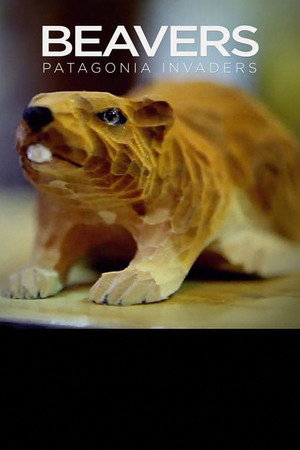
In 1940 twenty Canadian Beavers were brought to 'Tierra del Fuego' island in southern Patagonia for commercial fur production. However, beavers having no natural predators, quickly spread throughout the island, causing massive destruction of trees threatening the entire Patagonian forests rivers and species. Why wildlife conservationist are convinced that 150.000 beavers must be killed? Why some of the most recognized specialist are convinced that an eradication is not possible? Meanwhile truism is capitalizing on the situation: a man dressed as a beaver passes out flyers promoting a famous sky resort: 'Cerro Castor' - Beaver Hill. Hunters claim for subsidies, scientists are researching, rangers do what they can and restaurants tray to offer beaver meat to tourist.
In the heart of Uganda, there are lion prides that spend much of their lives in the trees – a rare and mysterious behavior seen in few other places in Africa – and little is known about why they do it. Big cat biologist Alexander Braczkowski sets out to study these lions, and his journey takes an unexpected, emotional turn.
Africa the Serengeti takes you on an extraordinary journey to view a spectacle few humans have ever witnessed: The Great Migration. Journey with more than two million wildebeests, zebras and antelopes as in their annual 500 mile trek across the Serengeti plains.