In a year of uprisings and political unrest, Stonebreakers documents the fights around monuments in the United States and explores the shifting landscapes of the nation's historical memory.
Nas Entranhas de Nicolópolis
Through moving and detailed testimonies, the documentary explores the significant Chilote heritage in the architecture of an emerging Patagonia at the end of the 19th century.
The inspiring story of a 17th century French priest who reluctantly became involved in educating poor children and in the process became the Founder of the Brothers of the Christian Schools, an order known today as the De La Salle Christian Brothers. Actor Mel Ferrer gives a heartfelt performance as St. John Baptist de La Salle, a priest from a wealthy upper-class family who gave up everything to serve the needs of educating poor children, facing tremendous opposition along the way.
Chris Marker’s A Grin Without a Cat is an epic political essay tracing the rise and decline of the global left from the 1960s to the 1970s. Through archival footage and commentary, the film examines revolutionary movements in France, Latin America, and beyond, reflecting on the ideals, failures, and fading hopes of a generation.
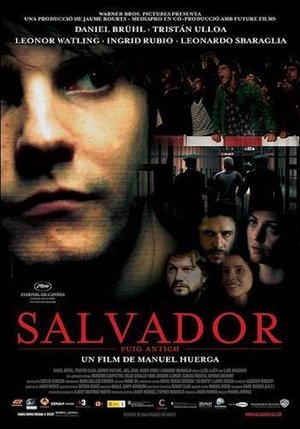
A war. Two friends. Chaos will reign.
Who is Kim Yo-jong? In a context of maximum tensions between North Korea and the United States, Pierre Haski paints an unprecedented portrait of the little sister of Kim Jong-un, whose influence in Pyongyang is growing stronger day by day.
1988 marked the year in which the debut album of the Chilean band De Kiruza - Oficial was released, where the single "Algo está pasando" stood out, the first Chilean rap recording.
Learn and capture the history of unesco world heritage Hue in Vietnam. The Hue Imperial Tombs in Vietnam are a testament to the country's rich history and cultural heritage. These tombs, located in the former capital of the Nguyen Dynasty, are a collection of royal mausoleums that showcase the architectural grandeur and artistic accomplishments of the period. Recognizing their historical and cultural significance, UNESCO has included these tombs as part of the Complex of Hué Monuments, a UNESCO World Heritage site. This designation ensures that efforts are made to preserve and protect these structures for future generations. Each tomb is uniquely designed, reflecting the personality and preferences of the emperor it commemorates, with elaborate decorations, serene landscapes, and intricate carvings. UNESCO’s involvement not only highlights the global importance of the Hue Imperial Tombs but also aids in tracking and facilitating international support for their conservation.
A serious crisis has shaken Spain since the referendum on self-determination and the proclamation of the independence of Catalonia by the government of Carles Puigdemont, bold actions firmly fought by the Spanish government by applying the constitutional article that allows it to place a region under guardianship. While Spain is on the verge of implosion, Europe is holding its breath.
A documentary on the rise and fall of Project Cybersyn, an attempt at a computer-managed centralized economy undertaken in Chile during the presidency of Salvador Allende.
A portrait of the Director’s maternal grandmother, Eliane, a French woman who lived her entire life in Tunisia. The film shows her last moments at home with her family before her passing due to Alzheimer's disease.
Cambodian refugee Ted Ngoy builds a multi-million dollar empire by baking America's favourite pastry: the doughnut.
Can you imagine a water market? A market where owners of water stock would buy and sell, while others would profit on its price without needing it? What would life be like if all of the planet’s water resources, superficial or subterranean, the waters of rivers, lakes and glaciers, belonged to the private sector? ‘Life For Sale’ examines the biggest water market in the world, set up in Chile.
Story of the 1974 coup that overthrew the right-wing Portuguese dictatorship--which continued the fascist policies of long-time dictator Antonio Salazar--and of two young army captains who were involved in it.
Raymond Roy is a 64-year-old idealist, an energetic social activist ready to give everything he has to those living on the edge: the alienated, impoverished and exploited members of society. Raymond is also a priest, doing what he has wanted to do ever since he was a teenager. Filmmaker Serge Giguère paints an intimate portrait of a man who has spent 30 years fighting for an alternative vision of life in his community. The film is a blend of cinema vérité and social history that provides a view of the man and his work from without and within, from the poetry of his personal diary laced with doubts and self-criticism, to the many achievements of the community groups he helped. Filming over several years, Giguère gives us a sense of the changes in values and attitudes of those who run our society, along with the role of the community groups who provide solutions, inspiration and a sense of renewal.
The film highlights the diverse psychological and political consequences of covert police operations. The undercover police officer, Iris P., investigated the Hamburg left scene as "Iris Schneider" for nearly six years. She had close friendships, and she had several years of intimate relations with people, who at the same she spied upon. After Iris P. was publicly unmasked in 2014, two more clandestine investigators were revealed as well. However, public surveillance can also affect people who would have considered it impossible. This is illustrated by the case of the police officer Simon B., who enrolled in the University of Heidelberg, to spy out peaceful left-wing students.
Florian Hartung and Dirk Pohlmann have reconstructed a previously unknown dimension of the collaboration between Nazis and the CIA in the Cold War. Drawing upon recently released documents, the film exposes for the first time a perfidious, worldwide net that reaches deep into the power structures of the Federal Republic of Germany. Lending their authority to the fact-finders’ mission are high-ranking statesmen, journalists and historians.
One man's hat is another man's treasure when it comes to the importance and significance of saving items of historic value.
1972. During the government of Salvador Allende 34 artists made works that were included in the construction of the UNCTAD III building, today GAM. After the 1973 coup, few works survived looting and destruction. 40 years later, Joaquín Maruenda, son of the late sculptor Félix Maruenda, finds a record that leads him to investigate the events of the sculpture "Chimeneas" and its possible restoration. Joaquín, artists and workers involved with the construction of the building, will try to answer the question Why did they destroy the art?