John Milius narrates this featurette on the Clint Eastwood classic.
Featuring Interviews with Noel Cunningham, Sean S. Cunningham, Kane Hodder and Todd Farmer. Discussions include writing and pre-production, the influence of Scream's success on the film, early concepts for the film, settling on outer space, plot and setting details, shooting 3-perf film, visual effects, ditched concepts, über Jason, audience reaction, and more.
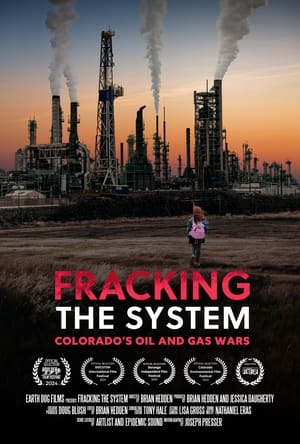
On September 30th, 2019; people rallied together to fight the system for climate change. This is the story of that rally, and the inevitable impact global warming will have on our planet.
Sir Ian McKellen and Richard Loncraine talking about making the film.
A great flood arrives in a desert kingdom, transforming a dustbowl into a vast and lush wetland, in one of the most diverse habitats on earth. This breath-taking blue-chip natural history film is a journey through Okavango’s seasons, seen through the eyes of an indigenous River Bushman. Our storyteller guides us through the course of Okavango’s flood and into a savage drought, interweaving intimate and spectacular wildlife stories. The arrival and disappearance of precious water determines the destiny of the millions of animals that call Okavango home. For many, the flood is a lifeline. For others, it brings the greatest challenges. Everyone lives or dies by this epic event. It is the heartbeat of the Kalahari.
Dance for All
For over 170 years, Crystal Palace Park has been home to monsters. When sculptor Benjamin Waterhouse Hawkins unveiled the Crystal Palace Dinosaurs to the public in 1854, they were the first ever life-sized depictions of extinct animals. Whilst hugely inaccurate according to our modern understanding, they now represent an important milestone in the history of science. They're also one of South London's most beloved and charming attractions. Over the years, the sculptures have fallen into disrepair thanks to a lack of funding, perennial vandalism and the forces of nature. But a passionate group of local residents have banded together to keep the statues standing. With the help of a world-famous rockstar, can they stop our dinosaurs from going extinct?
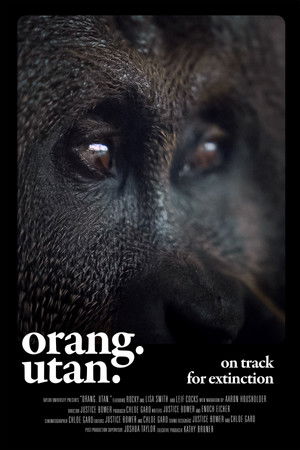
The loss of biodiversity is highly alarming: our planet is currently experiencing the greatest extinction since the age of the dinosaurs. This film documents the extinction of species currently happening around the world. But it also highlights hopeful initiatives as committed men and women on every continent fight to save endangered species and work towards improving biodiversity.
At once exaltation and elegy, this documentary profiles the natural history of North Carolina's Outer Banks, a seascape of transitory barrier islands doomed to disappear.
A heartwarming exploration of a community art project by photographer Tawfik Elgazzar providing free portraits for locals and passers-by in Sydney, Australia's Inner West. The film explores the nature of individuality, cultural diversity and the positive joy for the photographer of seeing his subjects smile.
This short explores the possibility that Louis XVII, son of King Louis XVI and Marie Antoinette, escaped death during the French Revolution and was raised by Indians in America.
It has been described as a once in a generation piece of environmental legislation and is key to the government’s commitment to be the first generation to leave the environment in a better state than that in which we found it. The Environment Act passed into law on 9 November 2021 – more than 1,000 days and three Parliaments since its first draft was published in 2018. Its journey was tumultuous, and its fate, at times uncertain. In this documentary, ENDS Report speaks to politicians and environmental policy experts to get the inside story on how this landmark piece of legislation was created – and finds out what the act’s architects think of it now.
Distressing accounts and images of historical warfare and the ongoing issues of a population suffering from hunger fill this short documentary about the North Ethiopian region of Tigray.
The short documentary Legends of Great Outdoors Colorado celebrates the visionaries who put Great Outdoors Colorado (GOCO) into motion three decades ago, creating a unique-in-the-nation resource and an enduring legacy of protecting and enhancing Colorado’s wildlife, parks, rivers, trails, and open spaces. In-depth conversations with legendary Coloradans, including GOCO co-founders Roy Romer and Ken Salazar, tell the origin story, and how the mission is possible thanks to passionate partners across the state, the people of Colorado, and GOCO's funding source, the Colorado Lottery. A combination of intimate interviews, archival footage, present-day scenes, and 8-mm film pays homage to Colorado’s outdoor heritage and GOCO’s continued commitment to conservation and recreation.
Takes us to locations all around the US and shows us the heavy toll that modern technology is having on humans and the earth. The visual tone poem contains neither dialogue nor a vocalized narration: its tone is set by the juxtaposition of images and the exceptional music by Philip Glass.
A short documentary where we learn about the endangered lemurs, owls and otters from the Knockhatch Conservation staff.
“Territorio Puloui” is a documentary that explores the relationship between the indigenous Wayuu community and water. It tells the journey of Carmela, who visits the La Guajira peninsula for the first time, her father's home region and ancestral territory of the Wayuu people. Carmela listens to the voices of indigenous leaders and sheds light on the environmental impact of coal mining in the region. At the same time, she discovers the strategies used by the women of the community to survive the lack of water. The documentary immerses us in the Wayuu cosmogony through their myths, legends and beliefs, depicted in a series of animations that explore their dream universe.
June 1971 - in a fluid landscape completely below sea level, a young biology student dies during the last year of his studies, leaving behind an unfinished scientific collection. More than fifty years later, a group of ecologists and volunteers are trying to understand and document the same environment as it is today.
Shot over the course of 30 days at sea, filmmaker Alizé Jireh documents the group’s voyage across the North Atlantic—from moments of stillness and calm to the chaos of storms and setbacks. With an observational approach and an eye for the emotional and physical rhythms of life at sea, Jireh captures not just the external landscape, but the internal shifts that come with navigating the vast unknown.
The documentary follows Polish artists on the first sailing expedition to Antarctica, their struggles, the first ever concert by Polish artists there, the first wet plate photography session & rare underwater encounters with leopard seals & other wildlife.