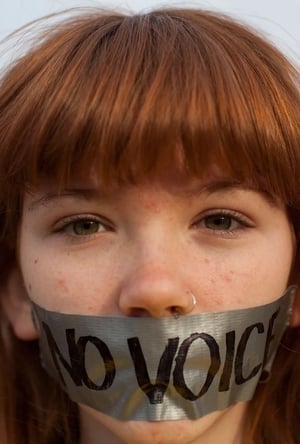
Two and a half years after the start of the full-scale invasion, Ukrainian artists and volunteers are heading to Burning Man to create a large-scale installation. Using road signs from deoccupied territories, they spell out the phrase "I'M FINE" — a symbol of how people hide their pain and try to persevere despite the circumstances. The sculpture becomes a place for meeting, reflection, and dialogue about war, trauma, and the strength of the Ukrainian spirit, demonstrating how art can become a platform for open conversation about painful experiences.
Poème Électronique is an 8-minute piece of electronic music by composer Edgard Varèse, written for the Philips Pavilion at the 1958 Brussels World’s Fair. The Philips corporation commissioned Le Corbusier to design the pavilion, which was intended as a showcase of their engineering progress. The pavilion was shaped like a stomach, with a narrow entrance and exit on either side of a large central space. As the audience entered and exited the pavilion, the electronic composition Concret PH by Iannis Xenakis (who also acted as Le Corbusier's architectural assistant for the pavilion's design) was heard. Poème électronique was synchronized to a film of black and white photographs selected by Le Corbusier which touched on vague themes of human existence.
Quincy Jones, Music Man
A one-of-a-kind cinematographic experiment. A grotesque fairy tale, staged in the real lives of the characters. A completely self-produced movie, designed and directed by two visual artists, with the purpose of telling the tale of Artaserse, a retired worker, boxer, trainer and life-long painter. Everything is staged in an industrial, now decadent Terni; like a steel bay without the sea, here it's difficult to dream about becoming an artist. This movie is like a suburban western movie; the boxer and the painting dancing the communal square dance together, in life and death, the meeting-match between Artaserse and an allegorical and remorseless art world, and more generically, the battle of all the colorful characters, appearing throughout.
Ferruccio Castronuovo was the only authorized eye, between 1976 and 1986, to film the brilliant Italian filmmaker Federico Fellini (1920-1993) in his personal and creative intimacy, to capture the gears of his great circus, his fantastic lies and his crazy inventions.
Lio
A portrait of the famous French actress Fanny Ardant, who has worked with great figures of cinema such as Agnès Varda, Alain Resnais, Michelangelo Antonioni, Sydney Pollack and, above all, François Truffaut (1932-84), with whom she had a sentimental relationship and whose death marked the rest of her life.
Kintsugi is a 16th century process of mending broken shards of pottery. Visual artist Mako Fujimura and Kintsugi Maker Kunio Nakamura, invite us to imagine how this ancient artform might help us find healing in the midst of trauma and come to a deeper understanding of the redemptive character of the Gospel.
This is the legendary meeting between a young filmmaker and one of the masters of surrealism: the spanish painter Óscar Domínguez, born in La Laguna, Tenerife, in 1906, died in Paris in 1957. In the "Visite," the artist -admirer of Picasso, rebellious disciple of Breton- is presented in solitude, far from the tumult of the exhibitions and parisian circles. An austere approach, almost “povera”, with no audio, nor flashy camera movements, but rarely attractive. Why Resnais could not finish his movie? Hope one of our experts help us to solve the mystery.
Art in an Age of Mass Culture pulls back the curtain and takes a look at the cultural climate surrounding MoMA's now famed exhibition, "High and Low: High Art and Popular Culture". Opening in the fall of 1990, the show placed a spotlight on the rapid merging of consumerism and the artistic avant-garde. Curated by Kirk Varnedoe and Adam Gopnik and featuring work from artists such as Jeff Koons and Roy Lichtenstein, "High and Low" ignites conversations of mass culture and our society's ever-changing relationship with the arts.
Jeff Wall is one of the most important and influential photographers working today. His work played a key role in establishing photography as a contemporary art form.
A lonely house-wife’s plan to end it all takes an unexpected turn when her last hurrah begins a radical journey of sexual exploration and personal re-invention.
Born into poverty in Panama, Cirilo McSween’s journey is one of defiance, resilience, and triumph over systemic barriers. Against the backdrop of Jim Crow America, he confronts racism while pursuing the American Dream. From his arrival in the U.S. as an ambitious immigrant to his rise as a trailblazing entrepreneur and civil rights activist, McSween’s life stands as a testament to determination and community. Through tireless advocacy for equality and opportunity, he helped shape both Panama’s identity and Chicago’s civil rights movement. A confidant of Dr. Martin Luther King Jr., a pioneering insurance executive, and a philanthropist empowering underserved communities, McSween’s story bridges nations and generations. CIRILO, A Legacy Untold illuminates a transformative figure whose legacy continues to inspire across the Americas.
Hans Haacke is a key figure in contemporary art whose work intersects with conceptual, pop, minimal and land art. The artist is particularly known for his research into the hidden economies and politics of the art world and the repressed histories of places and peoples. Haacke's strong political, cultural and social concerns are reflected in his installations, texts and sculptures.
"Elizabeth Murray: 4 Decades" tracks the artist's career and shows her moving forward fearlessly toward new shapes and concepts for her unique style of painting. Inspired by artists of the Abstract Expressionism movement such as Willem de Kooning and Philip Guston, Murray was privy to their technique and motive. Though she may share ideals with her artistic predecessors, Murray has created miraculously original work which she discusses with curator Robert Storr as they explore her MoMA retrospective.
Wrapped Walk Ways, in Jacob Loose Memorial Park, Kansas City, Missouri, consisted of the installation of 136,268 square feet (12,540 square meters) of saffron-colored nylon fabric covering 2.7 miles (4.4 kilometers) of formal garden walkways and jogging paths.
Encouraging visitors to engage and connect with on site artist's, Artpark provides a unique environment for those craving culture away from the whirring city. Located in Lewiston, New York the outdoor venue opens itself to artists, musicians and performers seeking a spot to reflect and create. During the summer seasons Artpark serves as an immersive experience, inviting the public to observe the artists as they work. Artpark People observes the vibrant scene and captures candid interactions between artist and onlookers. With a heavy emphasis on outdoor space and environmental influence, Artpark asserts itself as a cultural and communal haven for creatives.
Tribal Strands is about two self-made Brooklyn hair artists, who create authentic hairstyles, leading the anti-hair discrimination movement. In addition, they inspire Black people to embrace their natural hair worldwide while exploring the intersections between modern and ancient African indigenous hairstyles.
Pop Goes the Easel was Ken Russell’s first full-length documentary for the BBC’s arts series Monitor. It focused on 4 British Pop Artists - Peter Blake, Peter Philips, Pauline Boty and Derek Boshier.
An intimate portrait of David Hockney, featuring interviews with the artist - one of Britain's most beloved painters - in London and Normandy, and exclusive new footage of a master at work.