After a painful breakup, Ben develops insomnia. To kill time, he starts working the late night shift at the local supermarket, where his artistic imagination runs wild.
Lumpenball
Lila
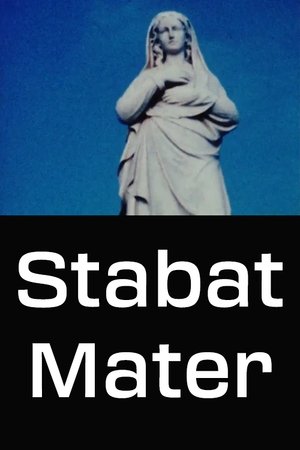
Stabat Mater opens and closes with two sung laments, then launches into a breathless torrent of words and phrases, a re-reading of the eternal feminine of Joyce’s Ulysses, which echoes the exultant/feverish swoop of the camera through a Mediterranean landscape
In the mid-1960s, wealthy debutant Edie Sedgwick meets artist Andy Warhol. She joins Warhol's famous Factory and becomes his muse. Although she seems to have it all, Edie cannot have the love she craves from Andy, and she has an affair with a charismatic musician, who pushes her to seek independence from the artist and the milieu.
A ballet dancer moves and shifts in a space unknown.
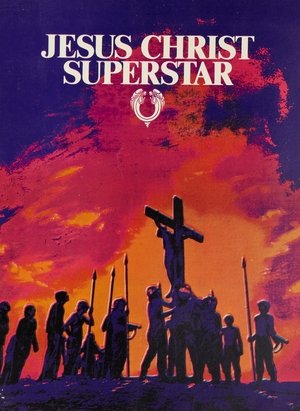
As played out by a theatre troupe, the last days of Jesus Christ are depicted from the perspective of Judas Iscariot, his betrayer. As Jesus' following increases, Judas begins to worry that Jesus is falling for his own hype, forgetting the principles of his teachings and growing too close to the prostitute Mary Magdalene.
After seeking transcendence through shamanic rituals, Ana’s life is transformed overnight by an unexpected turn toward faith.
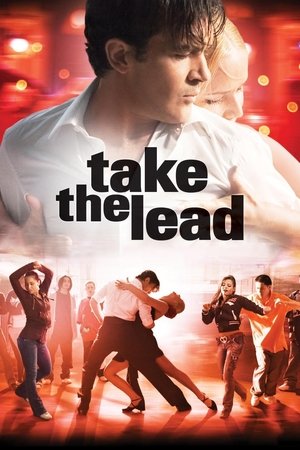
A former professional dancer volunteers to teach dance in the New York public school system and, while his background first clashes with his students' tastes, together they create a completely new style of dance. Based on the story of ballroom dancer, Pierre Dulane.
Yashima is a woman who works as a plumber. She is also uncomfortable with her own sexuality. One day she visits a home for a job and meets Kyu. Yashima senses Kyu's eyes watching her. They become intimate, but a dark secret is soon revealed.
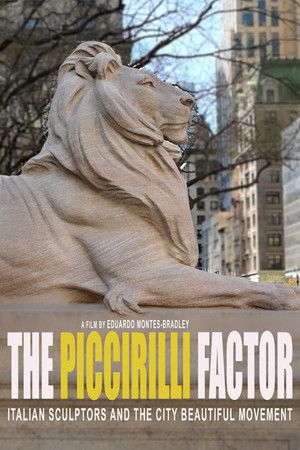
The Piccirilli family settled in New York City and started the largest and most prolific marble carving studio in America. For nearly 50 years, Piccirilli sculptors helped shape the architectural landscapes of Washington and New York through hundreds of monuments, memorials, and artworks, many of which are preserved in museums and private collections.
Dona Eulália
After Dan Brown's publishing phenomenon The Da Vinci Code was cleared of plagiarism charges, this documentary explores the climate which has permitted a fictional story to make such an effective challenge to conventional history that it has forced a counter-attack from the Church, the art world and academics. Has Brown cracked the most difficult code of all our 21st-century cultural DNA?
The film Cher Zoscar is a correspondence between the desire to create and life swallowing you up. Something like that.
Contemporary artist Koki Tanaka sets up a booth at a Los Angeles flea market to sell palm fronds. "I tried to bring something very extreme into the flea-market context. I picked the palm fronds because they are the most useless things in California – they’re what we have to sweep away after a windy day. It was an experiment in registering people’s reaction to a fundamental question about the value of objects. And I was referencing two historical pieces: David Hammons’s Bliz-aard Ball Sale [1983], where he sold snowballs during winter in New York; and a Japanese manga called Munou no Hito [A Worthless Person, 1985], in which the protagonist sells stones by the riverside – stones being sold alongside stones. So both shared quite similar ideas." - Koki Tanaka
On the night of Cosa High's prom, a cemetery next to a power plant unleashes an army of zombies. With their town overrun, an unlikely group of outcasts, geeks, cheerleaders, and bad boys must band together to survive, save their classmates, and stop the undead invasion.
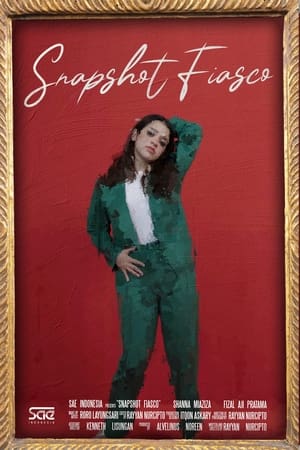
A model and a photographer, after hours of trying, strive for the perfect shot but face challenges as their high aesthetic standards get in the way.
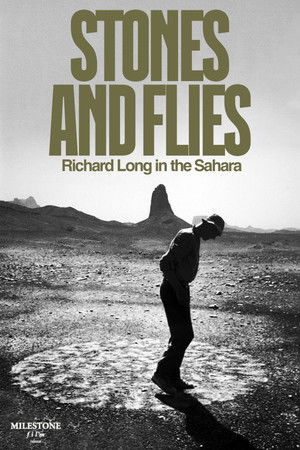
In the fall of 1987, Philippe Haas accompanied the sculptor Richard Long to the Algerian Sahara and filmed him tracing with his feet, or constructing with desert stones, simple geometric figures (straight lines, circles, spirals). In counterpoint to the images, Richard Long explains his approach. Since 1967, Richard Long (1945, Bristol), who belongs to the land art movement, has traveled the world on foot and installed, in places often inaccessible to the public, stones, sticks and driftwood found in situ. His ephemeral works are reproduced through photography. He thus made walking an art, and land art an aspiration of modern man for solitude in nature.
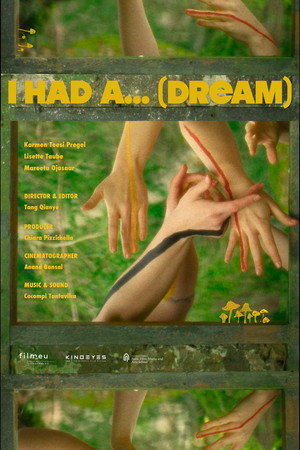
I HAD A... (DREAM) unfolds as a trip where dance, stop-motion animation, sound, and imagery interplay, far from established dimensions and expectations. Mushrooms immerse the viewer in a dreamlike space, where the film becomes a site for deviation and disruption.
Sinus Beta is almost a sort of teaching film about bodily behavior in different situations. The film also produces, through the heterogenic photographic materiality of the primary elements, a cross-section of the methods, used in capturing the body in a still photograph. (Mubi)