Milestone No. 3 is a documentary following three lifelong friends as they travel across the country to California for the very first time. Armed with doubts and anxiety about continuing his filmmaking career, director Nicholas Dapolito enlists the help of friends and family to examine why he creates, and if this path is truly right for him.
Filmmaker Alain Resnais documents the atrocities behind the walls of Hitler's concentration camps.
Behind the scenes documentary on the making of the film.
Paparazzi explores the relationship between Brigitte Bardot and groups of invasive photographers attempting to photograph her while she works on the set of Jean-Luc Godard's film Le Mépris (Contempt). Through video footage of Bardot, interviews with the paparazzi, and still photos of Bardot from magazine covers and elsewhere, director Rozier investigates some of the ramifications of international movie stardom, specifically the loss of privacy to the paparazzi. The film explains the shooting of the film on the island of Capri, and the photographers' valiant, even foolishly dangerous, attempts to get a photograph of Bardot.
Women are lucky, they get to have the only organ in the human body dedicated exclusively for pleasure: the clitoris! In this humorous and instructive animated documentary, find out its unrecognized anatomy and its unknown herstory.
In 1967, de Andrade was invited by the Italian company Olivetti to produce a documentary on the new Brazilian capital city of Brasília. Constructed during the latter half of the 1950s and founded in 1960, the city was part of an effort to populate Brazil’s vast interior region and was to be the embodiment of democratic urban planning, free from the class divisions and inequalities that characterize so many metropolises. Unsurprisingly, Brasília, Contradições de uma Cidade Nova (Brasília, Contradictions of a New City, 1968) revealed Brasília to be utopic only for the wealthy, replicating the same social problems present in every Brazilian city. (Senses of Cinema)
This film, directed by Dominique GAUTIER, takes the viewer on a worldwide excursion into the history and structure of the Esperanto language, introducing its present-day speakers. The words of these users of the language are reflective of a variety of activities and viewpoints, and in the film they are interwoven so as to reveal bit by bit how the utopia of its initiator, Ludwig ZAMENHOF, is concretised every day.
"Dance or Die" is a moving documentary about a young Syrian dancer who escapes the war and finds a new life in Holland. But the ghosts of the past won't let him go. With the war and the advance of the Islamic State in Syria, the young classical dancer Ahmad Joudeh lost everything – part of his family, his home, but also the right to practice his art. However, he will use dance as a weapon against Daesh. Three words adorn the neck of Ahmad Joudeh: Dance or Die. The tattoo is a declaration of war against IS if it takes him over. (Text: arte)
A group of African American students at the University of Arizona reveals the importance of political spaces within Universities in times of intolerance.
Unlike our dream of becoming a great filmmaker, the movie boards that adults talk about are tough. We are looking for our idol, Bong Joon-ho...
Exploration of prejudice and culture clash that a group of Laotian Buddhist refugees must endure in Rockford, Illinois.
A Chinese Canadian son sets out to make a film on his mother, who was once known as the first ever Chinese Opera Singer to have performed Pingju Opera in English in late 1980's China.
A film documenting the landscapes of northern Iceland.
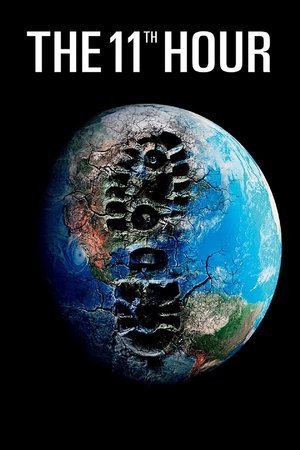
A look at the state of the global environment including visionary and practical solutions for restoring the planet's ecosystems. Featuring ongoing dialogues of experts from all over the world, including former Soviet Prime Minister Mikhail Gorbachev, renowned scientist Stephen Hawking, former head of the CIA R. James Woolse
A documentary that details the process of restoring 270 of the 520 lost films of pioneering director Georges Méliès, all orchestrated by a Franco-American collaboration between Lobster Films, the National Film Center, and the Library of Congress.
This short film focuses on the job of the Hollywood screenwriter.
Alcoholism and its Ill-Effects was considered to be one of the most popular science propaganda (or educational) films produced in Russia before the revolution of 1917. Alexander Khanzhonkov, the most prominent Russian film producer of that era, financed a special department dedicated to non-fictional cinema, despite the fact that such films were not commercially successful. Unfortunately, not a single copy of the film has survived to the present day. All that remains are 12 frames, which were used by Izvolov to create this reconstruction. He also used extracts from critical reviews, published at the time of the film’s release, to produce a soundtrack.
João Pedro Rodrigues answers the question from the title with an autobiographical short-film.
An animated film about the history and use of hot water.
Tarō Okamoto became world-famous by designing the “Tower of the Sun” at Expo ’70 in Osaka. The ideas and problems that came with its creation, however, are intertwined with the evolution of Japanese culture – from the Paleolithic up until modern times. In his documentary debut, director Kōsai Sekine takes us on a philosophical journey that transcends the visual limits of documentaries.