Drawing from never-before-seen footage that has been tucked away in the National Geographic archives, director Brett Morgen tells the story of Jane Goodall, a woman whose chimpanzee research revolutionized our understanding of the natural world.
A close-up portrait of the daily lives of a pair of cows: told by way of some narrative-free, intimate POV photography, with plenty of close shot images, we follow the daily routine of these animals as they live what can only be described as mundane, boring lives - all with an ultimate purpose within the human food chain.
Gombessa Expedition 3 Protected by an international treaty Antarctica has been spared the effects of hunting and fishing. But signs in ice’s cyclical patterns and its biodiversity have become worrying. Connected to the planet’s global ecosystem via atmospheric circulation and ocean currents, this white haven is suffering the effects of human activities. To document and explain what is unfolding in Antarctica, photographer, diver, and marine biologist Laurent Ballesta and photographer of extreme environments Vincent Munier will be blending their artistic perspectives of a rapidly changing continent. Laurent will tackle technical and human prowess below the ice to bear witness to its remarkable underwater life. His photographs will advance knowledge on Antarctica’s unique and little-known biodiversity. On land, his eye riveted to the lens of his camera, Vincent captures snapshots of life in an Emperor Penguin colony.
Le Goût de la savane : Herbivores et carnivores, festins croisés
The film tells of the beginnings of the Serengeti National Park in Tanzania. At the end of the 1950s, the Tanzanian National Park Administration wanted to fence in the protected area around the Ngorongoro Crater. Bernhard and Michael Grzimek were invited by the national park administration in 1957 to get a precise picture of the animal migrations and to provide the national park administration with the values they needed for their project. Using a new counting method with two airplanes, the Grzimeks found out that the migration of the herds was different than assumed.
The beauty of the Arctic is breathtaking. For as long as we can remember, the Arctic has been associated with inhospitable cold. But the climate is changing, and with it the northern polar region, which begins beyond latitude 66.5 degrees north. Climate change is now happening four times faster north of the Arctic Circle than on the rest of the planet, making the future outlook dire. At the moment it is still possible for polar bears to raise their cubs, but hunting is becoming increasingly difficult on the drastically shrinking pack ice. The disappearance of the ice also affects the marine fauna. The wintry ice bridge between Canada and Greenland is threatened with collapse. The unstoppable melting of the permafrost, which has held the tundra together for thousands of years, is worrying. But the Arctic is still one of the wildest and loveliest regions on earth. A documentary visit to the Arctic - as long as it still exists.
Axolotl, la salamandre miraculeuse
The story, told by the survivors, of a group of young men, members of a Uruguayan rugby team, who managed to survive for 72 days, at an altitude of almost 4,000 meters, in the heart of the Andes Mountains, after their plane, en route to Chile, crashed there on October 13, 1972.
They have no roots, no seeds, no flowers, but mosses show immense survival capacities and can suspend their biological activity for long periods. Today, researchers are exploring the exceptional resistance of these archaic organisms. British ecologists have even resurrected a "zombie" moss that has been trapped in the permafrost for 1,500 years. Associated with decay and disliked in Europe, mosses are deified in Japan. With 25,000 species worldwide, bryophytes - their scientific name - are the seat of real ecosystems, and can develop in inhospitable landscapes, through an extravagant reproduction cycle.
In Canada and Alaska, the consequences of global warming are being keenly felt by brown bears - but in different ways by different populations. Their survival depends mainly on the quantity of wild salmon available in the region, as it is the fruit of their catch that enables the bears to accumulate fat reserves for the winter. While salmon populations off Canada's Pacific coast continue to decline year after year, in the immense Bristol Bay in western Alaska, as well as on Kodiak Island, they are increasing considerably. The water temperature in the North Pacific is now ideal for salmon development. From Canada to Alaska, the documentary follows different bear populations over a two-year period.
Documentary about Indigenous peoples' profound connection to nature and their struggle against deforestation, a grave threat to their way of life and the ecosystem they call home.
Brown hyena expert Ingrid Wiesel wants to find her favourite study animal, named Tosca, who has disappeared from her home range on Namibia’s wild west coast. Ingrid's spent the last 17 years studying brown hyenas - now she must journey deep into Tosca's world to discover what exactly has forced her to leave her traditional hunting grounds.
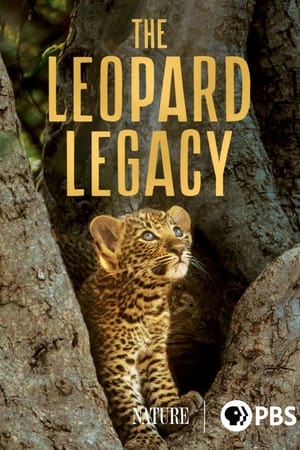
Follow the story of a leopard mother as she raises her cubs near the Luangwa River, facing a constant battle to hunt successfully, defend her territory and protect her cubs against enemies.
In the remote village of El Echo that exists outside of time, the children care for the sheep and their elders. While the frost and drought punish the land, they learn to understand death, illness and love with each act, word and silence of their parents. A story about the echo of what clings to the soul, about the certainty of shelter provided by those around us, about rebellion and vertigo in the face of life. About growing up.
Follow Leo, a handsome sea lion pup who's learning how to navigate life alongside his mother, Luna.
A film crew follows two leopard cubs as they make the fascinating journey from infancy into adulthood in this up-close-and-personal nature documentary.
Nos très chers animaux
70 years after the last wolves roamed the national park, a total of 41 wolves were reintroduced between 1995 and 1997. A globally unique experiment that had many supporters, but also resolute opponents, then as now.
An epic story of adventure, starring some of the most magnificent and courageous creatures alive, awaits you in EARTH. Disneynature brings you a remarkable story of three animal families on a journey across our planet – polar bears, elephants and humpback whales.
The equation of life on the Serengeti is simple: carnivores eat plants, herbivores eat carnivores. Africa: The Serengeti takes you on an extraordinary journey to view a spectacle few humans have ever witnessed. The Great Migration. Journey with more than two million wildebeests, zebras and antelopes in their annual 500 mile trek across the Serengeti plains