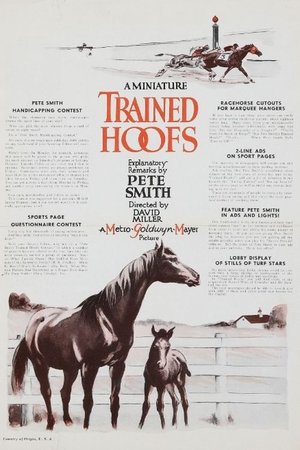
This short follows the life of a harness racehorse named "Spunky" from foal, through training, to the finish of his first race at Yonkers Raceway.
This short film focuses on how racehorses are trained.
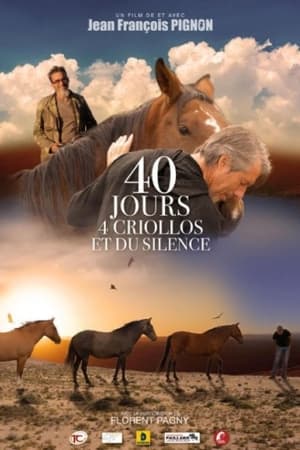
Jean-François Pignon, a renowned wild horses trainer, sets himself a new challenge : to tame four horses in their natural habitat, in the famous french singer Florent Pagny's campo. During these 40 days of an initiatory trip in Patagonia, he will use his knowledge and patience. Little by little, magic happens...
Galop Arrière
Battuta
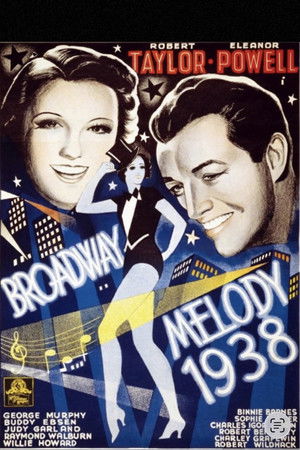
Steve Raleight wants to produce a show on Broadway. He finds a backer, Herman Whipple and a leading lady, Sally Lee. But Caroline Whipple forces Steve to use a known star, not a newcomer. Sally purchases a horse, she used to train when her parents had a farm before the depression and with to ex-vaudevillians, Sonny Ledford and Peter Trott she trains it to win a race, providing the money Steve needs for his show.
Erin Go Bragh, a small Connemara stallion, gets ready to compete in Combined Training, “the triathlon of horseback riding.” The three day competition consists of dressage, cross-country, and stadium jumping. Erin Go Bragh himself narrates as he and his rider, Carol Kozlowski, compete in two competitions.
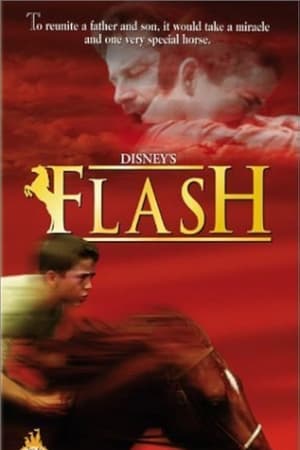
A boy falls in love with a horse named Flash that's for sale. He gets a job to earn the money to buy the horse, but he's forced to sell when the family falls upon hard times.
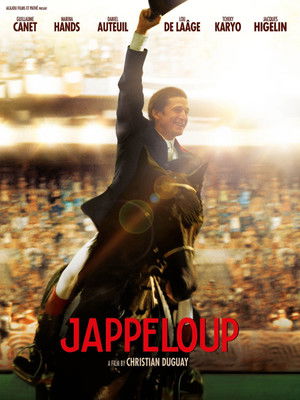
A true sports story that utterly defies the odds, Duguay’s film captures the wild ups and downs of the Olympics-bound career of legendary equine star Jappeloup and his troubled rider, locked in a tense relationship with his horseman father and forever uncertain of his own skills as an equestrian
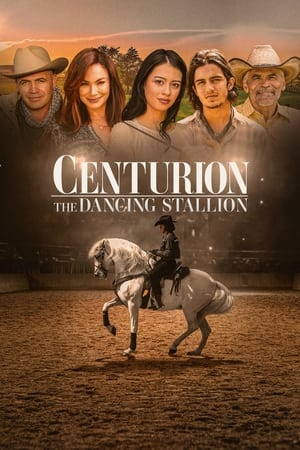
Ellissia adopts a white stallion to train in the art of Mexican horse dancing. As she starts teaching the handsome but previously abused Centurion, Ellissia falls critically ill, which keeps her from competing in a celebrated equestrian event. Under the watchful eyes of her father, new ranch hand Danny steps in as trainer, hoping to win the competition — and, perhaps, Ellissia's heart.
An affable drifter on the lam for a murder he didn't commit hides out in a circus.
This pioneering documentary film depicts the lives of the indigenous Inuit people of Canada's northern Quebec region. Although the production contains some fictional elements, it vividly shows how its resourceful subjects survive in such a harsh climate, revealing how they construct their igloo homes and find food by hunting and fishing. The film also captures the beautiful, if unforgiving, frozen landscape of the Great White North, far removed from conventional civilization.
Starting with a long and lyrical overture, evoking the origins of the Olympic Games in ancient Greece, Riefenstahl covers twenty-one athletic events in the first half of this two-part love letter to the human body and spirit, culminating with the marathon, where Jesse Owens became the first track and field athlete to win four gold medals in a single Olympics.
Part two of Leni Riefenstahl's monumental examination of the 1938 Olympic Games, the cameras leave the main stadium and venture into the many halls and fields deployed for such sports as fencing, polo, cycling, and the modern pentathlon, which was won by American Glenn Morris.
Working men and women leave through the main gate of the Lumière factory in Lyon, France. Filmed on 22 March 1895, it is often referred to as the first real motion picture ever made, although Louis Le Prince's 1888 Roundhay Garden Scene pre-dated it by seven years. Three separate versions of this film exist, which differ from one another in numerous ways. The first version features a carriage drawn by one horse, while in the second version the carriage is drawn by two horses, and there is no carriage at all in the third version. The clothing style is also different between the three versions, demonstrating the different seasons in which each was filmed. This film was made in the 35 mm format with an aspect ratio of 1.33:1, and at a speed of 16 frames per second. At that rate, the 17 meters of film length provided a duration of 46 seconds, holding a total of 800 frames.
Antônio Conselheiro: O Taumaturgo dos Sertões
Louis Ortiz, a down on his luck 40-something Puerto Rican resident of the Bronx, looks in the mirror one day and believes he’s found gold—he’s a dead ringer for Barack Obama. With visions of finally living the American Dream, the charismatic Ortiz launches a complete makeover. He dons Obama’s trademark suit, adopts his mannerisms, mimics his voice and steps out onto the street as a presidential impersonator. Taken on by a casting agent, Ortiz and a gang of other political impersonators, including a Bill Clinton and a Mitt Romney, hit the road during the run-up to the 2012 presidential election to perform satirical debates for mostly Republican conventions, throwing Ortiz into conflict with his personal political beliefs. As Ortiz struggles to make ends meet, the distance between the White House and the Bronx becomes increasingly acute. The life of a president isn’t always as easy as it looks.
Successful British band Japan filmed live in concert at the Hammersmith Odeon, London on 16th November 1982.
The film explores the journeys and philosophies of a select group of experimental musicians including Keith Rowe, Evan Parker, Eddie Prevost, Otomo Yoshihide, Toshimaru Nakamura and Christian Fennesz.
20 minute music documentary shot in two days of November 1984 in, and around the outskirts of, Tokyo, Japan. A large part of the music was completed during that same month and recorded over a period of three days.