Half blind and half deaf, ostraziced Cuban writer Rafael Alcides tries to finish his unpublished novels to discover that after several decades, the home made ink from the typewriter he used to write them has faded. The Cuban revolution as a love story and eventual deception is seen through the eyes of a man who is living an inner exile.
Having grown up within the Cuban Revolution, in 1980, Juan Carlos Zaldívar was a 13-year-old "pioneer" jeering in the streets at the thousands of "Marielitos" leaving the island by boat for the United States. Within weeks, he was a Marielito himself, headed with the rest of his family for a new life in Miami. Now a U.S.-based filmmaker, Zaldívar recounts the strange twist of fate that took him across one of the world's most treacherous stretches of water in 90 Miles, a new documentary having its broadcast premiere on PBS's acclaimed P.O.V. series in the summer of 2003. As related by Zaldívar in the intensely personal and evocative 90 Miles, arrival in South Florida is only the beginning of the family's struggles to comprehend the full meaning of their passage into exile. What follows is an intimate and uneasy accounting of the historical forces that have split the Cuban national family in two, and which shape the passage of values from one generation to the next.
This film traces the road of the Blues and takes us on a journey to mythical places: From the banks of the Niger to New Orleans, going up the Mississippi through Memphis to the skyscrapers of Chicago. It tells the story of this culture which faced the worst barriers and shows that Humanity can overcome barbarity.
A raw, unvarnished look at contemporary Cuba through the lens of its people, who are at once fiercely loyal to their country while being extremely dissatisfied after decades of neglect.
After almost thirty years of his career, the musician Fran Nixon joins film director David Trueba for a travel around Spain in which they'll talk about it and meet some friends.
A love letter that unites Brazil and Cuba. In the film Travessias, the director goes on a long journey seeking to understand the feelings and transformations of a person who is close to her. On this path of doubts and concerns, she meets Justin, a trans man who will help her on this journey. With a poetic and self-referential look, the director invites us to rethink our own prejudices and limits in relation to the others.
Content is an ambient 21st-century road movie, an associative film essay inspired by driving’s trancelike state rather than any linear unfolding of the road.
BBC Documentary focusing on drifters, drop-outs, tramps and RV snowbirds, squatters, hermits, cowboys and Indians in the American Southwest. Very interesting stories on how and why many became nomadic, and what the lifestyle means; all done without judgment or glorification.
Alcan Highway is a filmed diary of a one dream on its way to fulfillment. The Documentary depicts the story of Hese making his dream come true; with the help of his friends he attempts to fix a truck, build a home on top of it, and drive it from Wasilla, Alaska to the Vancouver island. Hese is trying finally to get a home.
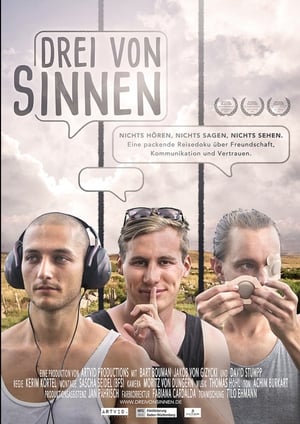
Polen für Anfänger
Cuba, 1961: 250,000 volunteers taught 700,000 people to read and write in one year. 100,000 of the teachers were under 18 years old. Over half were women. MAESTRA explores this story through the personal testimonies of the young women who went out to teach literacy in rural communities across the island - and found themselves deeply transformed in the process.
Cocco and Stefano are two unlikely friends bonded by a mutual goal: reach Samarkand from the mountains of Northeast Italy. Cocco is an old biker with a troubled past whose dream is to depart towards the East with his Harley-Davidson from ’39. Stefano is a young director who wants to make a film about the adventure and the story of his friend. Between the highs and lows of a quixotic trip, the challenge will reveal bigger than the two expected. Only through friendship, Cocco and Stefano will be able to reach their dreams.
Branko has been a truck driver for only a few months, a choice that is quite understandable, given that he now earns three times as much as he did as a schoolteacher. But everything has a price, which is not always quantifiable in terms of money. As children we were told: “work ennobles man”. But here the opposite seems true: it is Branko, with his efficiency, his obstinacy, his good will, who ennobles a job that grows more and more alienating, absurd and enslaving.
Probably the most famous Czech traveler of today, Dan Přibáň, has undertaken his most challenging expedition yet. The crews of two yellow Trabants, a Polish Fiat (aka Maluch), a Čezeta, a Jawa, and even two wheelchairs set off from Perth, Australia, and during their six-month adventure traveled through East Timor, Indonesia, Malaysia, and Thailand.
Documentary about the history of the bateyes, informal settlements surrounding the mills to house workers. Throughout the film, Sara Gómez recovers the political and cultural relevance of black migrants.
Finnish documentary about Cuba.
Modern day adaptation of the 1910 Gaston Leroux novel "Phantom of the Opera" – that the famous musical is also based on – set in the sultry nightlife scene of modern-day New Orleans, the world of jazz, R&B, neo-Soul, and funk.
The historic concert appearance of the British band in Cuba on March 25th, 2016. The "Concert for Amity" was and played at the Ciudad Deportiva Stadium - the bands first show in Cuba and the finale of their South America Tour.
Documentary road movie ‘Tarot Serbia’ is following Milan Radonjić, the star of ‘Commercial Tarot’ on his odyssey through rural, provincial parts of Serbia, where he’s invited to be the guest of honor at local TV stations. On his journey Milan will explore and reveal the characters of people living at the very edge of society, the ones who lost their jobs during transition, refugees from Bosnia and Kosovo, war veterans, invalids, sick people, betrayed lovers, girls possessed by demons, lonely pensioners, exorcists and all other people asking him for help and solution to all their problems.
In the early twentieth century, the Hotel Nueva Isla was an emblematic luxury hotel. After the Cuban Revolution, it was confiscated by the State and became a shelter for homeless people. Located in Old Havana, today it is an imposing ruin. Jorge de los Rios, a retired clerk, is one of the few residents who remain there, along with La Flaca, his lover, and Waldo, a young itinerant. As the rest leave for safer places, Jorge clings to his dilapidated home and its buried treasures, slowly digging his way through its debris. The film speaks poignantly to a lost generation who fought in the Cuban Revolution and dreamed of a better society.