In a culture where cremation is unusual, cemeteries fill up rapidly. In Latin America and in some other places, to solve the problem, remains are frequently exhumed. In Cuba, two year after interment. Relatives are invited to observe the little ritual. The music of the film is drawn from requiems from different periods. Twelve pieces by seven different composers are quoted. Together, they make up a traditional requiem, although only a few passages from the "dies irae" have been included, and other sections are slightly abbreviated.
Documentary about emigration between the Canary Islands and Cuba during the late 19th century and early 20th century.
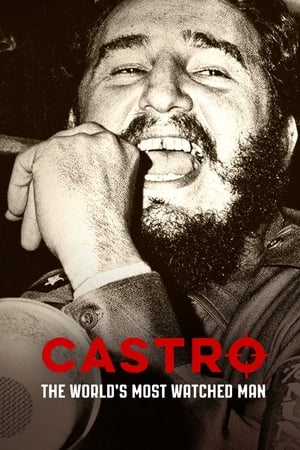
This revealing portrait of Cuba follows the lives of Fidel Castro and three Cuban families affected by his policies over the last four decades.
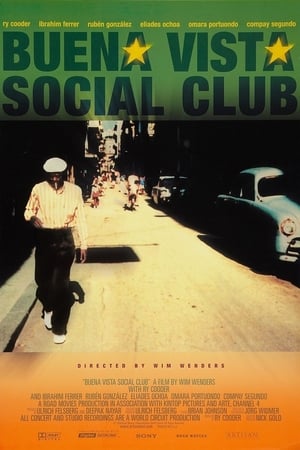
In this fascinating Oscar-nominated documentary, American guitarist Ry Cooder brings together a group of legendary Cuban folk musicians (some in their 90s) to record a Grammy-winning CD in their native city of Havana. The result is a spectacular compilation of concert footage from the group's gigs in Amsterdam and New York City's famed Carnegie Hall, with director Wim Wenders capturing not only the music -- but also the musicians' life stories.
A documentary about the corrupt health care system in The United States whose main goal is to make profit even if it means losing people’s lives. "The more people you deny health insurance, the more money we make" is the business model for health care providers in America.
In her feature documentary Seguridad, Newfoundland-based filmmaker Tamara Segura—once named “Cuba’s youngest soldier” in a militia publicity stunt—portrays her troubled relationship with her father in the context of the Cuban Revolution. When Segura accepts a scholarship to study film in Canada, the move offers crucial distance from her alcoholic father. After four years, she returns to Cuba hoping to make amends. But her father’s sudden death just days after her arrival forces Segura to explore his troubled past and the role Cuba’s highly militarized system played in his downfall. Through a series of deeply personal on-camera interviews with her immediate family, Segura unearths long-held secrets that ultimately tell a story of resilience and profound love between family members. Seguridad artfully weaves a lifetime’s worth of still photographs into its intimate narrative, which offers a rare glimpse into the inner lives of Cubans in the post-revolutionary era.
Documentary recounting the story of the Cuban Revolution and its impact on the young people of Cuba.
A ship of athletes training on the rough seas becomes a symbol of Castro’s Cuba, the games projected on the backdrop of political struggle. This is the story of a ship and of a sports delegation whom the enemy tried to stop from participating in the Tenth Central American and Caribbean Games.
Meet Andrew Lindy: a man with a camera and sex on his mind. Andrew is a New Yorker who travels the world to capture beauty for various freelance jobs. Andrew chases beauty but he longs for a connection. On an assignment for ELLE magazine, Andrew travels to Cuba and brings his camera and appetite for women with him. This is a look at the lack of sexual taboo in Cuba, as well as the financial difficulties that lead to prostitution in some Cubans, for the purpose of survival.
Che Guevara, naissance d'un mythe
Oliver Stone's second documentary on/interview with Fidel Castro specifically addresses his country's recent crackdown on Cuban dissidents; namely, the execution of three men who hijacked a ferry to the United States.
Dos Islas is a poetic story about old age, family and the bond between a granddaughter and a grandmother. The woman, who just turned 102, tells stories about her past and childhood. In a literary and visual way she describes the most minute details. The film dazzles the viewer with love and optimism, the time passes slowly between the two islands, which might be real people, real places or the products of the main character’s imagination.
There was a time in Argentina, not so long ago, when the army wasn't only one, official, but many and made up by civilians. In those times of courageous youths determined to fight to the death for that cause upheld around Peronism as wll as some left-wing postulates, revolutionary Cubas was a beacon of hope in the world scheme -a Montonero nation. "A House in Cuba" seeks to recover the curious adventure of a couple of Montonero parents and their small children, who were lovingly sent into exile in order for their parents to take up arms.
The story focus on Caridad and Georgina, who had learned the art of Cantonese Opera in Havana as a young age and performed as divas for over a decade before their lives were changed by Fidel Castro's revolution.
Cuban drummer Elvis García reflects on his journey from Havana to Miami, struggling to make his way in the American city as a professional musician.
"Eyes of the Rainbow" deals with the life of Assata Shakur, the Black Panther and Black Liberation Army leader who escaped from prison and was given political asylum in Cuba, where she has lived for close to 15 years. In it we visit with Assata in Havana and she tells us about her history and her life in Cuba. This film is also about Assata's AfroCuban context, including the Yoruba Orisha Oya, goddess of the ancestors, of war, of the cemetery and of the rainbow.
Lázaro Escarze, an 87 years old revolutionary Cuban man, lives in a small village and will have his phone installed for the first time in his life. To whom will he call?
The story of Cuban refugees who risked their lives in homemade rafts to reach the United States, and what life is like for those who succeed.
Habana Shakes takes us on a rhythm-filled odyssey spanning ten vibrant days in Havana, a pulsating island city teetering on the edge of transformation. Infused with a lyrical heart, this is not just an homage to Cuba's spirited culture but also provides an intimate window into the dynamic worlds of Cuban youth. Through the eyes of a skater, a tattoo artist, an actor, a ballerina and an electronica DJ, we find ourselves asking: What aspirations do these young Cubans hold for their nation and future, and how might these differ from or echo the dreams and hopes of their parent’s generation?
After ten years living as an expat in the United States, Asori Soto decides to return to his homeland of Cuba to search for the missing flavors of his childhood. This is a journey to discover culinary traditions long thought lost due to the hardship that Cuba survived after the collapse of the Soviet Union.