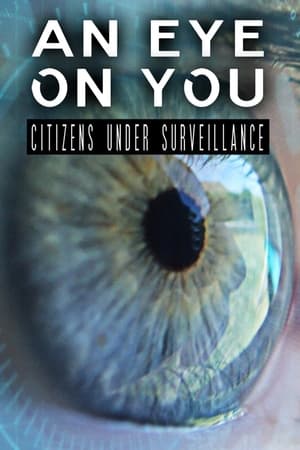
Host Grant Jeffrey discusses how technology and government activities are changing the way our information is handled. How is this shaping our lives?
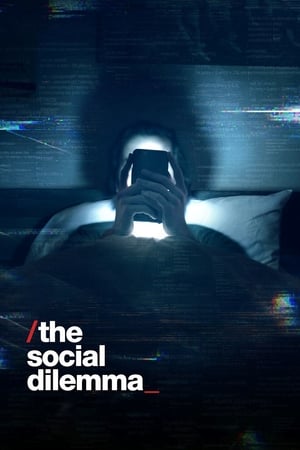
This documentary-drama hybrid explores the dangerous human impact of social networking, with tech experts sounding the alarm on their own creations.
Richard Doty is a former Air Force Intelligence operative whose job at Kirtland AFB in New Mexico involved creating and disseminating disinformation about the existence of extraterrestrial spacecraft to UFO researchers. In the late 1970s and early 1980s, Kirtland AFB was home to a wide range of highly classified technology experiments involving lasers, stealth aircraft, and nuclear weapons. Strange phenomena in the skies above the base piqued the interest of amateur and professional UFO investigators. Doty’s job was to recruit UFO researchers to be informants to the Air Force about goings-on in the UFO community and to spread military disinformation about UFOs among their peers. To accomplish this, Doty supplied fake documents to UFO investigators purporting to tell the “truth” about government involvement with extraterrestrials.
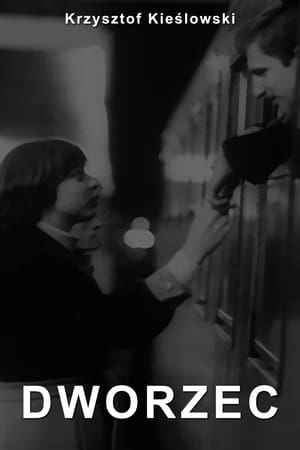
Warsaw's Central Railway Station. 'Someone has fallen asleep, someone's waiting for somebody else. Maybe they'll come, maybe they won't. The film is about people looking for something.
In this Pete Smith Specialty short, we see how real-life investigator Jo Goggin used a motion picture surveillance camera to gather evidence and disprove a fraudulent insurance claim.
David Bond lives in one of the most intrusive surveillance states in the world. He decides to find out how much private companies and the government know about him by putting himself under surveillance and attempting to disappear, a decision that changes his life forever. Leaving his pregnant wife and young child behind, he is tracked across the database state on a chilling journey that forces him to contemplate the meaning of privacy and the loss of it.
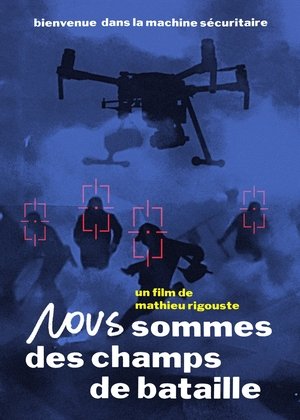
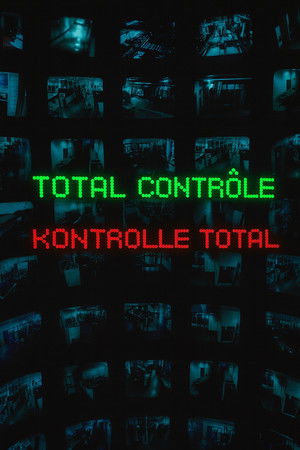
Under the pretext of fighting terrorism or crime, the major powers have embarked on a dangerous race for surveillance technologies. Facial recognition cameras, emotion detectors, citizen rating systems, autonomous drones… A security obsession that in some countries is giving rise to a new form of political regime: numerical totalitarianism. Orwell's nightmare.
This short 19-minute documentary is an intimate and moving exploration of the profound and far-reaching impact of surveillance on Muslim American individuals and communities. Premiering at the 2017 Tribeca Film Festival, WATCHED is told through the personal experience of two women, both coming of age in New York. The film charts the devastating toll of surveillance and reveals the scars it leaves behind.
An exploration of the interconnected experiences of queerness and illness, this film navigates personal and collective journeys through medical spaces, sexual violence, and survival, displays the profound impact on body and identity.
Some things can be seen more clearly at night.. . A film poem about a continent at night, a culture on which the sun’s going down, though it’s hyper alert at the same time, an “Abendland” that, often somewhat self-obsessively, sees itself as the crown of human civilization, while its service economy is undergoing rapid growth in a thoroughly pragmatic way. Nikolaus Geyrhalter takes a look at a paradise with a quite diverse understanding of protection. Night work juxtaposed with oblivious evening digression, birth and death, questions that await answers in the semi-darkness, a Babel of languages, the routine of the daily news, and political negotiation: All this has been captured in images with a wealth of details that make us look at things in a new way. The longer you consider a word, the more distant is its return gaze: ABENDLAND.
Journalist Sandra Harkow produces a promotional film for the RFID industry. Through a time traveler, she learns about the dark future triggered by RFID chips. Her encounter with the time traveler makes her prick up her ears and she researches the radio chips. The so-called docu-fiction style, which coherently combines real interviews with film scenes, gives the viewer the impression of being part of this reality.
Documentary and reflection about the effects of technology.
This educational film "Shoplifting is Stealing" was produced by Charles Cahill and Associates in 1975. It discusses the issue of shoplifting and the various measures taken by retail stores to combat it. It highlights the significant financial losses due to shoplifting, which amount to over $3.5 billion annually in the U.S. Stores often mark up prices to cover these losses, which can be particularly challenging for small businesses. The film explains that many shoplifters are teenagers who steal for emotional reasons, peer pressure, or thrills rather than necessity. It emphasizes that shoplifting is a serious crime with legal consequences, including a police record. Various security measures are described, such as trained security staff, surveillance cameras, electronic tags, and packaging techniques that make it harder for shoplifters to steal items. The film also follows a scenario where security tracks and apprehends suspected shoplifters using surveillance and communication.
NOTHING TO HIDE is an independent documentary dealing with surveillance and its acceptance by the general public through the "I have nothing to hide" argument. The documentary was produced and directed by a pair of Berlin-based journalists, Mihaela Gladovic and Marc Meillassoux. It was crowdfunded by over 400 backers. NOTHING TO HIDE questions the growing, puzzling and passive public acceptance of massive corporate and governmental incursions into individual and group privacy and rights. After the emotion initially triggered by the Snowden revelations, it seems that the general public has finally accepted to live in a monitored digital world.
Journalist Assia Boundaoui sets out to investigate long-brewing rumors that her quiet, predominantly Arab-American neighborhood was being monitored by the FBI.
On November 20, 1979 at 5:30 in the morning, hundreds of armed men take over the Grand Mosque of Mecca, transforming the holiest shrine of Islam into a fortress and a trap for almost 100,000 pilgrims inside. This was the beginning of the siege of Mecca…
Sonia Kennebeck takes on the controversial tactic of drone warfare, and demands accountability through the personal accounts—recollections, traumas, and responses—of three American military veterans whose lives have been shaken by the roles they played in this controversial method of attack.
Cyberspace is more insecure than ever as hackers exploit human error and technical vulnerability to hold it to ransom for their personal data. Companies, public bodies, schools and individuals have all become victims of cyber attacks. In this revealing documentary, victims tell how internet criminals have destroyed their lives
By exploring the relationship between the watched and the watching, our film uncovers the trauma and hope engendered by the Chinese all-surveilling state and lends a voice to those that stand in resilient defiance of such blatant abuse of power.
Uncover the insidious ways in which our daily lives are being surveilled by the state. In a gripping chase, Ronan Farrow travels across the world following breadcrumbs and finally exposing a dark world of spywares, hacking, and peddling of private information, where activists and journalists are persecuted, and no one is protected from the watchful and vicious eyes of authoritarianism.