Canada: A People's History - Episode 14: 1940 to 1946 CE. Canada comes of age in the anguish of World War II, with soldiers on the beaches at Dieppe and women in the industrial work force back home. The country's military role, and the domestic, social and political consequences of the war are traced through poignant stories of Canadians on both sides of the Atlantic. The horrific global conflict steals the innocence of a generation... but brings hope for a new future.
Disciplined Italian composer Antonio Salieri becomes consumed by jealousy and resentment towards the hedonistic and remarkably talented young Salzburger composer Wolfgang Amadeus Mozart.
The founding father has an extramarital affair and meets with the likes of Thomas Jefferson.
A love triangle forms between post-Enlightenment writer Friedrich Schiller and two sisters -- one who became his wife, and the other, his biographer.
In 19th century France, Jean Valjean, a man imprisoned for stealing bread, must flee a relentless policeman named Javert. The pursuit consumes both men's lives, and soon Valjean finds himself in the midst of the student revolutions in France.
The tale of Banda Singh Bahadur, one of the greatest warriors in Sikh history. He is chosen to fight Wazir Khan, governor of Sirhind, who had been terrorizing Punjab for decades.
Set against the conditions leading up to the French Revolution and the Reign of Terror, French doctor Alexandre Manette serves an 18-year imprisonment in the Bastille in Paris, followed by his release to live in London with the daughter he has never met.
A celebration of 50 years of NBC broadcasting in radio and television, since first going on the airwaves on 15 November 1926.
An Irish rogue uses his cunning and wit to work his way up the social classes of 18th century England, transforming himself from the humble Redmond Barry into the noble Barry Lyndon.
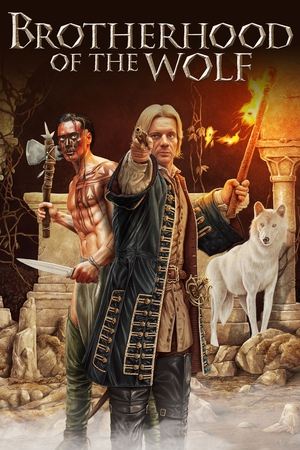
In 18th century France, the Chevalier de Fronsac and his Native American friend Mani are sent by the King to the Gevaudan province to investigate the killings of hundreds by a mysterious beast.
The story of the "Hutsul Robin Hood" Oleksa Dovbush, an 18th century Carpathian Mountains outlaw who's a popular figure of Ukrainian legend.
In the highlands of Scotland in the 1700s, Rob Roy tries to lead his small town to a better future, by borrowing money from the local nobility to buy cattle to herd to market. When the money is stolen, Rob is forced into a Robin Hood lifestyle to defend his family and honour.
In the summer of 2000, federal fishery officers appeared to wage war on the Mi'gmaq fishermen of Burnt Church, New Brunswick. Why would officials of the Canadian government attack citizens for exercising rights that had been affirmed by the highest court in the land? Alanis Obomsawin casts her nets into history to provide a context for the events on Miramichi Bay.
The common theme of the short story film is the famous duels between two important historical figures: Pushkin and Casanova. Pushkin's tragic duel, which ended his life prematurely, is portrayed in connection with the creation of his short story "The Dirty Shot", while Casanova's story is conceived in a rather ironic and humorous way. The point is that the famous seducer never actually seduced, on the contrary, all his life he was in a constant battle with female seductions.
A retrospective of television programming, hosted by Charles Kuralt.
In his final comedy special, Norm Macdonald ponders casinos, cannibalism, living wills and why you have to be ready for whatever life throws your way.
Pod maskou
Denmark, 1755. Captain Ludvig Kahlen sets out to conquer a Danish heath reputed to be uncultivable, with an impossible goal: to establish a colony in the name of the king, in exchange for a royal title. A single-minded ambition that the ruthless lord of the region will relentlessly seek to put down. Kahlen's fate hangs in the balance: will his endevours bring him wealth and honour, or cost him his life...?
Japan, 1701. A group of samurai become rônin after their lord is forced to commit seppuku for assaulting a court official, who will become the target of a merciless revenge.
Aging King George III of England is exhibiting signs of madness, a problem little understood in 1788. As the monarch alternates between bouts of confusion and near-violent outbursts of temper, his hapless doctors attempt the ineffectual cures of the day. Meanwhile, Queen Charlotte and Prime Minister William Pitt the Younger attempt to prevent the king's political enemies, led by the Prince of Wales, from usurping the throne.