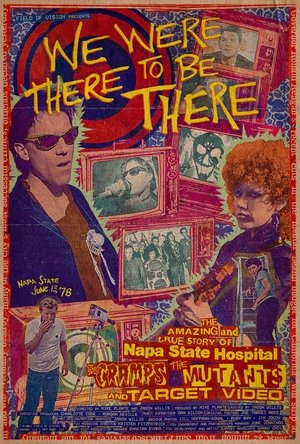
On June 13, 1978, the punk bands the Cramps and the Mutants played a free show for psychiatric patients at the Napa State Hospital in California. We Were There to Be There chronicles the people, politics, and cultural currents that led to the show and its live recording.
Ninety-year-old sound artist and comedian Henry “Sandy” Jacobs lives a quirky existence at the end of Sunnyside Drive, a steep and winding dirt road washed by fog from the Pacific Ocean. Sixty feet down the hill lives his eccentric 84-year-old friend and neighbor, architect and former Frank Lloyd Wright collaborator Daniel Liebermann. These extraordinary old men, influential artists in the 1950s and ’60s, continue, each in their own way, to search the world for perfection. Sunnyside takes us to an extraordinary place, a microcosm with its own distinctive rhythm and remarkable inhabitants. It is a film about creativity, the capacity to dream and, ultimately, the transience of life.
Monika Treut explores the worlds and thoughts of several female to male transgendered individuals. As with Treuts first film, Jungfrauenmaschine, Gendernauts, enters a minority sector of San Fransisco culture. The characters in this film have a lot to complain about, and they do. They are people whose physical appearance (female) does not match their inner sexual identity (male). The subject is pinpointed in the film independant of sexual orientation. Leave your conservative hats at the door, this is going to need your special attention.
Cold Refuge is about the physical, psychological, and spiritual aspects of full immersion in the natural world: how, though it may seem counter-intuitive, swimming in cold water helps mitigate some of life’s most serious challenges. The film’s diverse film subjects include a wheelchair-bound, paralyzed swimmer who faces fear by diving off a high pier; a Black man who was told by whites when he was 13 that “Black people don’t swim” (it took him 30 years to try); a blind man who tethers himself to a sighted swimmer; a woman with aggressive breast cancer who “swims to chemo;” a lawyer who reduces courtroom stress in the open water; and a young woman who communes with her late mother in San Francisco Bay, where they both swam together. Along with swimmers’ stories of adversity and resilience, the film’s marine mammals, birds, artwork, and a variety of open-water locations create a visual meditation on what it means to escape our abstract digital world in favor of what’s real.
Controversy erupts over a New-Deal-era mural of the namesake of San Francisco’s George Washington High School. The thirteen-panel artwork "The Life of Washington" by Victor Arnautoff offers a view of the Founding Father both celebratory and critical, referencing his involvements in slavery and Native American genocide.
Forever, Chinatown is a story of unknown, self-taught 81-year-old artist Frank Wong who has spent the past four decades recreating his fading memories by building romantic, extraordinarily detailed miniature models of the San Francisco Chinatown rooms of his youth.
The Rejected is a made-for-television documentary film about homosexuality, the first of its kind to be broadcast on American television. It was first shown on KQED on September 11, 1961, and was later syndicated to National Educational Television (NET) stations across the United States, receiving positive critical reviews.
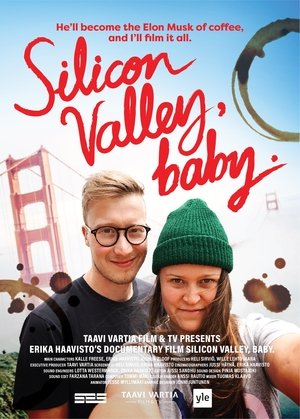
Finnish award-winning barista Kalle Freese travels to San Francisco with his girlfriend to start an instant coffee start-up with big goals. At stake are Kalle's health, relationship and the newly formed start-up.
A reflective look at the arrival and impact of AIDS in San Francisco and how individuals rose to the occasion during the first years of the crisis.
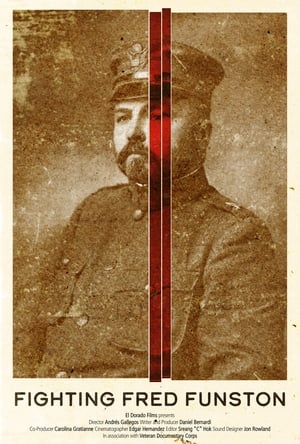
On April 18th, 1906, San Francisco witnessed its most devastating natural disaster – an earthquake that initiated a city-wide fire. The commanding officer of the U.S. Army base at the Presidio, Fred Funston, gathered citizens to fight the fire, patrol the streets, and rebuild the city – all without authorization.
When a young woman is shot by an undocumented immigrant on Pier 14 in San Francisco, the incident ignites a political and media furor that culminates in Donald Trump’s election as President of the United States. In the eye of this storm, two public defenders fight to reveal the truth.
The film is a study of Anton Szandor LaVey, leader of a cult of devil worshipers in San Francisco. He and his Church of Satan are shown performing a black mass, in which a nude woman serves as an altar and a boa constrictor wraps itself around a naked witch. Newsreel footage is included in which LaVey's neighbors are interviewed about the lion which he kept in his house until complaints resulted in the animal's removal to a zoo. The ideology of the Church of Satan is discussed--guilt rejection, sexual freedom, and self-indulgence.
San Francisco has long enjoyed a reputation as the counterculture capital of America, attracting bohemians, mavericks, progressives and activists. With the onset of the digital gold rush, young members of the tech elite are flocking to the West Coast to make their fortunes, and this new wealth is forcing San Francisco to reinvent itself. But as tech innovations lead America into the golden age of digital supremacy, is it changing the heart and soul of their adopted city?
In this rags to riches origin story, Lady Camden struggles to manage the demands of her freshly minted international fame, while Rex is forced to come to terms with the troubling childhood he left behind in Camden which drove him to so desperately seek joy, fantasy and escape through the performing arts.
A documentary account by award-winning filmmaker John Ferry of the events that led up to the 1969 Native American occupation of Alcatraz Island as told by principal organizer, Adam Fortunate Eagle. The story unfolds through Fortunate Eagle's remembrances, archival newsreel footage and photographs.
The film follows a simple structure, and shows the drug-related degradation of five youths (Jake, Tracey, Jessica, Alice, Oreo) during the course of three years. The film depicts drug-related crimes and diseases: prostitution, male prostitution, AIDS, and lethal overdoses.
Unable or unwilling to conform to the rigid atmosphere of Washington and Lee College as a freshman, Ed bailed out after a brief stint there to attend—and graduate from—Miami of Ohio. After graduate work at UK, he left for the Left Coast, and it suited him just fine. The first stop was a writing instructorship at Oregon State, then enrollment into the Stanford Writing Program, a move shared by Jim, Wendell, and Gurney. There he cultivated, among other things, relationships with Larry McMurtry, Robert Stone, and—most importantly—Ken Kesey. Ed didn’t just experience the 1960s; he wallowed in them. Also, a bonus interview from 1996 program, Signature Live.
A documentary chronicling the "youth movement" of the late '60s on Los Angeles' Sunset Strip and San Francisco's Haight-Ashbury district.
Thousands of participants in a San Francisco-based alternate reality game end up getting more than they bargained for. Told from the players’ perspectives, the film looks over the precipice at an emergent new art form where the real world and fictional narratives merge to create unforeseen and often unsettling consequences. Examining counter-culture, new religious movements and street art, this film takes the viewer on a journey into a secret underground world teeming just beneath the surface of everyday life.
A veteran Taxi driver struggles to find passengers in San Francisco and wages a spiritual war against his new self driving competitor, Waymo.