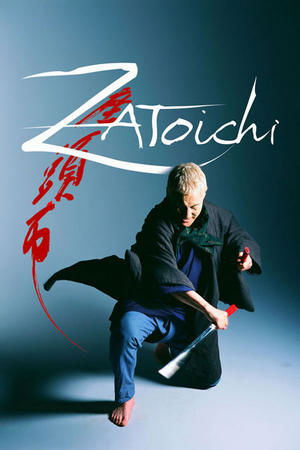
Zatoichi is sworn to protect the life of a young girl and without any real allies finds himself in the middle of a bloody turf war.
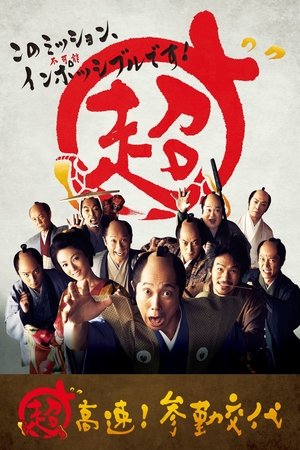
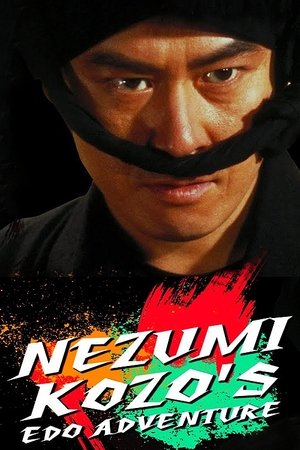
At the crowded Komatsuya in Kawadome, travellers are holding a secret art contest to relieve boredom. However, a thief goes around. During the sudden commotion, a young man called Gentaro begins to perform magic tricks. This magic trick brings out the lost wallets of the travellers one after another. Even the thief himself, Shinzo, is surprised by this trick. Gentaro hears that Okinu, daughter of Kutsukake Jinbei, is looking for Eijiro, the young boss of Omaeda. Gentaro arrives and introduces himself as Eijiro Omaeda. He moves to Kichibei's family in Sakamoto-juku where he meets Okinu's father who needs help.
During the Sengoku period, an army relentlessly lays siege to a castle, but they will need the head of the opposing lord to declare victory.
The ever versatile Kazuki Kitamura stars as masterless samurai Kyutaro Madarame, a feared swordsman who has fallen on hard times in old Edo. Caught between two warring gangs in an epic battle of cat lovers and dog lovers, he begrudgingly accepts the canine faction's offer to assassinate the opposite leader's beloved pet: an adorable white cat. Yet upon raising his lethal sword, he cannot bring himself to go through with the act, and the cat melts his ronin heart. But before finding peace as a newly minted cat person, the still fearsome Madarame will have to take on both gangs in a classic samurai street brawl.
During the reign of the eighth shogun of the Tokugawa shogunate, the Yunagaya Domain in the Tohoku region is a small han. But at the han, there is a gold mine. Suddenly, Masaatsu Naito of Yunagaya Domain receives an order to perform Sankin-kotai within 5 days. Sankin-kotai is a custom that requires the daimyo to visit the shogun in Edo. Unfortunately, the time needed to visit the shogun in Edo for Masaatsu Naito is 8 days. Masaatsu Naito also learns he received the order because a high ranking government official wants the gold mine. Also, the expense for Sankin-kotai is high and the Yunagaya Domain is such a small han that it seems impossible to complete. Nevertheless, Masaatsu Naito begins an unexpected operation to complete Sankin-kotai in 5 days.
Toshiro Mifune swaggers and snarls to brilliant comic effect in Kurosawa's tightly paced, beautifully composed "Sanjuro." In this companion piece and sequel to "Yojimbo," jaded samurai Sanjuro helps an idealistic group of young warriors weed out their clan's evil influences, and in the process turns their image of a proper samurai on its ear.
In this film, Hibari plays a dual role as brother and sister. The story involves a journey to Hanagasa for an incognito Lord (Kotaro Satomi) to overthrow an attempted usurpation of his domain, while being harassed by vassals of the usurper (Kensaku Hara). There's also a mysterious ronin played by Jushiro Konoe. The songs are seamlessly woven into the narrative and don't overwhelm the action. While the plot is derivative it is good example of its type and quite enjoyable. Note that there are some flashback sequences in black and white.
The fate of Tokugawa’s world hangs in the balance as Yagyu Jubei is sent on a mission to discover what happened to 10 of the shogun’s spies that never returned. Matsukata Hiroki, one of the last surviving members of the Golden Age of Japanese Cinema proves that he has not lost a step as he portrays an older and wiser Yagyu Jubei in a movie that brings the best of samurai filmmaking into the 21st century. Summoned from semi-retirement by Shogun Iemitsu, Jubei is asked to take to the road and investigate a clan rumored to be preparing explosives for a rebellion. With help from a beautiful female ninja they head into the Shirakawa domain where the fighting skills of both are tested time and again as they strive to destroy a conspiracy that could bring a new Warring States Era. In the 1960's Yagyu Jubei was the signature role of the great Konoe Jushiro, father of Matsukata Hiroki. This brings the character full circle.
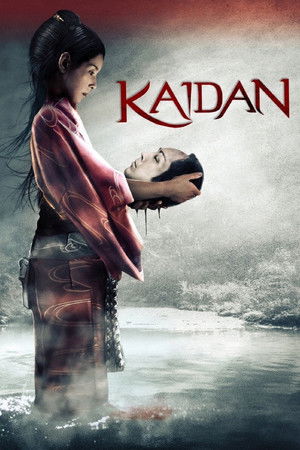
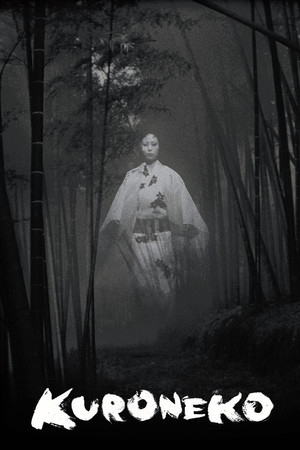
While her son, Kichi, is away at war, a woman and her daughter-in-law survive by killing samurai who stray into their swamp, then selling whatever valuables they find. Both are devastated when they learn that Kichi has died, but his wife soon begins an affair with a neighbor who survived the war, Hachi. The mother disapproves and, when she can't steal Hachi for herself, tries to scare her daughter-in-law with a mysterious mask from a dead samurai.
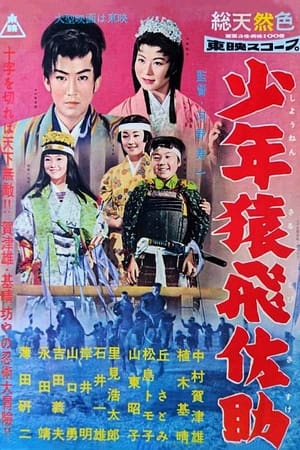
Young Lord Genjiro, who abandoned his castle to live as a commoner in Edo, returns home to restore peace amidst disruption over an inheritance dispute. Warned by a fortune-teller that he would die by the sword, the young lord must courageously battle 30 or 40 men who attack without warning. Meanwhile, his love affair with Kocho, a singer who is also a skilled archer.
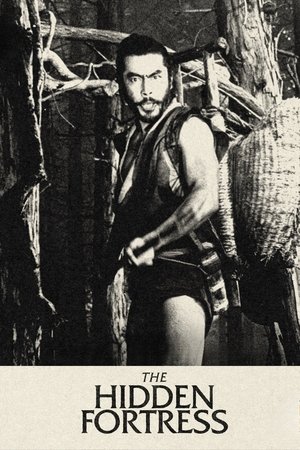
In feudal Japan, during a bloody war between clans, two cowardly and greedy peasants, soldiers of a defeated army, stumble upon a mysterious man who guides them to a fortress hidden in the mountains.
Having put down his sword and given up the will to fight, the masterless samurai Iemon lives in solitude while being haunted by his violent enigmatic past...
Blind traveler Zatoichi is a master swordsman and a masseur with a fondness for gambling on dice games. When he arrives in a village torn apart by warring gangs, he sets out to protect the townspeople.
A fugitive lord and his six retainers disguise themselves as monks to bluff their way through a hostile checkpoint.
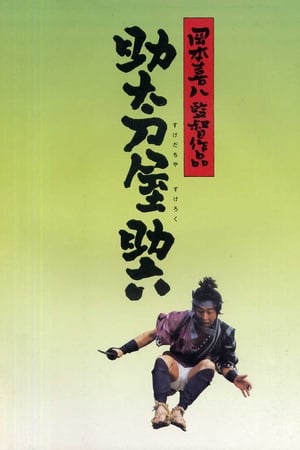
Momotaro carries this sword into battle against injustice in shogunate Japan. Aided by ninja he must now wage a furious battle against the terrible “Ran” clan, villains in league with Ohara Ukon, a bitter samurai nursing a grudge against the shogunate. Together the ruthless conspirators will threaten the foundations of shogunate rule over Japan. Only the relentless slashing sword of Momotaro may save the nation from the Ran clan's army of killers.
Two rogue vagrants make their living as "manure men", turning the waste from the tenement toilets into fertiliser sold to local farmers. Enter Okiku, the only daughter of a fallen samurai, and amongst the overflowing piles of excrement, a well-nourished love story unfolds.
A sadistic Daimyo (feudal lord) rapes a woman and murders both her and her husband, but even when one of his own vassals commits suicide to bring attention to the crime, the matter is quickly hushed up. Not only will there be no punishment, but because the Daimyo is the Shogun's younger brother, he will soon be appointed to a high political position from which he could wreak even more havoc. Convinced that the fate of the Shogunate hangs in the balance, a plot is hatched to assassinate the Daimyo. The two most brilliant strategic minds of their generation find themselves pitted against each other; one is tasked to defend a man he despises, and has a small army at his disposal. The other is given a suicide mission, and has 12 brave men. They are the 13 Assassins.
The fourth part of the series of films based on the Japanese epic novel Nanso Satomi Hakkenden by Kyokutei Bakin
Zatoichi comes upon the town of Tonda, overrun by gangsters. Using one of his favorite techniques, Zatoichi proceeds to win 8 ryo in a rigged gambling game. Of course, the local gangsters attempt to kill him, and the adventure begins. It turns out a blacksmith named Senzo examines Zatoichi's cane sword, and discovers it to be forged by his old mentor. Senzo discovers the sword is at the end of its usefulness and will break when it is used next.
Ichi is staying at an inn when a woman dies. Her dying wish is that Ichi take her son to his father, an artist living in a nearby town. After arriving in the town, Ichi finds out that the father has been forced by a local boss to create illegal pornography to pay off his gambling debts. Ichi makes it his mission to save the man and reunite the family, even though it brings him into conflict with a samurai he sort of befriended on his way to the town.