Nazi propaganda film about the Condor Legion, a unit of German "volunteers" who fought in the Spanish Civil War on the side of eventual dictator Francisco Franco against the elected government of Spain.
An RTÉ documentary on Irish involvement in the Spanish Civil War, 1936-1939.
The role of historians is key in the history of humanity because their objective is to investigate the past to avoid repeating the same mistakes in the future. Furthermore, they often bring to light the history of unique individuals who, due to circumstances, have not received the recognition they deserve, especially in the case of women. This documentary focuses on the work of the historian Aïda Sánchez, who rescued Dolours Vives Rodon from oblivion, one of the pioneering women in piloting aircraft in our country and who played a vital role during the Spanish Civil War.
This documentary collects, through the testimonies of five survivors, four women and one man, the tragedy experienced in “la Desbandá de Málaga and the subsequent exile to France. At the entrance of Queipo de Llano's troops into the city of Malaga, thousands of people, mostly women and children, fled to Almería along the road. They were bombed by sea, land and air by the German army, Mussolini's army and Franco's troops from the then Moroccan colony. Around five thousand people died on these two hundred kilometers of road. This exodus was known as “La desbandá”.
In 1936, the war broke out in Spain and in 1937 the front was maintained for many months around Angiozar and Elgeta. It has often been talked about what men experienced, but women have also experienced the war. Through this documentary, their bravery and courage, both at the front and in resistance away from the front, has been highlighted and recalled.
The documentary 'Jaén, Viento del Pueblo' places the viewer in the year 1936 and takes them to the present day, analyzing and pivoting around the processes of exhumation of the graves in the province of Jaén, the stories of relatives and experts
The adventurous life of Natacha Rambova (1897-1966), an American artist, born Winifred Kimball Shaughnessy, who reincarnated herself countless times: false Russian dancer, silent film actress, scenographer and costume designer, writer, spiritist, Egyptologist, indefatigable traveler, mysterious and curious; an amazing 20th century woman who created the myth of Rudolph Valentino.
The son of an anarchist republican who went into exile in Mexico in 1941 brings back to Spain the suitcase with which his father left Spain. Through his testimonies we will discover the exciting story of his father, unknown until today in Spain.
In this propaganda film intended to raise money for republicans fighting in the Spanish Civil War, Henri Cartier-Bresson first presents the achievements of the Spanish Republic in the field of public health. He then shows how members of the public and organizations across the world were supporting the fighters.
Documentary film about the Spanish Civil War.
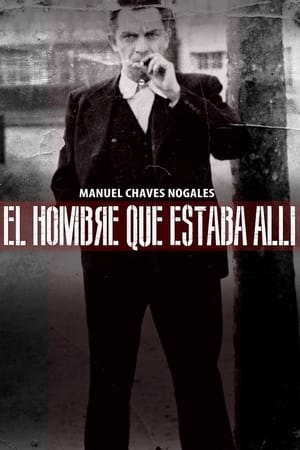
The Spanish journalist Manuel Chaves Nogales (1897-1944) was always there where the news broke out: in the fratricidal Spain of 1936, in Bolshevik Russia, in Fascist Italy, in Nazi Germany, in occupied Paris or in the bombed London of World War II; because his job was to walk, see and tell stories, and thus fight against tyrants, at a time when it was necessary to take sides in order not to be left alone; but he, a man of integrity to the bitter end, never did so.
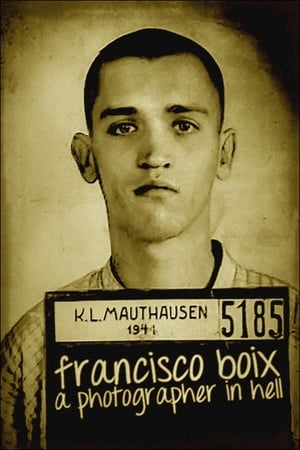
In 1939, just finished the Spanish Civil War, Spanish republican photographer Francesc Boix escapes from Spain; but is captured by the Nazis in 1940 and imprisoned in the Mauthausen concentration camp, in Austria, a year later. There, he works as a prisoner in the SS Photographic Service, hiding, between 1943 and 1945, around 20,000 negatives that later will be presented as evidence during several trials conducted against Nazi war criminals after World War II.
The Moroccan Labyrinth
An account of the brief life of the writer Albert Camus (1913-1960), a Frenchman born in Algeria: his Spanish origin on the isle of Menorca, his childhood in Algiers, his literary career and his constant struggle against the pomposity of French bourgeois intellectuals, his communist commitment, his love for Spain and his opposition to the independence of Algeria, since it would cause the loss of his true home, his definitive estrangement.
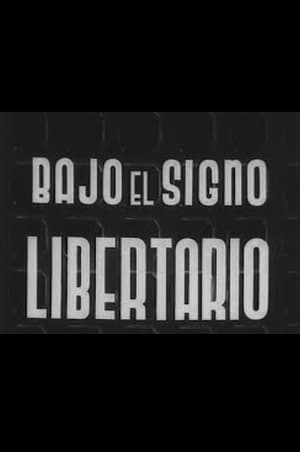
Bajo el signo libertario is a propaganda documentary, with the script and direction of Les (known for his articles in Solidaridad Obrera and the magazine Espectáculo) whose central theme is the reconstruction of the development of life in a libertarian community in the Aragonese town of Pina de Ebro.
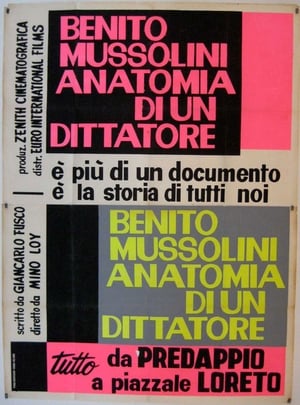
Benito Mussolini: Anatomy of a Dictator
During the Spanish Civil War, more than 500 young Spanish pilots went through the Russian Aviation School in Kirovabad, former capital of the current Republic of Azerbaijan. Once the Spanish war was over, some of them remained in Soviet territory and continued their fight against Fascism on the side of the Russian army.
The film, directed by Pedro Grimaldi, with his mother as the protagonist, narrates the events unleashed in Jerez since the occupation of the military rebels on July 19, 1936. It is a tribute to the "wounded generation", the one who lost their childhood in the context of the war and the postwar period. Girls and boys who had to mature quickly. But, above all, it is a recognition of a generation of resilient, brave and fighting women who were doubly victims: by the violence of the war itself and by their status as women.
Pedro Urraca, Spanish policeman and Gestapo agent led the persecution of numerous Spanish Republican loyalists exiled in France during the Nazi occupation. The portrait of a sinister character through the testimony of his granddaughter.
The documentary film by director Bartomeu Vilà relives the experiences of one of the last cinematographers of the Republic, Joan Mariné, exceptional witness to a moment in the history of Catalan cinema that, despite the economic precariousness, the lack of means and the difficult international circumstances, was characterized by its high production, never surpassed, and its innovation in forms and contents. Through the memories and experiences of Joan Mariné (Barcelona, 1920), the documentary takes a tour of the films he filmed during those years of contention, both with the Sindicat d'Espectacles de la CNT/FAI, and later with the production company of the Republican Generalitat, Laya Films.