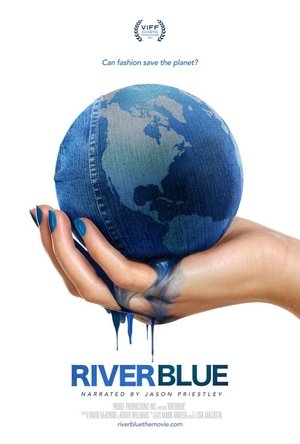
RiverBlue chronicles an unprecedented around-the-world river adventure, led by renowned paddler and conservationist, Mark Angelo, who ends up uncovering and documenting the dark side of the global fashion industry.
A fictionalized day in the life of Anna Nicole Smith, revealing her innermost thoughts on the people (friends, servants, lawyers, photographers) and events (photoshoots, bathing, sexual exploits) that make up her life.
A documentary that follows three women who perform via webcam to paying customers.
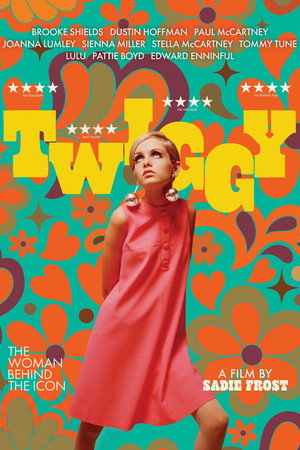
Twiggy takes a comprehensive look at the life story of UK model and cultural icon Twiggy, real name Lesley Lawson, whose career kickstarted in the 1960s. It features interviews with Twiggy and her husband Leigh Lawson, as well as commentary from Erin O’Connor, Paul McCartney, Lulu, Poppy Delavigne, Brooke Shields, Pattie Boyd and Zandra Rhodes.
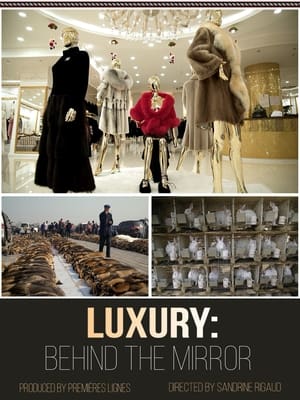
With their beautiful shopfronts and finely crafted goods, brands like Gucci, Max Mara, Louis Vuitton and Prada are seen as being the height of luxury, conjuring images of master craftsmen finely crafting each item. But - as this investigation reveals - behind the glamorous exterior, all that glitters is not gold. From Haute-Couture at Paris Fashion Week to Chinese and Italian backroom boutiques, LUXURY: BEHIND THE MIRROR investigates the hidden side of luxury.
Friends, family, co-stars and admirers of actor Steve McQueen talk about his life and his movie career.
Nel silenzio del parco
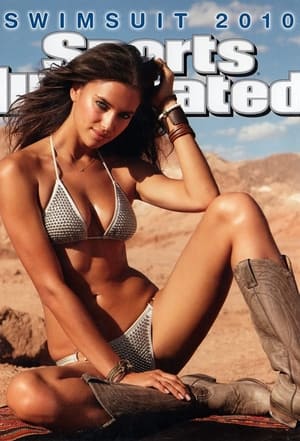
Paradise won’t ever feel closer than it does in Sports Illustrated Swimsuit 2011: The 3D Experience natively shot in 3D. Join supermodels Julie Henderson, Alyssa Miller and 2011 SI Swimsuit cover girl Irina Shayk as they explore the natural beauty of Maui—and see it in breathtaking 3D on Blu-ray. Featuring exclusive interviews with the models and amazing photo sessions on some of the most pristine beaches in the world, Sports Illustrated Swimsuit 2011: The 3D Experience is so vivid and lifelike viewers will almost be able to feel the sand between their toes.
A documentary on Yves Saint-Laurent and the legendary fashion designer's final show.
The Versace story is a family story of glory and tragedy that reads like a glamorous soap opera. In the late 1970s, Gianni Versace founded a small family business that would grow into a global fashion empire with his older brother in charge of the finances and his sister as artistic director. His audacious designs would revolutionise the fashion industry.
In fashion you’re only as good as your last collection, and the next collection always has to be your best. There is no margin for error. Nicholas Raefski is an emerging designer attempting to change the landscape of American fashion. Go inside New York City Fashion Week with Raefski to see how his young and inexperienced team pulls off a major fashion showcase with almost no budget.
In the 1920s, the rivalry between fashion icon Gabrielle Chanel and her stylistic rival Elsa Schiaparelli gave rise to innovations in haute couture.
Sportswear dominates everyday street wear; but so does haute couture: what began a hundred years ago as functional clothing for playing tennis or golf has revolutionized the way people dress.
This is the first generation of Russian youth to have grown up after the fall of the Soviet Union, and are looking inwards to the Eastern Bloc for inspiration, rather than the wider Western world. With designers like Gosha Rubchinskiy popularising post-Soviet style around the world, we discover what effect the former Soviet Union has had on modern creativity, the impact of this cultural explosion on the rest of the world, and what it is to be young in Russia today.
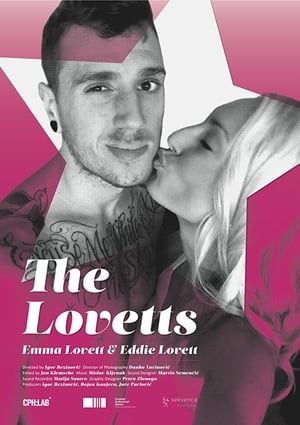
Mr. & Mrs. Lovett live out their (sex) lives in full public view in front of a permanently connected webcam, which frames their spartan living room like a human aquarium. This is all we see of their lives - but it's not so little after all. The young couple are driven business people, and they flirt, strip and screw for the benefit of the camera and the customers on the receiving end. The Croatian filmmaker Igor Bezinovic has created a surreal and funny take on a piece of avant-garde 'adult entertainment' from one of the internet's seedy corners. But he also documents a performance culture, which dissolves the boundaries between the private and public spheres and a parallel economy of images. A hedonistic and thoroughly commercialised culture, where supply and demand have taken on an entirely new and absurd meaning.
Joe McKenna is one of the most influential stylists in the world. From the beginning of the 1980s, he struck up a great friendship with Azzedine Alaïa, and they continued to work together for many years. Thanks to their mutual understanding and trust, Joe McKenna was able to obtain the rare privilege of entering the studio and the couturier’s workshops with his camera. He paints an intimate and endearing portrait of Alaïa, punctuated by interviews with Nicolas Ghesquiere, Carlyne Cerf, Naomi Campbell and Grace Coddington, among others
A camera crew follows Helmut Newton, the fashion and ad photographer whose images of tall, blond, big-breasted women are part of the iconography of twentieth-century erotic fantasy. He's on the go from L.A., to Paris, to Monte-Carlo, to Berlin, where he was a youth until he escaped from the Nazis in 1936. We see him on shoots, interviewing models, and discussing his work.
Featuring tell-all interviews with insiders and former staff, this exposé traces American Apparel's journey from fashion phenomenon to financial flop.
The Price of Cheap tells the stories of modern slaves in textiles manufacturing supply chains and the brave individuals fighting on the ground against immeasurable odds to help them. We follow a man named Joseph Raj, who runs an organization called T.E.S.T. (Trust for Education and Social Transformation) in Tamil Nadu, India as he goes on raids to rescue underage children from unsafe and labour intensive factories. We hear from the survivors he has helped rescue, hear of their horrific experiences, and desire for education and change. Academics and social justice workers weigh in on why the issue of forced labour persists.
After decades of growth and ostentation, when every excess was allowed, the fashion industry is currently at a turning point, caught up in the political issues that are reshaping our times: climate change and sustainable development, cultural representation and appropriation, equality, gender issues... Brands and creators are now subject to increasingly sharp public scrutiny. How is the fashion industry facing these challenges and responding to this new paradigm? Based as it is on the concept of planned obsolescence, can fashion survive?