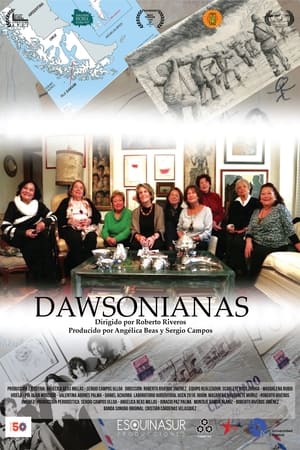
During the first days after the 1973 Chilean coup d’état, the political leadership of the Popular Unity government was arrested and transferred to Dawson Island, Magallanes Region, extreme south of Chile and the mainland. The wives of the then political prisoners began an incessant effort to find out the whereabouts of their husbands and then try to return them alive. In these circumstances, they meet and spontaneously organize into a group they call the “Dawsonianas.”
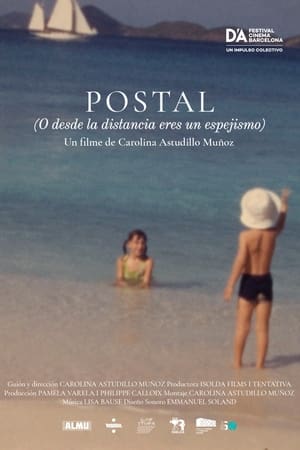
"The palm trees on the reverse are a delusion; so is the pink sand". This line, taken from a poem by Margaret Atwood, lights the path traced in "Postcard". As the years go by, landscapes transform, take on new meanings, and hold onto joys that will never be regained. The sea and the beach, once stages of happy summers, romances, and encounters, will turn into concentration camps or centers of detention and torture. This occurs across different times and places. In this piece, I embark on a journey through some of my works that explore the relationship between testimony, spaces, and time, engaging in dialogue with the beautiful film directed by Alejandro Segovia in 1972.
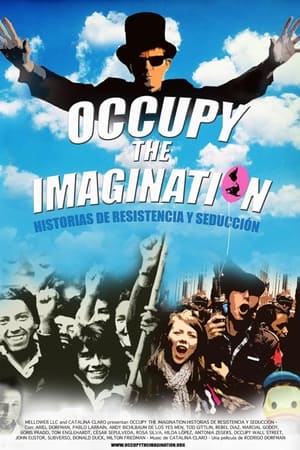
Filmmaker Rodrigo Dorfman goes in search of his revolutionary roots in Chile and in the process finds it in the euphoria of the Occupy Movement.
Draped in an electric blue fabric, the artist acts as a conduit between the tangile and the spiritual, blurring the boundaries between human form and natural elements.
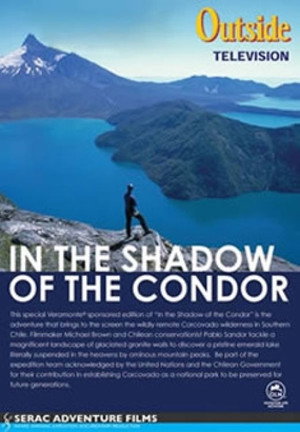
In the Shadow of the Condor documents an expedition in January of 2002 into the spectacular pristine Corcovado wilderness in Southern Chile.
The documentary portrays the desires and ftures of four young people from the third year of secundary education in Chile. Two of them attend the industrial high school in the San Joaquín commune, where they have already begun their training as a textile technician. They both have dreams, they want to study, work, start a family and improve themselves. On the other hand, at the exclusive Saint George school, two students study in privileged conditions. They want to be professionals and develop through the arts. This is the portrait of two worlds located less than 20 kilometers apart and that can only be together in the audiovisual montage. It is the manifestation of the coincidences and contradictions that exist between the realities and the discourses of four young Chilean students in a fundamental stage for their future.
The ocean contains the history of all humanity. The sea holds all the voices of the earth and those that come from outer space. Water receives impetus from the stars and transmits it to living creatures. Water, the longest border in Chile, also holds the secret of two mysterious buttons which were found on its ocean floor. Chile, with its 2,670 miles of coastline and the largest archipelago in the world, presents a supernatural landscape. In it are volcanoes, mountains and glaciers. In it are the voices of the Patagonian Indigenous people, the first English sailors and also those of its political prisoners. Some say that water has memory. This film shows that it also has a voice.
Sonar Rock City: Seattle is a journey through the city that caught our attention back in 1992 thanks to the grunge movement which today no longer exists. Still today the creative spirit runs through its veins with a new music scene that captures what Seattle is in its core.
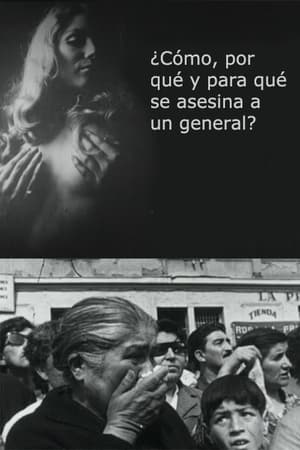
Documentary short about the death of Chilean general René Schneider by the CIA, following the election of Salvador Allende as president of the nation.
A documentary on the rise and fall of Project Cybersyn, an attempt at a computer-managed centralized economy undertaken in Chile during the presidency of Salvador Allende.
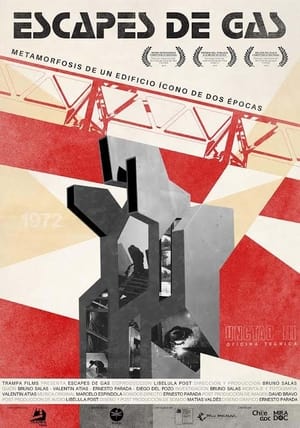
1972. During the government of Salvador Allende 34 artists made works that were included in the construction of the UNCTAD III building, today GAM. After the 1973 coup, few works survived looting and destruction. 40 years later, Joaquín Maruenda, son of the late sculptor Félix Maruenda, finds a record that leads him to investigate the events of the sculpture "Chimeneas" and its possible restoration. Joaquín, artists and workers involved with the construction of the building, will try to answer the question Why did they destroy the art?
It all begins at a party in Santiago, Chile, when a seemingly innocent gesture -- the offer of a ride home -- ends in a passionate night of lovemaking and intense conversation for young singles Bruno and Daniela. Shacked up at a flea-bitten motel for a one-night stand, the pair lingers deep into the night, alternating between powerful physical encounters and an ever-deepening emotional connection.
Children are lured to Metropolis only to find that the renowned, mythical city may not be the happy-go-lucky utopia they'd thought it would be.
"Everybody should have a home. If you punish a nation, this is so abstract, it's very mean to use your power to put another country in your control... Instead of punishment, maybe we should have love." Eliane from Chile, Milad from Iran, and Georgia from Greece, three migrants in the UK and their thoughts on love, home, family, and Shakespeare's Romeo and Juliet.
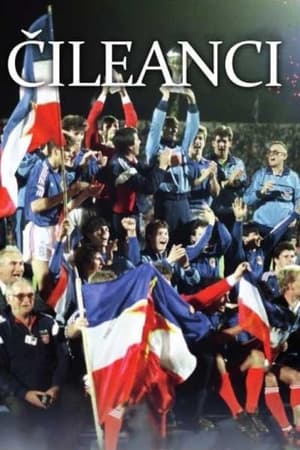
The story of the Yugoslavian football team who became youth world champions in Chile, 1987.
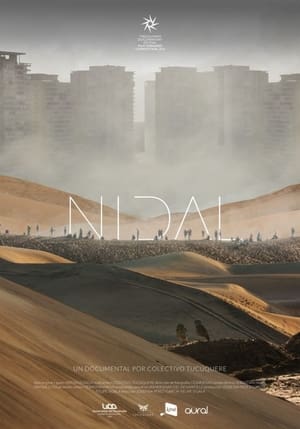
The real estate industry has destabilized the natural surroundings of the city of Concón, on the Chilean coast, forcing the inhabitants and landscapes of the region to find new ways to adapt and survive. “Nidal” depicts the cohabitating of species and the accelerated transformation of the landscapes due to human occupation.
Alain Cluny is Balthazar, a bumbling middle-aged intellectual who spouts off from time to time about leftist causes, usually to his current girlfriend. Then Edwarda (Bernadette Lafont), who is active in the political underground, comes into his life. From that point on, he begins to act on his beliefs. Edwarda's underground political action group stages a little drama to test Balthazar's commitment and reliability, putting him through an interrogation by what appear to him to be French secret police. Having passed this test, he is given a real assignment. This film is a comedy with elements of satire, and it explores the humor to be found in left-wing pretentiousness of all kinds. - Rovi
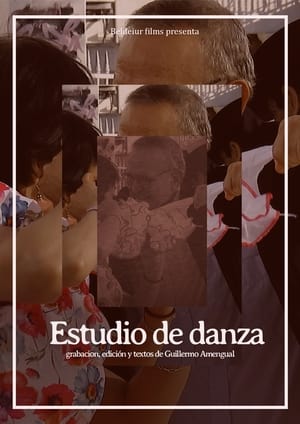
The "cueca" is Chile's national dance. Marveled by this form of dancing, the narrator reflects on the meaning of dance in our lives and how it has been portrayed in the history of cinema.
Guided by compassionate experts and a devoted team of volunteers, Ramba, an Asian elephant who endured 50 years of isolation in a Chilean circus, embarks on an extraordinary 2,550-mile journey to her new home at Elephant Sanctuary Brazil.
When a man is late to work after getting pooped on by a pigeon, he hustles through the park to make it on time. Suddenly, it happens again. Only this time, when he looks up, he does not see a pigeon... He sees a PIGEON MAN!