World renowned journalist, and award-winning filmmaker Rahiem Shabazz presents the third installment of his docu-series Elementary Genocide: Academic Holocaust. The first two documentaries in the series; The School To Prison Pipeline and Elementary Genocide 2: The Board Of Education vs. The Board of Incarceration received critical acclaim and launched Shabazz as a political pundit and academic ambassador for the African American community. Elementary Genocide: Academic Holocaust adds more statistical proof of the scholastic inequalities faced by Original people around the country. The documentary revisits the importance of education and its impact on self-image, family structure, financial freedom, and the collective future of African/indigenous people in America and abroad.
Elementary Genocide is a documentary executive produced by award winning journalist/filmmaker Rahiem Shabazz. The documentary appeals to a wide general viewership by addressing the social, cultural, political and personal ramifications of how the federal government allots money to each state, to build prions based on the failure rate of 4th and 5th graders. In America, where half of the 4th grade is reading below grade level and more African-American males are in jail than are in college, Elementary Genocide serves as a striking reminder of a flawed system in need of repair.
Rahiem Shabazz continues the conscience-raising dialogue generated by his acclaimed documentary Elementary Genocide: The School To Prison Pipeline with his equally hard-hitting Elementary Genocide 2: The Board of Education vs The Board of Incarceration. The Board of Education vs The Board of Incarceration uncovers the true purpose of today’s educational system and how it’s failing the African child. Going beyond the school-to-prison pipeline headlines and conspiracy theories, The Board of Education Vs. The Board of Incarceration proves that something sinister is afloat by digging deep to explore its origin, its existence and how to plot its destruction to save every Black child.
For some time now, there have been schools in Germany whose aim is not to segregate any child. Everyone should be integrated with their minor or major handicaps, advantages or weaknesses, whether highly gifted or severely disabled. Klassenleben tells the story of such a school, its teachers, its children and the immense challenge of learning. From winter to summer 2004, Hubertus Siegert and his film team accompanied class 5d at the Fläming elementary school in Berlin. At eye level with its protagonists, the film observes the learning and life of pupils with extremely different abilities in a class of 20 children, four of whom have learning difficulties or severe multiple disabilities, and 16 "normal pupils", including some so-called gifted pupils. Do lessons succeed in such a heterogeneous group? Is everyone motivated to learn where the competition is not between "gifted" children?
The documentary's title translates as "to be and to have", the two auxiliary verbs in the French language. It is about a primary school in the commune of Saint-Étienne-sur-Usson, Puy-de-Dôme, France, the population of which is just over 200. The school has one small class of mixed ages (from four to twelve years), with a dedicated teacher, Georges Lopez, who shows patience and respect for the children as we follow their story through a single school year.
Twelve years after they went to school together, six children from Berlin with and without disabilities are interviewed on the topic of inclusion in the German school system.
A major figure in contemporary feminism and the first Frenchwoman to win the Nobel Prize for Literature, Annie Ernaux is seen by many as a source of individual and collective emancipation, blending the intimate with the universal. Filmmaker Claire Simon has devoted an original portrait to her, giving students and teachers a voice.
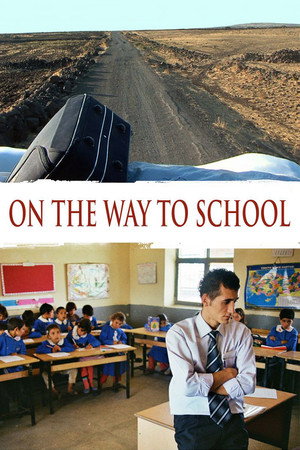
One year in the life of a Turkish teacher, teaching the Turkish language to Kurdish children in a remote village in Turkey. The children can't speak Turkish, the teacher can't speak Kurdish and is forced to become an exile in his own country. On the Way to School is a film about a Turkish teacher who is alone in a village as an authority of the state, and about his interaction with the Kurdish children who have to learn Turkish. The film witnesses the communication problem emphasizing the loneliness of a teacher in a different community and culture; and the changes brought up by his presence into this different community during one year. The film chronicles one school year, starting from September 2007 until the departure of the teacher for summer holiday in June 2008. During this period, they begin to know and understand each other mutually and slowly.
Les chiens-loups
Follows the rich history and traditions of the English Language School “Plovdiv” in Plovdiv, Bulgaria.
L'école en actes
Follows the lives of students and their teachers based on the director's childhood memories. The events of the film take places in the actual boarding school called "Gymnasium Canisianum", founded in 1946 by a German catholic priest.
Le Retour de l'école à l'ancienne
Esmalts
Gripping, heartbreaking, and ultimately hopeful, Waiting for Superman is an impassioned indictment of the American school system from An Inconvenient Truth director Davis Guggenheim.
In recent years, more than 2,500 books have been removed from school districts around the US, labeled as banned, restricted, or challenged, and made unavailable to millions of students. By no accident, the themes targeted are the usual scapegoats of the American Right—LGBTQ+ issues, Black History, and women’s empowerment—impeding the power of future generations to develop their own thoughts and opinions on critical social issues. By weaving together a lyrical montage of young readers and authors, THE ABCs OF BOOK BANNING reveals the voices of the impacted parties, and inspires hope for the future through the profound insights of inquisitive youthful minds.
In the vast expanse of desert East of Atlas Mountains in Morocco, seasonal rain and snow once supported livestock, but now the drought seems to never end. Hardly a blade of grass can be seen, and families travel miles on foot to get water from a muddy hole in the ground. Yet the children willingly ride donkeys and bicycles or walk for miles across rocks to a "school of hope" built of clay. Following both the students and the teachers in the Oulad Boukais Tribe's community school for over three years, SCHOOL OF HOPE shows students Mohamed, Miloud, Fatima, and their classmates, responding with childish glee to the school's altruistic young teacher, Mohamed. Each child faces individual obstacles - supporting their aging parents; avoiding restrictions from relatives based on traditional gender roles - while their young teacher makes do in a house with no electricity or water.
Nová škola
L'école du voyage
Brigitte macron, un roman français