This episode from the Czech Journal series examines how a military spirit is slowly returning to our society. Attempts to renew military training or compulsory military service and in general to prepare the nation for the next big war go hand in hand with society’s fear of the Russians, the Muslims, or whatever other “enemies”. This observational flight over the machine gun nest of Czech militarism becomes a grotesque, unsettling military parade. It can be considered not only to be a message about how easily people allow themselves to be manipulated into a state of paranoia by the media, but also a warning against the possibility that extremism will become a part of the regular school curriculum.
Uchiyama Kaede and Shiina Kasumi used to be best friends. Now in high school, Kasumi grew more popular than Kaede, which has led her to continually bully her ex-best friend. One day after school, Kaede meets Kishida Takumi, a bike thief who's especially talented in picking locks. She asks him for a favour: if he could possibly open the key to the school roof. Meanwhile, the arrival of a new teacher seems to bring changes to the school.
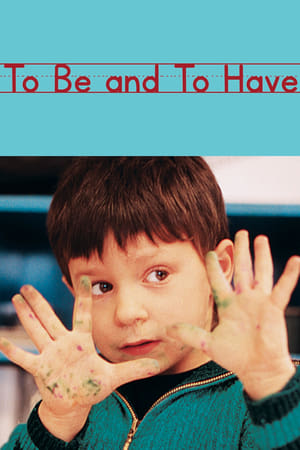
The documentary's title translates as "to be and to have", the two auxiliary verbs in the French language. It is about a primary school in the commune of Saint-Étienne-sur-Usson, Puy-de-Dôme, France, the population of which is just over 200. The school has one small class of mixed ages (from four to twelve years), with a dedicated teacher, Georges Lopez, who shows patience and respect for the children as we follow their story through a single school year.
A father films the daily efforts and struggle of his son to do his homework. Completing the school tasks is an agony that oppresses the creative passion of a restless, imaginative boy. His father gets deeply involved so he can understand what the problem is, and spends an hour every day to help him with his homework. Days, weeks, years go by, and we observe how the eagerness to learn clashes with the ghost of school dropout. The endearing relationship between father and son, a real rollercoaster of emotions, reveals with a sense of humour the contradictions in the French education system.
When nice-guy Jeremy Martin puts on mysterious virtual reality glasses at the mall, he suddenly loses his “inside voice” and starts spouting every thought he has out loud. Making matters worse, Jeremy is running for student council president against his classmate Milly, who is full of great ideas to improve the school. Desperate to get back to normal, Jeremy and his sister Victoria must figure out how to convince his brain that he can speak up for himself.
A new teacher at a highly problematic comprehensive school feels that corporal punishment may just be inflaming the problems, and so begins to campaign against it.
A documentary about a teacher who sends a group of pupils out of the classroom when one of them does not own up to talking behind the master's back.
On a blustery January day bishops arrive for the opening of the new Knutsford Test School.
A Cincinnati public school fights to break the cycle of poverty in its Urban Appalachian neighborhood, where senior Raven Gribbins aims to become the first in her troubled family to graduate and go to college. When Principal Craig Hockenberry's job is threatened, it becomes clear it's a make-or-break year for both of them.
Young scholars get busy for Newcastle-on-Tyne's 'Education Week' in the tour of Tyneside classrooms.
Guigo is in love with Sabrina, with whom he exchanges messages through his cell phone. He is the son of separated parents. One day he and his friend Túlio travel to a fishery with their father, Roberto, and his friend, Paulo.
What does it mean to belong to a place, a country? In a south Tel Aviv elementary school, that question is addressed head-on by a fourth-grade class and their teacher. The children are asylum seekers whose families mostly do not have a legal status in Israel, yet learn, sing and play in Hebrew all the while examining their identity and sense of belonging.
All vile things must come to an end, and for Daria Morgendorffer that means it's time to look beyond high school to college. Our little girl has grown up so fast. It's time for higher learning, lowered expectations, and a heavy dose of sarcasm. Life can't suck more after high school, can it?
In the Makarenko public elementary school in the Paris outskirts, children want to learn and to be cheered while teachers know they do not only teach, they also educate. With care, tenacity and efforts, children are trained to become not only responsible citizens but also human beings.
Gripping, heartbreaking, and ultimately hopeful, Waiting for Superman is an impassioned indictment of the American school system from An Inconvenient Truth director Davis Guggenheim.
A comedic, sometimes poignant look at the absurdity of today's college-applications process for parents and teens. Joan Cusack stars as a stressed-out mom who is trying to get her teen daughter into college.
Elementary Genocide is a documentary executive produced by award winning journalist/filmmaker Rahiem Shabazz. The documentary appeals to a wide general viewership by addressing the social, cultural, political and personal ramifications of how the federal government allots money to each state, to build prions based on the failure rate of 4th and 5th graders. In America, where half of the 4th grade is reading below grade level and more African-American males are in jail than are in college, Elementary Genocide serves as a striking reminder of a flawed system in need of repair.
One year in the life of a Turkish teacher, teaching the Turkish language to Kurdish children in a remote village in Turkey. The children can't speak Turkish, the teacher can't speak Kurdish and is forced to become an exile in his own country. On the Way to School is a film about a Turkish teacher who is alone in a village as an authority of the state, and about his interaction with the Kurdish children who have to learn Turkish. The film witnesses the communication problem emphasizing the loneliness of a teacher in a different community and culture; and the changes brought up by his presence into this different community during one year. The film chronicles one school year, starting from September 2007 until the departure of the teacher for summer holiday in June 2008. During this period, they begin to know and understand each other mutually and slowly.
World renowned journalist, and award-winning filmmaker Rahiem Shabazz presents the third installment of his docu-series Elementary Genocide: Academic Holocaust. The first two documentaries in the series; The School To Prison Pipeline and Elementary Genocide 2: The Board Of Education vs. The Board of Incarceration received critical acclaim and launched Shabazz as a political pundit and academic ambassador for the African American community. Elementary Genocide: Academic Holocaust adds more statistical proof of the scholastic inequalities faced by Original people around the country. The documentary revisits the importance of education and its impact on self-image, family structure, financial freedom, and the collective future of African/indigenous people in America and abroad.
Ute Vecchio has two years to prepare children who have just arrived from other countries for the German school system. The challenges she faces are just as diverse as the cultures the children originate from.