An oil boom has drawn thousands to America’s Northern Plains in search of work. Against the backdrop of a cruel North Dakota winter, the stories of three children and an immigrant mother intertwine among themes of innocence, home, and the American Dream.
Those who do not know the Sahara think there is only sand in the desert. But in the desert there are children who play and draw and make movies, and who would like to not have to think about the war. In the desert there's a European colony, an occupied country called Western Sahara, where there are thousands of Sahrawi refugees living a hard life in exile. "Little Sahara" tells their story, the story of a supportive, resilient people who try to thrive and grow in the Hamada, where everything has a hard time growing.
A brief portrait of famous and brave bullfighter Manuel Benítez el Corbobés; an account on still photos of his triumphs and failures.
A documentary that invites the viewer to immerse themselves in a intimate and thoughtful walk through Poblenou Cemetery in Barcelona, better know as "El Santet", to see what is happening at its surrounding areas and, especially, inside: work, buildings, people watching over those who are no longer here, cemetery workers... A trip through a space that is closer than we think.
A trip on the Swedish lake Mälaren by a 115-year-old steamboat. The journey between Stockholm and Mariefred takes 3,5 hours. The steamboat Mariefred was manufactured over a hundred years ago and is one of the last steam-powered vessels on the lake. The steam whistle sounds when Maja, as she is called in Mariefred, steers into the bay towards the small town. A fanfare for the summer!
Eleven major film makers from Europe, America and Asia talk about Akira Kurosawa and discover surprising influences on their own work.
Working men and women leave through the main gate of the Lumière factory in Lyon, France. Filmed on 22 March 1895, it is often referred to as the first real motion picture ever made, although Louis Le Prince's 1888 Roundhay Garden Scene pre-dated it by seven years. Three separate versions of this film exist, which differ from one another in numerous ways. The first version features a carriage drawn by one horse, while in the second version the carriage is drawn by two horses, and there is no carriage at all in the third version. The clothing style is also different between the three versions, demonstrating the different seasons in which each was filmed. This film was made in the 35 mm format with an aspect ratio of 1.33:1, and at a speed of 16 frames per second. At that rate, the 17 meters of film length provided a duration of 46 seconds, holding a total of 800 frames.
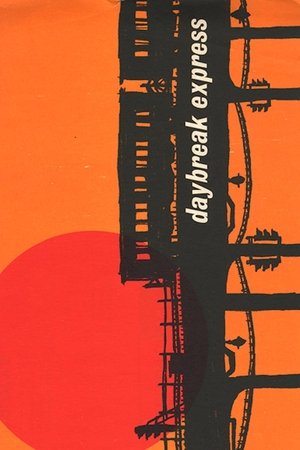
Set to a classic Duke Ellington recording "Daybreak Express", this is a five-minute short of the soon-to-be-demolished Third Avenue elevated subway station in New York City.
Xu Xin’s film “Dao Lu” (China 2012) offers an exclusive “in camera” encounter with Zheng Yan, an 83 year-old veteran of the Chinese Red Army, who calmly relates how he has navigated his country’s turbulent history over three-quarters of a century.Born to a wealthy family in a foreign concession, Yan joined the Chinese Communist Party (CCP) in 1941 because he sincerely believed in the socialist project, and in its immediate capacity to free China from the Japanese yoke and eradicate deep-rooted corruption.
A documentary about the artistic and verbal expressions of mentally ill people.
Why wouldn't you? Is there any reason not to? We've got so much at our disposal, so, why don't you? Won't you tell me? Won't you please tell me? To have you down is simply unacceptable. Just look at this; or this; at all these hallmarks to guide you and convey to you the prime ways to feel lovely. Just follow them and you'll be set. So, I ask you again... Don't you feel lovely today?
Exploring the art of Armenian portraitist Hakob Hovnatanyan, Parajanov revives the culture of Tbilisi of the 19th century.
In rural Kosovo, identical houses are built for family members working abroad, in the hope that they will one day return to settle in their old homeland.
Filmed inside Pharmacy No. 3 in Shanghai, Joris Ivens and Marceline Loridan-Ivens document the daily work of a state pharmacy that functions as both a dispensary and a neighborhood medical center. The film focuses on routine interactions between staff and patients, revealing an integrated model of urban healthcare in 1970s China.
Based on an unrealized film script written in 1964 for The Homosexual Law Reform Society, a British organisation that campaigned for the decriminalization of homosexual relations between men, "The Colour Of His Hair" merges drama and documentary into a meditation on queer life before and after the partial legalization of homosexuality in 1967.
One Thousand and One Attempts to Be an Ocean reflects on the experience of not being able to see the world with depth perception. Made up of micro-events from "satisfying video" that swarm on the internet, the abstract narrative unfolds through an appropriation way by referring to trance and minimal music. It's about a desire for groundless waves, blended with today's inexorable entropy of our information societies.
Aspects of a London day, including prostitutes on street corners, a striptease show and the 2i's Coffee Bar.
Documentary about new chinese cinema.
A fist-person story of the director of the documentary, who talks about the loneliness that entails living with an eating disorder and her vision now thar she is entering into adulthood.
Images and numbers illustrate the domestic political measures taken after the Nazis came to power to eliminate unemployment.