3IRTH
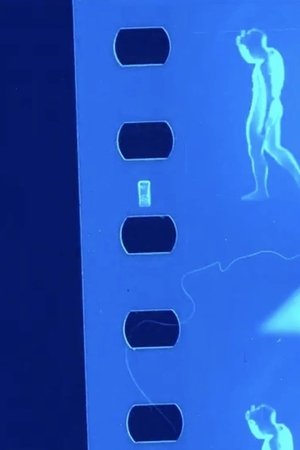
A visual reinterpretation of dance and animated found footage.
Experimental short-film made by brazilian students about the trópicalia and cinema novo movement. The narrative revolves around the song Géleia Geral from the album Tropicália ou Panis Et Circensis and also around the political, artistical and social time from that period.
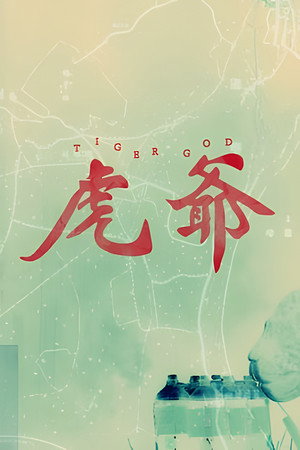
The Tiger God project originated during the artist’s residency at Cien Art Village in Hualien in 2021, inspired by a Sikawasay (Amis priest) who said a concrete tiger carried a soul. The work explores encounters between Han folk beliefs and Amis spiritual traditions, reflecting on suppressed indigenous histories in eastern Taiwan under colonial and religious forces. Nighttime fireworks symbolize external impacts on the land, linking concrete animals, mining, and colonial imagination. The ritual opera returns the footage to the land and gods, weaving ritual, research, and reflection into a narrative about silent objects and memory.
People are punished not for their sins, but by their sins and this is the most severe and proper punishment.
Roca Morena
Tableaux mouvants
Swyngomatic Blues
A video sketch at Hayama's bed, situated in Bangkok.
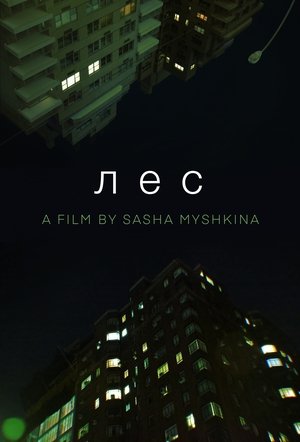
A young woman wakes up on a train going to an unknown destination. She has no recollection of how she got there or where she is. She finds herself in a vast city; a forest of steel and iron and concrete, wandering the dark streets.
A jewel of Italian artist cinema long considered lost, Echo by Gianfranco Pardi was presented for the first time in 1971 at Studio Marconi. The music from the film, created together with the artists Mino Ceretti, Carlo Ruffini and Davide Mosconi, will then flow into the album Uno zingaro di Atlante con un fiore a New York, released by RCA in 1973. As Franco Quadri had already noted at the time, the structure of the film unfolds in three moments which, although contrasting, blend into each other harmoniously, from a visual and musical point of view. The first is of an exquisitely conceptual nature and focuses on the constructive values of the architectural measurement of space; the second is characterized by a convulsive explosiveness bordering on pop and, finally, the third brings the gaze back to the natural order.
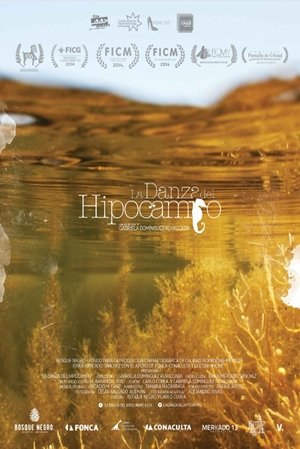
Memory mechanisms are mysterious: we only see the stories we choose in order to construct our own reality. Every mark is a message in time, the invocation of an absence. To travel in the memory is to walk in time, zigzagging, a long road permeated by a dark, indecipherable logic… if we could choose seven moments to sum up our entire life, which ones would they be? The Dance of the Memory is a documentary-essay that guides us in that autobiographical search, where image and memory intertwine. It mixes archive material with an aesthetic and subjective tone.
R_pour ne pas céder d’un pouce
La fin
Despierta
HU
The first embodiment of (a) concept of structural activity in cinema comes in Kren's Bäume im Herbst, where the camera as a subjective observer is constrained within a systematic or structural procedure, incidentally the precursors of the most structuralist aspect of Michael Snow's later work. In this film, perception of material relationships in the world is seen to be no more than a product of the structural activity in the work. Art forms experience.
When we are in the dark, we can see only the sign of the space. The moment the light comes into the room, we can see another space. This space is the incorporated like smoke construction that is composed of the dark, light and time.
A reflection on loss and nature’s quiet observance in a small nook of the Ozarks.
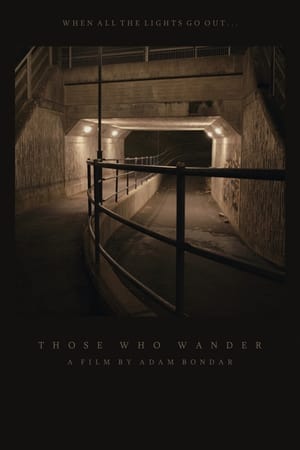
What are they? What do they seek? When all the lights go out, they will wander. And you will never see them.