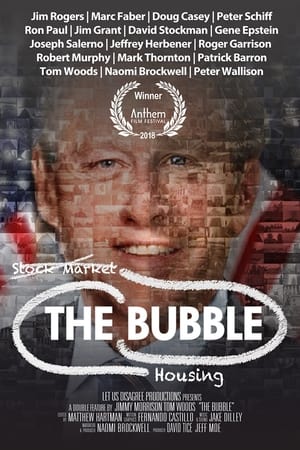
Diving deep into the true causes of the Great Recession, the financial crisis of the 2010s, renowned economists, investors and business leaders explain what America is facing if we don't learn from our past mistakes. Is the economy really improving or are we just blowing up another Bubble?
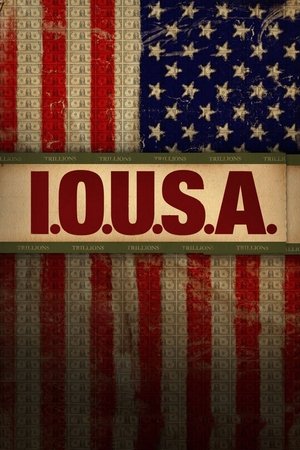
With the country's debt growing out of control, Americans by and large are unaware of the looming financial crisis. This documentary examines several of the ways America can get its economy back on the right track. In addition to looking at the federal deficit and trade deficit, the film also closely explores the challenges of funding national entitlement programs such as Social Security, Medicare and Medicaid.
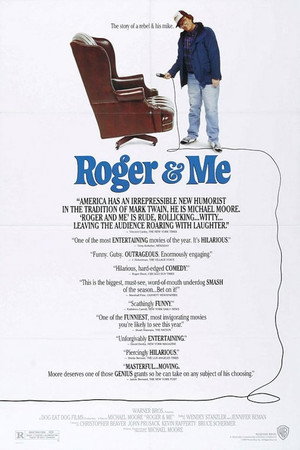
A documentary about the closure of General Motors' plant at Flint, Michigan, which resulted in the loss of 30,000 jobs. Details the attempts of filmmaker Michael Moore to get an interview with GM CEO Roger Smith.
Directors Twila Raftu and Shaun Cronin explore the controversial issue of free data exchange and the growing impact of copyright legislation, intellectual property laws and digital rights management from the viewpoint of those dedicated to the unregulated flow of creative products and information. Advocates of "free culture," including Xbox hacker Andrew "Bunnie" Huang and underground rapper Adam "Doseone" Drucker, offer opinions and commentary.
Wincapita documentary film gives a silenced perspective on Finland's alleged biggest financial crime and pyramid scheme.
Since the late 18th century American legal decision that the business corporation organizational model is legally a person, it has become a dominant economic, political and social force around the globe. This film takes an in-depth psychological examination of the organization model through various case studies. What the study illustrates is that in the its behaviour, this type of "person" typically acts like a dangerously destructive psychopath without conscience. Furthermore, we see the profound threat this psychopath has for our world and our future, but also how the people with courage, intelligence and determination can do to stop it.
A documentary about the Enron corporation, its faulty and corrupt business practices, and how they led to its fall.
In suburban Buenos Aires, thirty unemployed ceramics workers walk into their idle factory, roll out sleeping mats and refuse to leave. All they want is to re-start the silent machines. But this simple act - the take - has the power to turn the globalization debate on its head. Armed only with slingshots and an abiding faith in shop-floor democracy, the workers face off against the bosses, bankers and a whole system that sees their beloved factories as nothing more than scrap metal for sale.
Jamie Johnson takes the exploration of wealth that he began in Born Rich one step further. The One Percent, refers to the tiny percentage of Americans who control nearly half the wealth of the U.S. Johnson's thesis is that this wealth in the hands of so few people is a danger to our very way of life.
“I don’t think most people really understood that they were in a casino” says award-winning financial reporter Mark Pittman. “When you’re in the Street’s casino, you’ve got to play by their rules.” This film finally explains how and why over $12 trillion of our money vanished into the American Casino.
A tale of how the great vision and epic failure of General Magic, the "greatest dead company in Silicon Valley", changed the lives of billions.
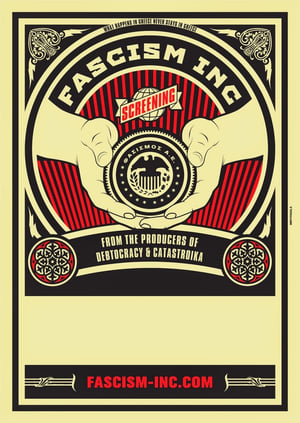
An investigation of "disaster capitalism", based on Naomi Klein's proposition that neo-liberal capitalism feeds on natural disasters, war and terror to establish its dominance.
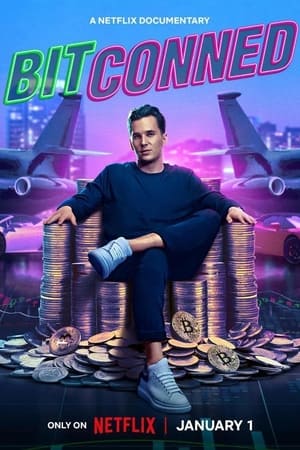
Cryptopia: Bitcoin, Blockchains and the Future of the Internet takes a deep dive into the crypto ecosystem and blockchain technology to discover the good, the bad and the ugly of this controversial industry, its major narratives, conflicts and the major players behind it. Can blockchain technology be used to create a new, fairer, decentralised and uncensored web3.0 where we can control our data and protect our online identities? Or will the potential be squandered as mega corporations once again compete for dominance in this new field. With his unrivalled and exclusive access, award-winning filmmaker Torsten Hoffman (Bitcoin: The End of Money as We Know It) takes us on a journey into the heart of this brave new world.
The End of Poverty? asks if the true causes of poverty today stem from a deliberate orchestration since colonial times which has evolved into our modern system whereby wealthy nations exploit the poor. People living and fighting against poverty answer condemning colonialism and its consequences; land grab, exploitation of natural resources, debt, free markets, demand for corporate profits and the evolution of an economic system in in which 25% of the world's population consumes 85% of its wealth. Featuring Nobel Prize winner Amartya Sen and Joseph Stiglitz, authors/activist Susan George, Eric Toussaint, Bolivian Vice President Alvaro Garcia Linera and more.
An examination of the causes of the global economic crisis which began in 2008, studying how decades of social changes have influenced financial systems and practices.
What happens to two dying coal towns in British Columbia when an American corporation provides a contract for millions of tons of coking coal? The film follows the consequences for the towns of Natal and Michel, suggesting that industrial growth has its price, especially with regard to the environment.
DEBT is the story of a frantic pursuit: the search for the responsible for the televised cry of hunger of Barbara Flores, an eight-year-old Argentinean girl. Buenos Aires, Washington, the IMF, the World Bank and Davos; corruption and the international bureaucratic lack of interest.
As the US debt spirals out of control, it polarizes society and threatens to disrupt traditional retirement with an impending freight train of onerous taxes and draconian austerity measures.
Emmy-winning journalist Danny Schechter investigates America's mounting debt crisis in this latest hard-hitting expose. The film reveals the unknown cabal of credit card companies, lobbyists, media conglomerates and the Bush administration itself who have colluded to deregulate the lending industry, ensuring that a culture of credit dependency can flourish. Schechter exposes the hidden financial and political complex that allows the lowest wage earners to indebt themselves so heavily that even house repossessions are commonplace.
Michael Moore comes home to the issue he's been examining throughout his career: the disastrous impact of corporate dominance on the everyday lives of Americans (and by default, the rest of the world).