Documentary about the merging of the Communist Party of Germany and the Socialist Unity Party of Germany in the Soviet occupation zone, a merger that would lead to the creation of the Socialist Unity Party that would rule the soon-to-be-created East Germany until 1989.
During a military uprising known as “El Porteñazo”, a priest is photographed while trying to help a soldier wounded in combat. The photo travels the world and is awarded the most important prizes in photojournalism, such as the Pulitzer Prize and the World Press. Throughout this documentary, photographers, editors and witnesses reveal various aspects surrounding that image: who is the priest, who was its author, the events that surrounded the photographic event, what was its political role and what said image represents in the history of Venezuelan journalism. Additionally, it allows the presentation of other photographs, some unpublished, that Rondón managed to capture in those difficult moments.
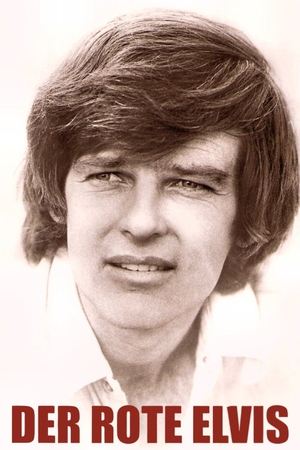
A documentary on the late American entertainer Dean Reed, who became a huge star in East Germany after settling there in 1973.
The impact of Marx on the 20th century has been all-pervasive and world-wide. This program looks at the man, at the roots of his philosophy, at the causes and explanations of his philosophical development, and at its most direct outcome: the failed Soviet Union.
Alex Jones interviews Walter Burien, commodity trading adviser (CTA) of 15 years about the biggest game in town. There are over 85,000 federal and regional governmental institutions: school districts, water and power authorities, county and city governments – and they own over 70 percent of the stock market.
A cartoon film about the whole heterogeneous mixture of Canada and Canadians, and the way the invisible adhesive called federalism makes it all cling together. That the dissenting voices are many is made amply evident, in English and French. But this animated message also shows that Canadians can laugh at themselves and work out their problems objectively.
Jean-Luc Godard brings his firebrand political cinema to the UK, exploring the revolutionary signals in late '60s British society. Constructed as a montage of various disconnected political acts (in line with Godard's then appropriation of Soviet director Dziga Vertov's agitprop techniques), it combines a diverse range of footage, from students discussing The Beatles to the production line at the MG factory in Oxfordshire, burnished with onscreen political sloganeering.
An innovative and charismatic influencer is suddenly exiled from her community of creative partners and colleagues when she states an opinion that she did not know was “unacceptable” in their eyes.
A documentary on the rise and fall of Project Cybersyn, an attempt at a computer-managed centralized economy undertaken in Chile during the presidency of Salvador Allende.
Documentary film with play scenes about the rise and fall of the short-lived Bavarian Soviet Republic in 1919 from the perspective of various well-known poets and writers who experienced the events as contemporary witnesses.
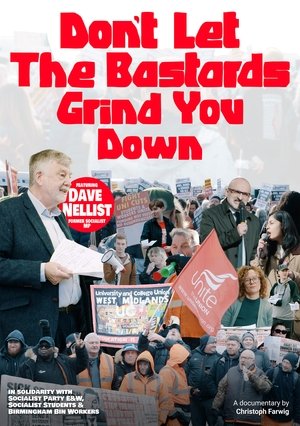
"Don't Let The Bastards Grind You Down" is a documentary film about British social policy. The focus is on the political struggle against neoliberal austerity policies, which have their origins in the hated Thatcher government. The film features the former socialist MP Dave Nellist, who is now the national chair of the Trade Unionist & Socialist Coalition and Hannah Sell, the general secretary of the Socialist Party. The film features a local election campaign in the miners' town of Nuneaton, students campaigning against an increase in tuition fees and refuse workers from Birmingham striking against massive cuts to their wages.
The early struggles of the working class are placed under a microscope in Plutocracy III: Class War, the latest chapter in an exceptionally well produced series which explores the origins of America's growing economic divide.
Music documentary about Billo Frómeta by director Rafael Marziano Tinoco from Venezuela.
The history of Camp Kinderland, founded in the 1920s to provide Jewish children an escape from the hot New York City summers.
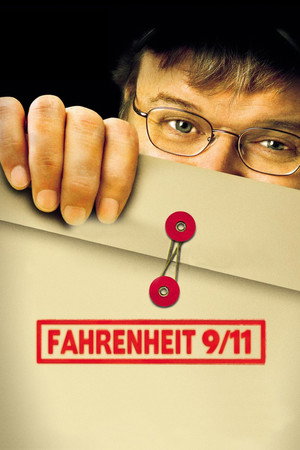
Michael Moore's view on how the Bush administration allegedly used the tragic events on 9/11 to push forward its agenda for unjust wars in Afghanistan and Iraq.
A sound system plays Commander Ernesto Guevara's speech, delivered on October 20, 1962, during the Second Anniversary of the Young Communist League, along with a series of archival images of the revolutionary leader visiting factories and meeting with workers.
In the run-up to parliamentary elections in mid-October, Polish filmmaker Marcin Wierzchowski travelled across his country to gauge the atmosphere in a society that is more divided than ever.
Hugo Chavez was a colourful, unpredictable folk hero who was beloved by his nation’s working class. He was elected president of Venezuela in 1998, and proved to be a tough, quixotic opponent to the power structure that wanted to depose him. When he was forcibly removed from office on 11 April 2002, two independent filmmakers were inside the presidential palace.
A feature length, lively - montage style - documentary, capturing the essence of what life was like in socialist Hungary - dubbed the "The most cheerful barrack" back then - using contemporary music, interviews, adverts and news footages.
The last months in the life of a Serbian philosopher and socialist activist Svetozar Marković and his exile by the government of the Serbian Princedom.